Recognize you have control of this, if nothing else — Michael Marcus Jan 10 By JESHOOTScom on Pixabay I rem...
Business
5/Cars/feat-tab
Search This Blog
Author Details
Templatesyard is a blogger resources site is a provider of high quality blogger template with premium looking layout and robust design. The main mission of templatesyard is to provide the best quality blogger templates.
Extracting lifelong lessons from the world’s favorite sport

№10 is one of the most coveted jersey #’s in the game
With
an estimated 3.2 billion spectators tuning in to the last FIFA World
Cup, the sport has earned the right to be called a global phenomenon.
Now, with the next world cup just around the corner, I wanted to take a
moment to reflect on the invaluable life lessons I learned through
playing ‘the beautiful game.’
Those
who hate soccer (🇺🇸) see a bunch of grown men chasing down a ball -
but for those who cherish ‘the beautiful game,’ they see a test of
endurance, athleticism, emotions, and strategy in what I call ‘real-time
chess.’
Indeed,
fútbol is a nuanced sport, requiring physical and mental resilience,
spatial intelligence and the ability to think several steps ahead of
your opponent. Therefore, one’s play style is very much a window into
their psychological makeup — beyond how fast someone runs or how
accurately they can shoot, the decision-making and thought processes
behind their actions are largely rooted in their personality. To play
against someone then is equally a mental battle as it is a physical one.
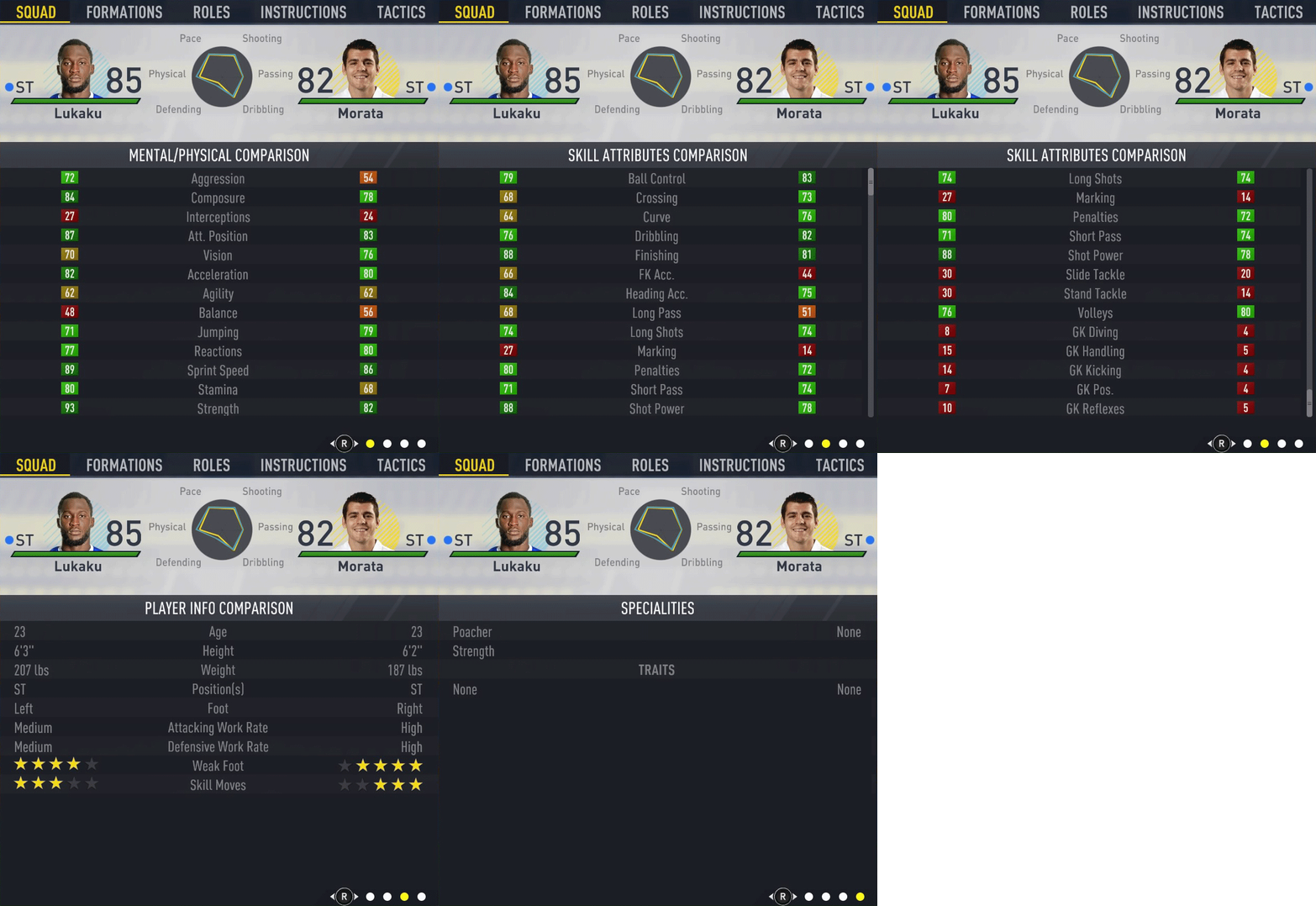
Its
always interesting to see how everyone makes the worldwide game their
own on an individual, team and country-wide level. Typically the
Brazilian culture play with lots of flair, emphasizing dance-like
control over the ball, while Germans play technically and concisely,
with few redundant or unnecessary movements.
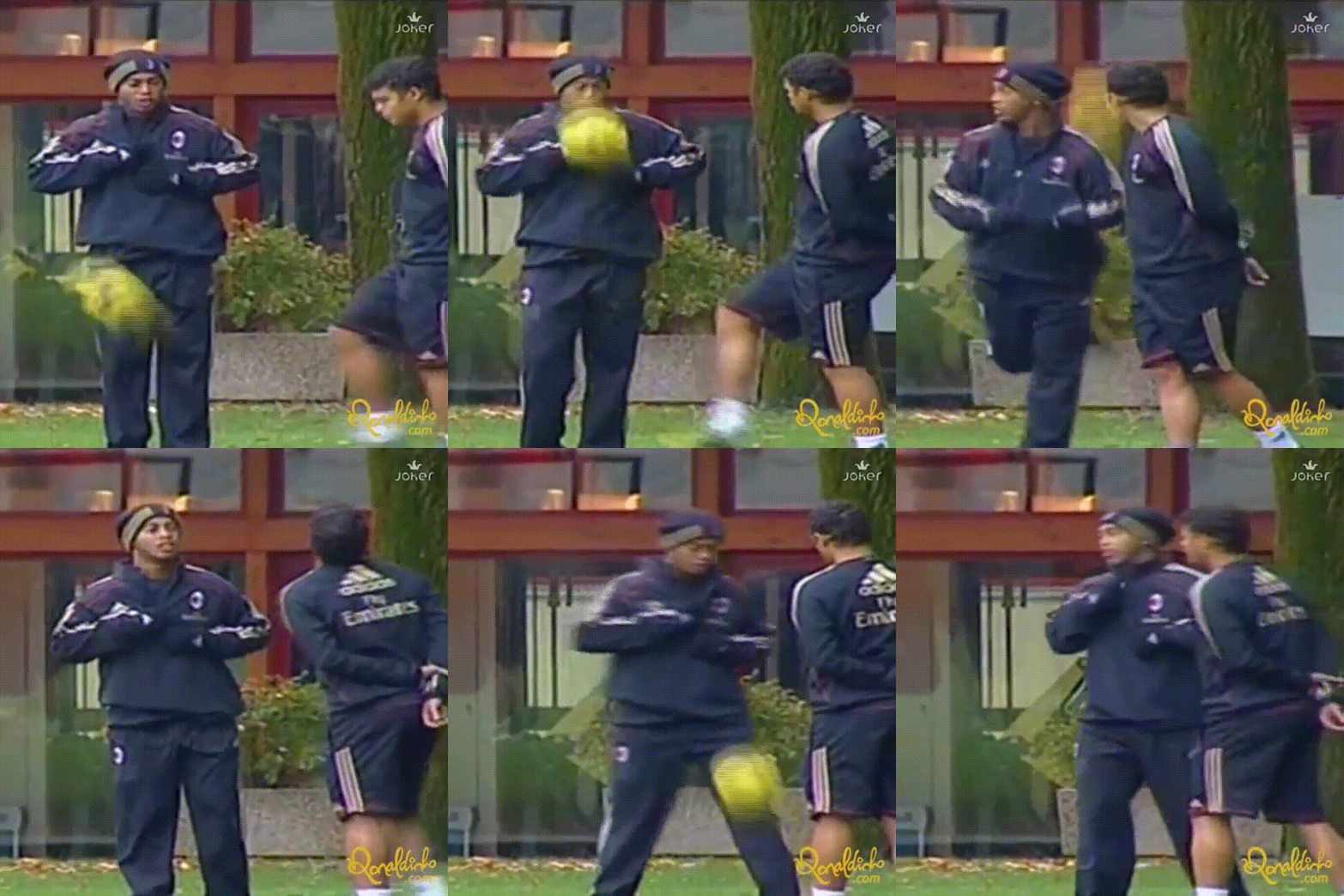
Ronaldinho casually performing his trademarked sorcery
Having
grown up with the sport, a ball at my feet feels like a natural
extension of my body, much like a paintbrush does for a painter, or a
vinyl for a DJ. As a kid, I modeled my play after Ronaldinho, who’s
command of the ball is arguably the best in the history of the sport. I
aspire to mimic just a fraction of the magic he produces.
Throughout
my time experimenting with different positions to find my natural fit,
I’ve learned a thing or two about the sport. These lessons not only
stuck with me as in my athletic development, but have actually poured
over into my career, personal life, and just about everything I do. So
without further ado, here are 10 Lessons Playing Soccer Taught Me About Life.
1. Strike with conviction
We’re
taught to shoot with our toes pointed downwards, running through the
ball with our laces and making sure to follow through with the motion.
The form has to be confident and composed.
To
go for (your) goal, you have to be true to your efforts; if you don’t
believe in yourself to hit the target, you never will. Its all about
timing, positioning, power, precision, finesse and form — things that
can easily take shape in any of your life’s endeavors and, if you’re
truly conscious of and use them effectively, will get you to hit more of
your goals through practice. Think of how and where these tips can
apply to your personal life.
Timing — what
tasks should I be prioritizing? When should I schedule my posts,
emails, meetings, interviews? When is the best time to do X, so that I
can achieve Y?
Positioning — am
I where I want to be right now? If not, how can I get there? If so,
where do I want to be next? Am I playing ‘off the ball?’ (see #2).
Power — how much passion and energy am I bringing to my work? Am I being aggressive or assertive?
Precision — how focused am I? Are all of my endeavors aligned? Am I channeling my power correctly?
Finesse — have
I paid attention to the details? Have I put in the minimum amount of
work needed to obtain the maximum result? (Think: 80/20 rule.)
Form — have I perfected areas in life that demand attention? Are the things I’m supposed to know like muscle-memory?
Zlatan Ibrahimovic always strikes with conviction
2. Play Smart Off the Ball
What
most people don’t realize about soccer is that the game is played
almost entirely off of the ball. With 22 players on the field, and the
ball at the feet of only one person at a time, the chances for any
individual to hold possession is low.
But
just because you don’t have the ball doesn’t mean you don’t have a job
to do. Positioning is critical for off the ball play, since you want to
make it easier for your teammates to progress up the pitch when they’re
met with resistance. It’s about optimizing your movements to put you in a
better position to receive a pass, play the ball out of danger, make an
assist or score a goal.
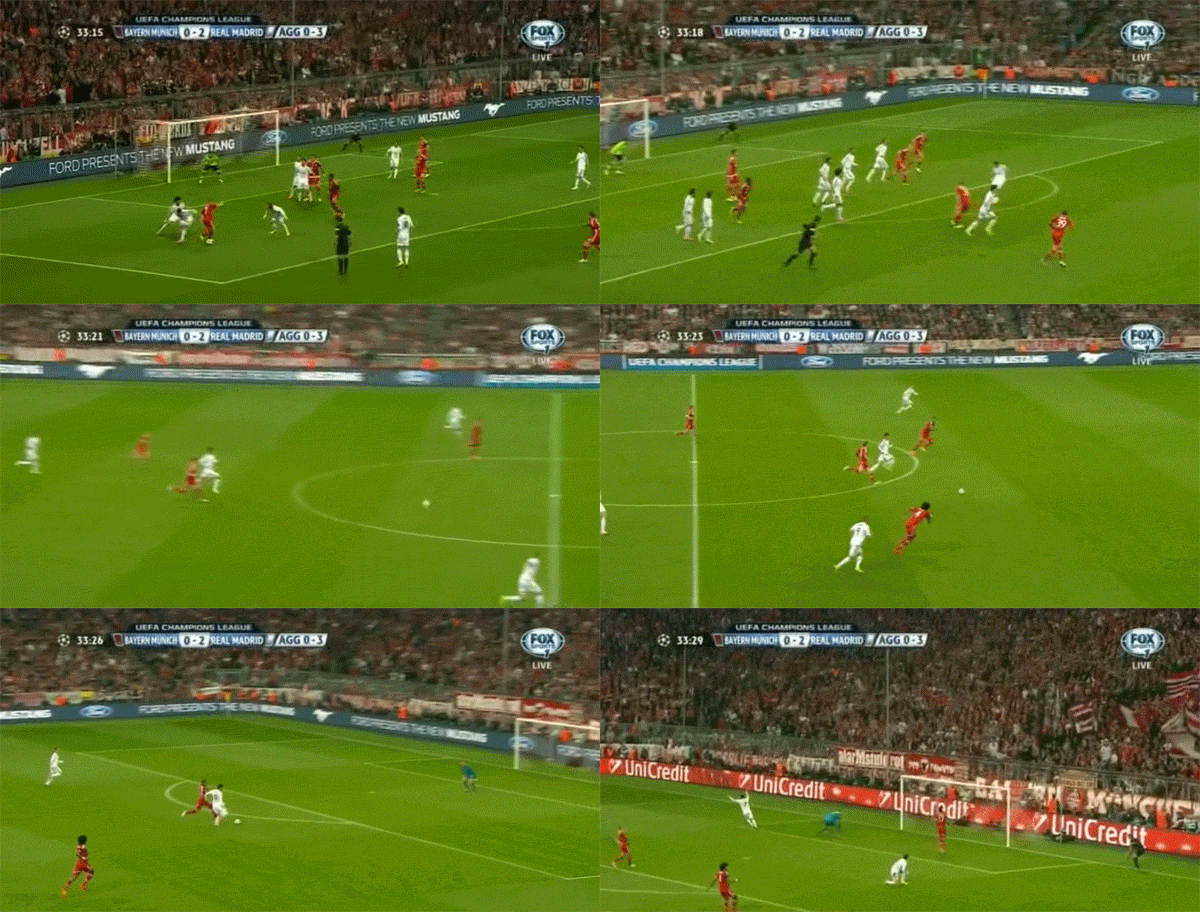
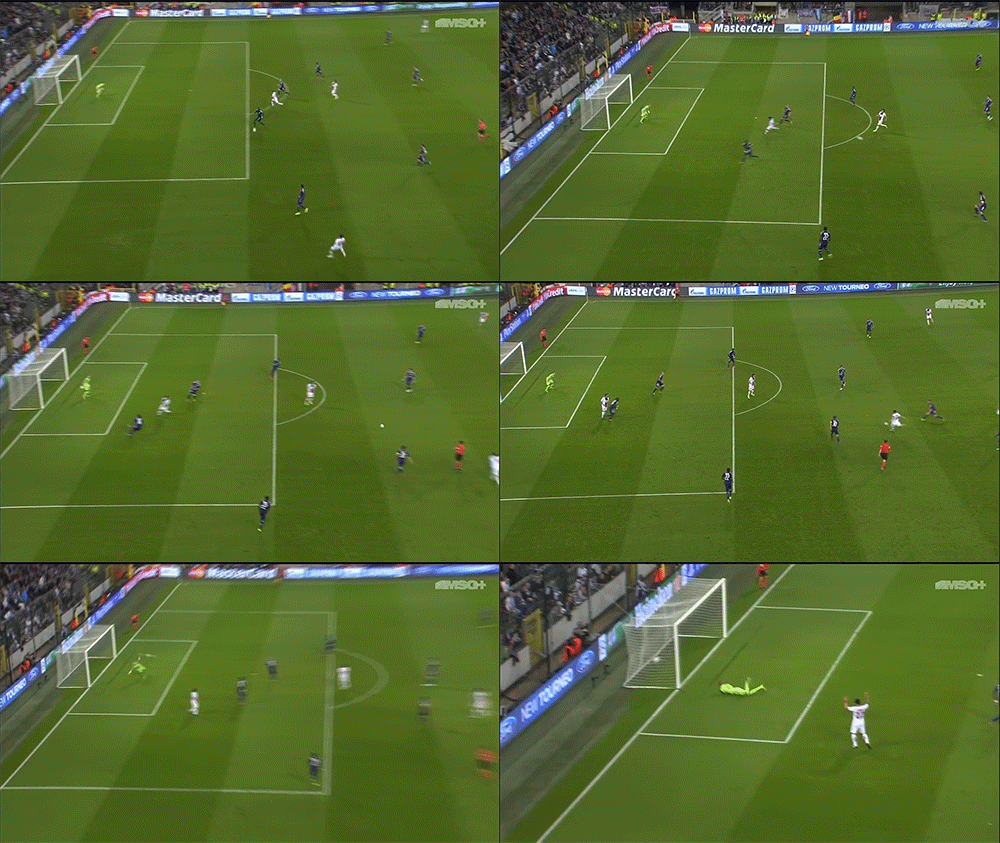
Real
Madrid displays its hallmark counter-attack style of play. Notice how
well the players positioned themselves by finding open space to help
move the ball forwards and find a scoring position
How are you playing off the ball?
If
you’re an athlete in general, you have to train at the gym, get enough
sleep and intake optimal nutrition to maintain a competitive advantage.
If you’re a blogger or musician, its not enough to create content, you
have to learn the ins and outs of social media and promote your work
effectively. If you’re a freelancer and just made your first sale,
‘follow through with the motion’ and reach out personally to make sure
they’re enjoying their purchase. If you’re a business owner, you can’t
just be good at the industry, you have to constantly network, crunch
numbers and do the rest of the *business* aspect of your business.
Learn
the ‘optionals’ and ‘nice to have’s’ of your trade to positively impact
the more immediate aspects of your work. The key is to allocate some of
your attention to the less obvious but equally as important tasks, even
if they seem indirect to your overall progress. Be well-rounded, and
commit to the same work ethic ‘off the field’ as you do on it to ensure
your progress.
3. Sometimes You Have to Move Backwards to go Forwards
Soccer
is predominantly a game about stealing space from opposition. The less
space your opponents have, the closer you are to their goal and the more
likely you’ll have a better shot on target. But in order to progress up
the field to get a chance at scoring, you first have to maintain
possession of the ball.
Sometimes
the best option is to take a step back and recalculate your plan. If
you’ve ever performed an exercise at the gym with the wrong form, you
first had to unlearn the improper form to approach the workout again
with the correct one. Sometimes when switching jobs you have to accept a
lower position to find yourself in better company and with more
opportunities. To turn bad habits into good ones, its easier to slowly
weed yourself off of the negative first instead of going for the
immediate swap and attempting a 0-to-100 overnight transformation.
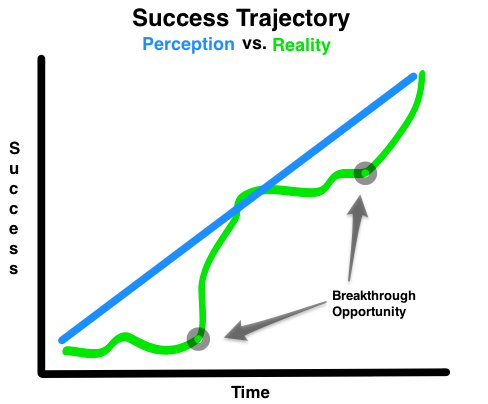
Success
is never a consistently linear path with an upwards trajectory. If
you’ve ever felt like you’ve been moving backwards while conscientiously
trying to make progress, just know that moving backwards is a natural
progression of progress itself.
4. Develop Your Own Style
The
beauty of soccer is that no one body type excels over another. Unlike a
sport like basketball where you have a significant advantage the taller
you are, if you look at the elite soccer players, you won’t notice a
definitive body type that excels at the sport. Sure, it helps to be
stronger, faster, have more stamina, jump higher, but its ultimately how
you play the game and what you can contribute to the team more than it
is any one of the aforementioned traits.
Its
obvious that all players have their own unique makeup when it comes to
mental and physical attributes, which is why Messi and Ronaldo both
thrive despite their wildly different body types.
To
cultivate your own style, its important to first recognize your
strengths and weaknesses. This is of course easier said than done, since
people tend to severely overestimate abilities they’re confident in and
underestimate the ones they’re not. In the event that your ‘favorite
position’ (however that manifests in life) differs from your natural
fit, you’ll have to do some compromising either on your gifts or the
role you play.
Next,
you’re going to have to figure out how to channel your abilities
effectively. Any one skill doesn’t make a player — you have to
experiment and learn how to combine your unique traits to add your mark
and bring value in a way that’s bigger than the sum of your parts. This
is where the magic happens: in aligning the things you’re good at, you
won’t just be contributing enormous value, you’ll do it in a way that’s
uniquely your own.
Be
true to who you are and constantly work on refining what you’re good at
while counterbalancing what you’re not. Just make sure you’re doing
what you love and prefer rather than what comes easiest.
5. For Teams to Thrive, Chemistry Is Everything
Communication
is critical for any team across any discipline. There have been times
when various egomaniacal managers joined a new club and brought in five
new players for their upcoming season. While they splurged their team’s
funds on the best players money could buy, they somehow still ended up
fourth, fifth, sixth on the league table at the end of the season.
Although
the players themselves were world class talent, they had never played
together, and that reality revealed itself time and again on the pitch.
Lack of communication kept the team fragmented and therefore incapable
of making intelligent decisions in the attack, midfield nor defense.
Their mismatched movements and poor connection in the passing lost the
team possession of the ball — the very currency of the game — which many
times resulted in the ball finding the back of their own net.
It ultimately comes down to this: it’s not the team with sensational players, as much as it is the players with a sense of team.
Chemistry
is one of the most underrated facets of a team’s composition for what
its worth, yet it’s the single most critical factor of whether a team
will succeed. Everyone must be able to work fluidly with one another and
balance each other’s respective strengths and weaknesses to work
effectively as a unit. Trust, community and culture are therefore the
glue that holds a team together; without them, you’re just a collection
of individuals.

U.S.A Women’s team is often touted as the best in the world and its no wonder why, just look at that chemistry.
6. The Leader Isn’t Always the Best Player
There’s
a common misconception that the best player — or even the one that puts
in the most effort — should be the leader. They shouldn’t.
While
Messi is one of (if not) the best player in the world, he’s quite
silent on the field. Because sneakiness is one of his tactics, he relies
on his teammates to scope him out without having to shout or wave his
hands.
While
his contributions to Barcelona have been and continue to be
tremendous — he’s the club’s highest goal scorer and has brought them
countless trophies in the process — he shouldn’t be captain. Despite
having played for the club since childhood, Messi lacks the leadership
that other less-skilled players can offer the team.
Why?
While
leaders should strive to lead by example, mastering the specific skills
that placed them at the top of the totem pole, being good at what you
do is not enough. In fact, it’s not even the most important thing.
As
a leader, you have to be able to facilitate the chemistry of the team,
uniting it through inspiration and communication. Head chefs make sure
the kitchen is organized and running smoothly. CTO’s (chief technology
officer) translate the company’s vision for their engineers, as well as
the engineer’s work for the rest of the company. Film directors
orchestrate the actors to bring out their best for each scene.
While
the soccer player, head chef, CTO and director are all likely the best
in their respective field, it isn’t always the case. More important than
their own capabilities is how they empower others to express theirs. In
the end, the central function of leadership is to produce more leaders.
7. Play with the Goal in Mind
Sometimes
while going through the motions, you lose track of what you’re there to
do. Soccer makes for a particularly nice analogy here because it quite
literally shares the idea of ‘having goals.’
While
in sports the objective is more blatantly apparent, much like in life
you can often forget why you started something in the first place when
faced with more immediate obstacles to overcome. As fatigue sets in and
motivation withers, your ‘why’ has to be be larger than your excuses.
Don’t lose sight of the big picture. Hold yourself accountable.
Passing
and communication are important, just like dieting and business
meetings — but if they’re getting you nowhere then you need to start
changing things up. While we mentioned that progress is never linear in
#3, you’re still at the reigns of your own momentum. Breakthrough
opportunities are just that: breakthroughs. Before you can ‘strike with
conviction,’ you first have to know where the goal is.
Hone your sense of where the goal is. How far are you from hitting your target? What do you need to do to get a better shot?

Zlatan Ibrahimovic always knows where the goal is
8. Know Your Enemy
It pays to do your homework.
Who’s your competition? What are their weaknesses? What are their strengths? How do they go about their business?
Needless
to say, professional teams study their opponents well — long before
they shake hands and await the sound of the whistle.
Sometimes
when studying your opponents, you begin to understand yourself better
as well. Differences in philosophies can lead to new insights and
introspection that reveal why you think the way you do and how these
beliefs influence your own ‘style of play.’
Everyone
is playing the same game, but everyone plays it differently. What’s
really the difference between Uber, Lyft, Gett, Via, Juno and the rest
of the on-demand car rides?
While they all basically do the same thing, the way they do it
is unique. Beyond their branding (notice how they’re all starkly
different on that front), the companies seek to differentiate themselves
through key partnerships, pricing models, experiences and so forth.
At a glance, every soccer team is the same, just like every car-share service is the same. But if you take a closer look, you will spot some key differences that have likely emerged as a result of direct competition.
Knowing
your enemy is vital for survival as a person, company, family unit and
so forth. Its important to note though that your enemies may not always
be other people. Treat roadblocks as your enemies and really try to wrap
your head around what they are, why they’re happening and how you’re
going to fix the situation: in the worst case scenario, you come more
prepare. In the best, you’ll learn a thing or two about yourself in the
process.
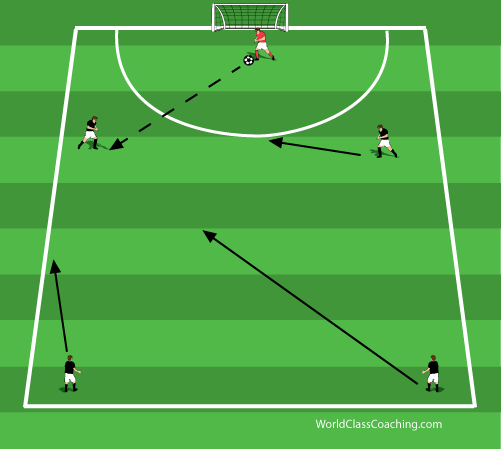
9. Check to the ball
When
receiving a pass, watching the ball come to you simply won’t cut
it — you have to check to it. The art of receiving a pass is as nuanced
as making a pass; if you merely watch the ball roll closer to you,
someone else will inevitably snatch it before it ever gets to your feet.
Checking
to the ball is a lesser known skill in the game (and in life), but one
that will benefit anyone who learns it tremendously.
How do you check to the ball?
Be
the first one to introduce yourself in a new email thread or social
setting. Learn about the new people you’re going to be working with and
offer to help them with something specific. Approach new opportunities
assertively and really embrace them for the chances they present, don’t
be ‘afraid of the ball.’ Even if an impending moment for greatness seems
inevitable, check to it. Make sure you’re giving it the attention it
deserves long before the moments leading up to it, and do your best to
stay on top of it.
Checking
to the ball means you get to keep the ball. It means you now have more
opportunities, and you don’t have to drop to a defensive or reactive
state. Its just one more way to ensure your success in soccer and in
life.
Take a step towards the incoming ‘big thing’ in your life.
10. Be Patient
This
last one is easily observed; its really rather intuitive even to people
who don’t play soccer that the game requires endurance and patience. As
a low-scoring game, the value of each goal has tremendous implications
on the result of a match. Players must expend their energies effectively
to last the full 90 minutes, or else risk burning out in the early
stages of the game.
You’ve
likely already heard the saying that life is a marathon, not a sprint;
indeed truer words could not have been said. Pacing yourself requires
discipline, and discipline requires awareness.
Conscientiousness
is arguably the most important life skill, and it helps lead to better
self-management, introspection and the manifestation of your dreams and
desires. Trust in your abilities rather than your luck, and work
diligently to get to where you want to be. The biggest empires weren’t
built overnight, and neither were their star performers.
When
we speak about resilience, we often think of “bouncing back.” This
implies rebounding to how things were prior to experiencing adversity.
This definition may be fine for minor challenges, but it’s unproductive
for more serious ones.
First off, it sets a pretty high expectation. If you don’t meet it, you’re likely to be disappointed. Sometimes you physically can’t
bounce back, like in the case of chronic illness or the death of a
loved one. If you lose a limb — literally or metaphorically — you won’t
ever be the same as before. Trying will only leave you down and
dejected.
It’s
highly distressing to carry with you fear, pain, and uncertainty. But
it’s even more distressing trying to repress or forget those feelings.
Second
off, bouncing back is limiting. It says that there is a “back” to which
we should bounce; some ideal, perhaps more comfortable, place. But this
fails to acknowledge the significance of the adversity itself. It’s as
if you are trying to delete it from your life. In my own experience,
this doesn’t work. Yes, it’s highly distressing to carry with you fear,
pain, and uncertainty. But it’s even more distressing trying to repress
or forget those feelings when they’ve been seared into you by situations
that are unforgettable.
Following
true adversity — I’m talking about the gut-wrenching, hole in your
heart, sleepless nights kind — there is no bouncing back. There’s only
moving forward.
And,
though it sucks at times, you’ve got no choice but to carry your
experience with you. This won’t make you an immediately happier person,
but it will make you a fuller and more compassionate one.
And yet…and yet…
Holding fear, pain, and uncertainty is hard.So it’s important to dispel yet another falsehood about resilience. Resilience is about inner strength, but it’s not
about keeping a stoic profile and going at it alone. Inner strength and
seeking support are not exclusive; if anything, they go hand-in-hand.
Following
true adversity — I’m talking about the gut-wrenching, hole in your
heart, sleepless nights kind — there is no bouncing back. There’s only
moving forward.
Being
vulnerable and reaching out for help when you need it demands
inner-strength, and inner strength grows when it’s supported by help.
“It is a myth that resilient people don’t need help,” writes Meg Jay, a clinical psychologist at the University of Virginia. “Seeking support is what resilient people do.”
In the aftermath of adversity don’t try to bounce back. Do your best to move forward. And let others help you along the way.
“Creativity
is more than just being different. Anybody can plan weird; that’s easy.
What’s hard is to be as simple as Bach. Making the simple, awesomely
simple, that’s creativity.” — Charles Mingus
The
best lesson you’ll ever learn is that your education in life should
never stop. Not only that, but the best education you’ll ever receive
will most certainly not come in the classroom. You’re going to learn
through your personal experiences, family, relationships and competitive
ventures. And even when you think you have all the skills you need, you
have to remind yourself that you always need more.
As
a lifelong learner, I’m always looking for new ways to increase my
knowledge and skill. I’m always looking for an edge — something to help
distinguish myself in my field and to grow my brand. Great ideas can
last a lifetime, though some ideas are ephemeral. They serve a purpose
for a while, and then they go away. They grow stale. You need to
rejuvenate, keep thinking, ideating and coming up with something new.
Here’s
the thing — if you’re reading this article in this great publication,
you probably recognize that your personal growth is a lifelong journey.
There will be mistakes, adversity and many bumps along the way. In order
to keep growing, you can’t rely on what you learned at home, in grade
school, high school or even college. There may be no rush for you to go
out and get a Master’s degree, either.
There
are an abundance of resources at your fingertips thanks to the
Internet. I’m encouraging you to be a player. Life is a contact sport,
meaning, you can’t afford to sit on the sidelines and think the game is
going to come to you. You’re going to have to get out there and get your
hands dirty to make the plays that will bring satisfaction to your
life.
The
more I’ve made strides in my writing and coaching careers, the more
I’ve encountered adversity in a variety of forms. But this adversity has
been eclipsed by my successes. I’ve persevered through the tough times
and I’ve grown because I’ve been willing to stick it out and learn. The
more I feel I’m staying in the same place, the more I desire to keep
growing — and keep learning something new.
Don’t
sit back and think that you’ve become the expert just because you’re
getting by in your job. You literally and figuratively cannot afford to
do so, particularly when the world around you is constantly evolving.
Technology changes, and smarter, more efficient processes enter the
workforce. Bold, new ideas from incredibly creative people replace old
ideas.
If
you truly want to get what you want, you have to be willing to put
yourself out there, find a way to dedicate time and get by through the
help of others. I’ve detailed five ways to get where you want to be. We
live in an expert’s world. The experts are the ones who are sought out
for their expertise, because they’re the most knowledgeable and best at
what they do.
We
should strive to live happy, fulfilling lives that lead us to becoming
the best person we want to be. There are plenty of opportunities for you
to live this life. Here’s some methods to get started:
1. Dedicate 5 Hours per Week to Using Your Creative Imagination
“Creativity is seeing what everyone else has seen, and thinking what no one else has thought.” — Albert Einstein
I’ve
found the absolute best way to do this is to immerse myself in
solitude. It could be meditating early in the morning when it’s still
dark out and the kids haven’t woken up yet. It could be finding 45
minutes of piece during a midday break from work. But I strongly prefer
solitude. I like thinking of the things that I love, things that inspire
me and sometimes listening to music.
But
most of the time the most creative ideas that come to my mind are when
I’m in solitude and able to reflect on the things in life that motivate,
inspire and get my adrenaline going. I’m most creative when I’m in the
zone about doing what I love, dreaming of the end goals that I’ve set
out and thinking of celebrating in the winner’s circle.
When I wrote my first book, The Value of You,
I often did so in solitude. I thought deeply about what each value
meant to me. I thought about what inspired me most in my life and how my
dream was always to become an author. I kept going and kept writing.
Now, I’m on to new goals which I truly believe I’ll only be able to
achieve if I use my creative imagination to imbue them with beauty and
color.
Use your imagination. We’re all blessed with a beautiful mind that can create incredible things.
2. Take Advantage of the Online Courses at Your Disposal
This
goes back to the idea that life is a continuing education and we are
literally continuing this when we keep learning something new. I’ve
taken courses online that taught me how to create a WordPress site.
That’s how I created my first blog. I’ve read a lot online about
branding and marketing, because I never had a formal education in these
subjects.
I
recommend Udemy, Lynda and Coursera. But bear in mind that this
industry, like every other, is constantly changing. Something new always
comes along that’s better, more user-friendly and perhaps even cheaper.
Take advantage of YouTube and all the great learning videos there. And
remember, Google is your best friend. There’s absolutely nothing
stopping you — unless it’s a poor Wi-Fi connection!
3. Learn How to Master Social Media
If
you’re looking to become the expert in your field in 2018 and beyond,
you absolutely must use social media. That’s a must. It’s simply
non-negotiable. If you want a seat at the table, you must start there.
But it’s not just about starting and getting your seat. You need to
learn how to differentiate yourself. First, it’s worthwhile to
brainstorm on how you want to position your brand.
I
can tell you that if you’re a writer, you’re going to want people to
hear and see your most authentic voice when you’re posting and sharing
on social media. Build your strategy around authenticity, around your
passions and what makes your expertise unique. You will never, ever go wrong with this strategy.
One
of the best lessons I ever learned is that the world absolutely needs
you. It wants you to be YOURSELF and to be truly unique. And it most
certainly doesn’t want you to sit on your butt and waste your talents.
Be yourself and like anything, learn from the experts of who is
succeeding at creating beautiful, inspiring messages on social media.
Emulate them, take what you can and then make it your own. This is the essence of creativity!
4. Develop One New Connection Each Week that Becomes a Mutually Beneficial Relationship
None
of us make it on our own. We live in an interdependent world and our
successes are the byproduct of the loving, nurturing seeds that others
plant in our lives. Speaking of social media, get ready to use Linked in
to your advantage. Go out and meet people. Be willing to ask someone for help. You have to be bigger than thinking people will just come to you.
Also,
be willing to offer something. You may be looking to become a social
media genius, but perhaps you have an awesome background in web design
that you can share with the person you’re meeting. Offer something.
Receive in return. Repeat. Once you meet more people, you’ll keep
learning and growing. And you’ll gain allies and fans of you that will
help you build your brand.
5. Focus on the DOING and Keep Going
“The worst enemy to creativity is self-doubt.” — Sylvia Plath
Keep
Going. Keep Going. Keep Going. Persistence and perseverance are
absolutely paramount in becoming an expert and living life on your
terms. Think of anything you’ve succeeded at, and look at the examples
of people you admire. The common thread is unequivocally that you and
they kept going to achieve your goals. This is plain to the eyes to see.
Yet, it’s not always easy to do. Focus on what you love to do, what you want to become and keep on doing. Keep producing, even on the days when you feel like lying on the couch
and watching Netflix ’til you pass out. Eliminate time wasters like
unhelpful perusing on Instagram and Snapchat. If you’re going to spend
that time on social media, use it to grow YOUR brand!
Whatever
it is you’re doing, if you find yourself at the intersection of passion
and natural talent, please continue to keep going. Pour your all into
what you’re doing and never, ever give up. Instead of looking up to the
experts, one day, you’ll count yourself in their company.
“Losing your way on a journey is unfortunate. But, losing your reason for the journey is a fate more cruel.” — H. G. Wells
“What is it you seek?” asked the Master of a scholar who came to him for guidance.
“Life,” was the reply.
Said the Master, “If you are to live, words must die.”
When asked later what he meant, he said:
“You
are lost and forlorn because you dwell in a world of words. You feed on
words you are satisfied with, when what you need is substance. A menu
will not satisfy your hunger. A formula will not quench your thirst.”
The
tale by Anthony de Mello invites you to measure your life by
significant moments, instead of through thoughts and words alone.
Knowing life is short, seize opportunities as they arise instead of focusing on circumstances for which you care little.
Events
conspire in your favour, despite your worries and frustrations. They
are there to help you experience yourself in a greater capacity.
Sometimes, your way of life may be upturned as you wrestle with a change in conditions.
“Everything
in your life — especially your challenges — is tailor-made to help you
see your stories of struggle. Whatever is in the way, is the way!” avows
author Mary O’Malley in What’s in the Way Is the Way: A Practical Guide for Waking Up to Life.
Have you experienced the pain of losing direction?
Recall how you felt. Connect with that moment.
Now cast your mind back to the present. Note the insignificance of the experience from this vantage point. Hindsight is a wonderful teacher, in so far as it gives you clarity of mind to see the past in a new light.
Losing your way is attributed to losing sight of one’s core purpose, a sensation accompanied by emptiness and confusion.
I
experienced this feeling when I changed career over a decade ago. Being
vulnerable made it difficult to make sense of what was taking place. I
tried to fight my way out of this gloomy state, to no avail.
However difficult life may be, in One Small Step Can Change Your Life: The Kaizen Way,
author Robert Maurer reminds us the solution is often found in the
scariest of places: “When life gets scary and difficult, we tend to look
for solutions in places where it is easy or at least familiar to do so,
and not in the dark, uncomfortable places where real solutions might
lie.”
Directed By A Greater Intelligence
“Who in the world am I? Ah, that’s the great puzzle.” — Lewis Carroll
Let
me set your mind at ease — you cannot lose your way in a purposeful
universe conspiring in your favour. Although it may not appear that way,
contained within uncertainty lies the opportunity to reconnect with
your intuitive compass.
You are likely to lose your way since man is not equipped with an inner navigation system, routing his passage through life.
Whilst
we’re endowed with intuitive guidance by way of emotions, many are less
inclined to heed the messages. This is because they are busy attending
to the torrents of emotions that being lost invokes.
“You
just have to let things be and not do anything about them. That is
probably the greatest discipline in the world because our whole thing is
about making it happen. The point is to be present and trust the
process,” write authors Charlene Belitz and Meg Lundstrom in The Power of Flow: Practical Ways to Transform Your Life with Meaningful Coincidence.
What if being lost turned out to be your greatest gift?
If
you’ve used a GPS device before and have taken the wrong turn, you’ll
know that as long as you enter the right coordinates, the unit will find
its way to your destination, no matter which road you take.
Life
functions in the same respect. You are connected to a greater
intelligence through intuition and emotional guidance. Whilst you may
veer off course, you can never stray far because your connection to this
intelligence is far greater.
If
you’re feeling lost, reconnect with your purposeful self to get back on
track. It may require you to get quiet to listen to the stillness
within that knows your next move.
To
concede defeat may be your best move and not detrimental as you might
think. In surrendering, you are made aware of a new direction you hadn’t
considered before.
Trust you will reach your destination before long.
I
invite you to retreat into these moments of silence often. When the
mind is absorbed in excessive thought, it is difficult to find your way
given the cloud of distorted thinking.
Remain
still until a stirring within you summons you to take action. You will
know when to take the next step, not unlike knowing when you’re hungry
and must eat. It is the same intelligence guiding you.
A
computer may pause momentarily while buffering data to stream your
favourite show. However, it is still a computer despite the brief
disruption to its viewing. So it is of your life’s journey.
Strength Of Character
“And you? When will you begin that long journey into yourself?” — Rumi
Life
is a recurring tale of surprises. Sometimes you may feel lost while
other times your path is well laid out. There is a greater purpose to
everything which is known further down the road.
“You
cannot, I repeat CANNOT dwell in any blame game in your life. Even
blaming yourself is completely useless,” states Gary John Bishop in Unfu*K Yourself: Get Out of Your Head and into Your Life.
Despite
popular opinion espousing seeking happiness is key, doing so when you
are lost is akin to expecting the sun to shine through a raging storm.
Advance through the storm and assuredly, the sun will find its way
through an unblemished sky.
Share
your pain with others to support you and help you find your way back.
What may appear as being stuck holds your greatest gift, yet seldom it
appears that way.
In Paulo Coelho’s book The Alchemist, Santiago the young shepherd boy traverses the globe in search of his personal legend,
to find it was present at home all along. Had he not embarked upon the
journey, he would have missed the wisdom and insights gained along the
way.
A confident outlook is paramount, since failure has a way of sharpening the saw of a person’s character. That which you sense when you are at your lowest point flames your inner spirit and invokes true grit and strength of mind.
Knowing
your time is limited invites you to stop reaching for answers that
don’t exist. Man spends a lifetime cultivating his way on earth and will
naturally veer off track, only to find his way back again.
Nothing good results from fearing for the worst. For the breadth of one’s life is to be measured by memorable moments, not by losing direction.
Contained within each uncertainty lies the opportunity to step into your own power and know your true worth. Don’t allow it to be obscured by opposing what tomorrow will bring.
For it is not thoughts nor words that man craves, but the core of his actions that invokes the promise of a hopeful future.
If you’re reading this, you’re not alone. Overall, 32% of Americans are also looking to get out and away from their current job situations.The strugglebus is at full capacity.Being
in a job situation that you hate is one of the most demoralizing
experiences that a person can face. That’s why this piece of content
exists. To liberate your soul.However, before we get started, keep in mind that quitting your job isn’t always the solution. Nor is quitting immediately after finishing this article, even if you really really really feel like it.Some healthy alternatives to quitting are:Having a conversation with your supervisor or boss to work out the issue Considering if you’re actually working hard enough for the things you want Joining another department or asking for different responsibilities Leaving
your current company shouldn’t be a spur of the moment decision you
make because one or two small and insignificant things happened that
made you upset. That being said, there is absolutely nothing wrong with leaving a toxic job situation.
Being in a workplace or job position that is physically harmful,
emotionally taxing, not paying you what you’re worth (merit based), or
isn’t offering an opportunity for growth, is a losing game. Head for the hills.
“But how do I tell if I need a new job or not?”
Reasonable question.
It
can be difficult to determine which signs point to needing to leave
your job, especially if you are on the fence and this is your first time
having to make a decision like this.
Here are some questions to help point you in the right direction:
In 5 years, where do you see yourself within the company? Are you content with that thought?
Do you get joy or fulfillment out of the results you produce?
Do
you partake in self-destructive behaviors (drinking, binge watching
television, overeating, crying, etc) after or before work to mask or
deal with the stress?
Do you agree with the company’s values, ethics, and projections for the future?
Are your bosses and supervisors encouraging, responsible, mentorship oriented, and invested in your success?
If
you’re coming up with a bunch of nos…then it might be time. Quitting
your job isn’t always easy, but doing so can be liberating and help you
find a healthier and more professional path that will ultimately lead to
a better life.
Here’s how to do it the right way.
How To Leave Your Current Job The Right Way
Step 1. Realize It’s Time To Move On
The first and most important step to finally leaving your job is realizing that the job you currently have isn’t all that great.
You’ve
got to come to the understanding that your potential isn’t being
fostered, the future isn’t all that promising, and/or you have passions
that lie elsewhere. These are all factors that your current situation
isn’t providing for you.
This life is all about perspective.
If you have the attitude that you’re lucky to be making $10.50 an hour
at Taco Bell for the next 5 years then there’s really nothing anybody
can do for you. If you’re content with that situation then great, that’s
amazing. At the end of the day, you have to do you and know yourself.
I commend positivity and support making the most out of every situation.
BUT, if you’re not lying to yourself
(like the people who are pretending to be happy with that situation I
just described), and you’re actually discontent and complaining about it
all the time, then you’ve got to realize that part of the problem is
the fact that you don’t understand why your job is so toxic.
If
you aren’t convinced that your current position is wrong and that there
are better opportunities out there, you will continue to rationalize
and make reasons to stay.
Take a good hard look at yourself.
Think about what you want out of your professional life and what kind
of life you want your future self to have. Consider your work
performance, skill sets, interests, and contributions to your company
and the world.
If you know you’re worth more or feel like something’s missing, you’re definitely ready for the next step.
Step 2. Figure Out What You’re Supposed To Be Doing Instead
Thinking
that you’re better than your current position or situation is all well
and dandy, but there is a bigger picture to consider. You’ve got to
realize what direction you want to head in if you’re unsatisfied with
the current one.
Where are you going to go and what are you going to do after the breakup?
You’ve
probably been working at dead end jobs that you hate or that don’t pay
you well for a while now so you have probably forgotten (or never taken
the time to understand) what you actually enjoy doing.
Your
concept of who you are and what things matter most are likely not that
concrete in your mind because of a lack of will or opportunity to deeply
consider them.
This
is hugely problematic because if you don’t know what you want to do
with yourself then you run the risk of getting stuck again when you move
on to the next job. So it’s important to be self-aware and figure out
exactly what you want.
Here’s how to do that:
Think about what you do in your spare time. What do you do on the weekends? What do you do that gives you a sense of joy?
Open your mind up to every possibility.
If you could have an unlimited amount of time, no responsibilities, and
money didn’t matter what you would be doing? Do not limit these
thoughts.
Sit down with a piece of paper and a pencil in your hand and write down 25 dream jobs.
I’m serious. 25 things that you could be doing with your life that
would make you wildly happy and fulfilled. It doesn’t matter how
outlandish or ridiculous they seem.
Jump on LinkedIn and map out real world jobs that correspond to your dream job(s).
Put these in a column to the right of your dream jobs or on a separate
piece of paper. Each “real” job should correspond to one of your dream
jobs. When doing this exercise, look out for job environments, role
descriptions, and company mission statements that align with your
values.
Now
you’ve got a picture of what kind of alternatives are possible and how
close those opportunities are to your dreams. Those are the kind of jobs
you should be going after.
Moving along.
Step 3. Seek Out Other Opportunities (In Real Life)
No, this is not the point where you quit your job…
Take a deep breath.
However, this is the point where you start doing this thing called putting in effort and actually applying for different new job positions. Remember all of those jobs you found on LinkedIn and Indeed?
Start applying for them.
As
long as they fulfill the requirements you decided would inspire,
energize and fulfill you, put in an application. Don’t apply for
anything just to get slightly higher pay or some other incremental
improvement over your last job.
If
you do, you run the risk of backtracking and winding up in the same
situation you’re working so hard to get out of. If you’ve found jobs
that match up with your interests, apply.
When going through this application process, do yourself a favor and apply to 20 of those jobs.
That’s right, 20. Just because you’ve reached enlightenment and decided
which direction to take your life in, doesn’t mean you’ll have a
straight shot to your dreams. You have a much better chance of
succeeding when you cast a wide net.
Also,
the regular rules of job searching still apply. So be sure to cover the
basics like representing yourself correctly and having a standout
resume. You will give yourself the best chance to win.
“Awesome. Thanks, Ken. I’m totally gonna get the job now on my first try!”
Not so fast.
It
is very much within the realm of possibility that you will apply and
not get any of the jobs. DO NOT let this discourage you. Pursuing your
passions and making your dreams happen takes time and dedication. Be
willing to suffer through the temporary discomfort because it will be
worth it in the end.
Simply
going through the process of searching is giving yourself hope for a
better future and your painting a better picture of what’s possible for
yourself. Every experience going forward will be a learning one.
Part
of getting your dream job is actually putting in the work and not
giving up until you get there. If it was supposed to be easy……well…you
know the rest. That’s why it’s not necessarily good for everyone to quit
right away before they find the new better position.
Some
of you will quit, be super inspired for a week, not find the new better
job for a while, get discouraged, and then go right back to the old and
unfulfilling job simply because you need a way to make ends meet. Or
because you’re unwilling to give up temporary luxuries for the future
good.
That’s
a one-way ticket right back into the situation you tried to escape from
and you’ll be just as disappointed as you were before.
Those of you who choose to stick it out, you get it. Proceed.
Step 4. Be Confident In Yourself & Your Decision
It’s important to know exactly who you are. In fact, self — esteem is the most important aspect of this whole process.
You need to become a straight up sage guru of internal peace and confidence.
This
is a huge decision, and if you’ve been more or less following the
status quo your entire life, it’s going to come with a good amount of
stress and indecision. That’s where your trust in yourself and knowing
that you have more to offer the world comes in. You owe it to yourself
to make sure that you’re fulfilled and content with your life.
If
at any point during the decision-making process you start to develop
doubt or talk down to yourself, stop and take a deep breath. Look
yourself in the nearest mirror and remind yourself how capable you are.
Then moonwalk back to reality.
Realize your passion. Believe in it. Trust your abilities. Have faith in the journey.
For
some of you, it’s going to be hard to make the decision to leave.
Either you think that you and your coworkers are family, that your job
needs you and in 60 years everything will be alright once you get that
assistant manager position.
But the truth is, if you’re miserable at work, not getting treated properly, and you don’t have a promising future there, it’s not the right place for you.
Also, this is going to be hard to hear, but you’re most likely replaceable.
At
the end of the day, they are a business so understand that you leaving
is alright as long as you do it properly. When you leave, make sure that
you have a sincere conversation with your boss or supervisor. Keep it
classy.
Never burn bridges if you can help it.
That’s
about it. You’ve done it. You’re free from your job (or at least you
just got really pumped walking through all of the steps and know how to
do it properly). Congratulations!
Thanks
for reading this! If you liked it, please give up to 50 claps to show
your support so I can afford to keep dedicating time to write.
I felt disbelief not because of the story of sexual abuse I just heard.
I
was amazed that a beautiful lady just shared her most vulnerable moment
in life with all of us, despite this being the first time we met.
In that moment, I felt that we belonged together.
When
a friend and I decided to organize a storytelling workshop two weeks
ago, I never thought what started as a fun idea could turn out so
beautifully.
As the host, it felt special when I could share my beliefs in storytelling and how I approach the work that I care deeply about.
Stories carry the ideas that change the world
Story is a mean to get an idea out of a person’s head and get it across to another person’s head.
When
one person has a crazy idea and does something crazy, he is called a
nut. When 2, 5, 100 and 1000 people share the same idea and do the same
thing, it became a movement.
This is how a cause is started, a company is formed, a nation is built, and a war is ignited.
Everything around us, no matter how big or small, starts with an idea conceived in a person’s head.
Stories inspire changes
Every story has a climax, and every climax is about change.
A
movie script writer said that in order to create an engaging story,
there must be a character overcoming challenges to achieve a goal.
At
each turning point, what was impossible becomes possible, what was
unknown becomes known, those who were losing starts to win.
As an audience, we indulge in the wonderment of a passionate pursuit, inspired to accomplish something bigger than ourselves.
Stories shapes who we are
Stories present us with a window to peek into our past and reimagine our future.
When we apply storytelling in our life, do we see a character overcoming challenges to achieve a goal?
If
we don’t, we have an opportunity to reimagine who we could be, what
kind of challenges we want to overcome, and what is the goal that we are
willing to struggle for.
When we look at life like a story, we will be aware of our power to decide and design the kind of story that we wish to live in.
Stories connect and empower people
When
I walked around the room, I heard about stories of sexual abuse,
depression, gambling, cryptocurrency and hard lessons in life.
Despite
coming from all walks of life and across different generations,
everyone was genuine when they shared a personal story and commented on
each other’s storytelling skill.
There was no judgment or critic, but a sincere openness in embracing differences and holding space for each other.
No voice is too small to be heard. OUr story could empower another person on a similar path.
The art of storytelling
That
night, everyone who came with an open heart allowed us to create a
space where it’s okay to be vulnerable and speak the truth.
When
everybody revisited their past and shared a story filled with deep
emotion, their heartfelt message inspired me and touched my heart. I
felt privileged to be granted the trust.
What is the art of storytelling?
It is not a competition to tell the best story.
When we share our truths with kindness and generosity, it is the most powerful tool that we have.
Aging has always been considered an inevitable process. But the discovery that the aging process itself could be ‘hacked’
has led to the concept of ‘health span’ as opposed to merely
‘lifespan’. A long life is not necessarily marred by disability and
death and specific dietary interventions in particular may promote
healthy long life.
However,
much of this data results from animal data as it is difficult to
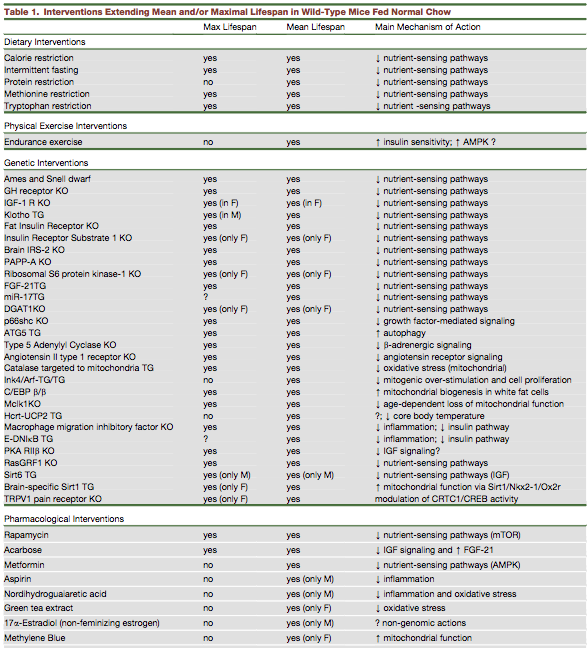
experiment on live humans. The table below illustrates the results from
dietary, exercise, genetic and drug interventions and their main
mechanism of action. Pay particular attention to the column ‘Main
Mechanism of Action’. This is the best guess as to how all these
different interventions may increase lifespan.
Did you notice something rather striking? Almost all of the interventions work through the same pathway — decreased nutrient sensing — which also includes decreased growth factor signalling and increased autophagy. As you may recall from our previous post on mTOR, the main 3 nutrient sensors of the human body, which is similar to most animals are
mTOR
AMPK
Insulin
Most of these interventions affect one or more of these pathways. With TOR, less is more.
Blocking mTOR improves protein handling, increases autophagy and
enhances stem cell function. That is, from all the animal research,
increased health span depends not on having more nutrients, it is having less. Increased longevity depends on decreasing
the nutrient sensors (lower mTOR and insulin, higher AMPK) at least
periodically. This is fascinating, because the most ancient dietary
intervention is fasting — a clear form of decreasing nutrient sensing
pathways. Humans have used fasting (or cleansing, detoxification,
purification or whatever you call it) as a method of increasing wellness
since antiquity. Benjamin Franklin, kind of a smart guy, said “The best
of all medicines is resting and fasting”
In
addition, there is a clear correlation between better mitochondrion
functioning and decreased nutrient sensors. Mitochondrion are the
powerplants of the cells, and it is obvious that cells need to have
power to work properly. Activation of SIRT1 and AMPK activates PGC-1a, a
key regulator of mitochondrial function, antioxidant defenses, and
fatty acid oxidation.
AMPK
is a highly conserved regulator of energy homeostasis and links
energetics to aging. AMPK is a sort of reverse fuel gauge of the cell.
ATP is the molecule that carries energy in a cell. When this level gets
low, AMPK goes up. AMPK induces mitochondrial biogenesis (creation of
new mitochondrion) as well as regulates mitochondrial metabolism and
dynamics. In the 2017 study, Weir et al show that AMPK can maintain
youthful mitochondrial network morphology even with aging. When they
exposed animals to Intermittent Fasting, there was a striking change in
mitochondrial networks. Both fission and fusion are required to maintain
health and lifespan.
Recent (2017 Weir et al)
work highlights the key role that dietary restriction may increase
lifespan by affecting mitochondrial networks. Mitochondrion are part of
networks that can fuse together (fusion) or break apart (fission) in
constant remodeling. A dysregulation of these mitochondrial dynamics and
abnormal morphology (shape) of these mitochondrion are hallmarks of
aging and thought to contribute to many degenerative diseases such as
Alzheimers and Parkinsons. With age, many studies report increased
swollem fragmented mitochondria. Mitophagy, a process of degrading
damaged mitochondrion and recycling, plays an important role in keeping
the dynamics normal.
If this holds true for humans, then dietary interventions are the key to longevity.
This has refocused attention to meal frequency, timing and intermittent
fasting. During our evolutionary history, most large animals and humans
ate only intermittently. Long periods of starvation were normal,
whether due to seasonal changes or due to episodic weather events. Many
animals developed forms of quiescence in response to the onset of food
shortages. If food was not available, then most of the cells in our body
stop growing. Importantly, the same genes that control quiescence also
control lifespan. In rodents, fasting for 24 hours every other day or
twice weekly extends lifespan up to 30%. Chronic caloric restriction may
also have similar benefits. Fasting may promote mitochondrial function,
trigger autophagy and DNA repair pathways.
But
what is more controversial is whether the benefits relate to caloric
restriction in general, or whether it relates to specific nutrients. Original studies from 1985
suggested that it was calories, rather than protein. However, a point
overlooked originally was that these animals were not food restricted.
Subsequent studies, (eg. Grandison et al, 2009,)Solon-Biet 2014, Nakagawa 2012
and others pointed specifically to protein restriction as the key to
longevity in these animal studies. Most believe this is due to dietary
protein’s key regulatory effect on mTOR and IGF1. In humans, unlike
rodents, severe calorie restriction does not reduce serum iGF-1
concentration unless protein intake is also reduced.
Is
it all protein or certain amino acids? The answer is not known. In
animal studies the specific amino acid that is critical differs between
species. In humans, branched chain amino acids seem to be a particularly
strong activatory of mTOR.
Decreased Nutrients Sensors
Compared
to other dietary interventions, intermittent fasting appears to be far
more powerful because alone has the ability to affect all 3 nutrient sensors simultaneously,
as well as stimulate autophagy and mitophagy. mTOR is sensitive to
dietary protein. Insulin is sensitive to proteins and carbohydrates. So
eating a pure fat diet (not realistic) may lower mTOR and insulin, but
will not be able to raise AMPK, since that senses the energy status of
the cells. If you are eat a very high fat diet (ketogenic) your body
will still be able to metabolize this to energy — generating ATP and
lowering AMPK. Only 2 of the 3 nutrient sensing pathways have been
alerted. Only complete restriction of nutrients will have this effect
(ie. fasting).
Theoretically,
eating less frequently may significantly improve health. Most
omnivorous mammals eat only intermittently, since we tend not to live on
a Petri dish where nutrients are constantly available. Carnivores like
lions and tigers often eat once a week or less. Ancestral humans tend to
eat intermittently depending on food availability. Being able to
function at a high level, both physically and intellectually, for
extended fasting periods was fundamentally important to survival. This
explains our well developed systems for food storage (glycogen in the
liver, and body fat), and also our highly conserved nutrient sensors to
slow cellular growth during a period of low nutrient availability.
Things
changed somewhat with the agricultural revolution approximately 10,000
years ago. From a hunter-gatherer society, agriculture allowed
populations of humans to stay in one area and resulted in more stable
food availability. However, there would still be seasonal variation and
possibly long weeks or months where food is less available. There would
also be shorter periods of time, days — weeks, where food was
restricted.
Most
humans ate between 2–3 times per day. Without light, it would be
difficult to eat a ‘midnight’ snack in the pitch blackness. So early
humans still followed a tradition of a long overnight fasting
period — hence the term ‘break-fast’.
Different
nutrient sensors are sensitive to different time durations. That is, it
would be useful for our body to know whether nutrients were restricted
in the short term (overnight) in the medium durations (days) or long
durations (weeks — months, seasons). You can see that our human body has
evolved exactly those same capabilities in our nutrient sensors.
Insulin (short term)
mTOR (days)
AMPK (weeks)
Insulin
spikes quickly after a meal, but falls just as quickly during an
overnight fast. It responds primarily to carbohydrates and proteins.
While protein does not raise blood glucose, it raises insulin quite a
bit. It also raises glucagon, so that blood glucose stays stable. mTOR
is mostly sensitive to protein and particularly branched chain amino
acids. It does not fall as quickly and takes somewhere from 18–30 hours
to activate. AMPK is the reverse fuel gauge of the cell (AMPK goes up as
cellular energy stores of ATP deplete) and only increases with
prolonged energy deprivation. All macronutrients can contribute to ATP
production, so AMPK is sensitive to all macronutrients.
These
nutrient sensors overlap somewhat in their sensitivities and functions
but each is also unique. In this manner, our cells are able to gain
exquisite information about the particular macronutrient availability of
the outside world. Crafted by millions of years of evolution, the
biochemical wizardry of our nutrient sensors makes a mockery of our
comparatively dull brain that can only say ‘Look like food to Grok. Grok
eat.’ But we don’t need to understand all the complicated biology to
gain the benefits. We can begin to regain some of our lost ancient
wisdom by following the ancient food tradition of taking a break from
eating once in a while. Give yourself a chance to digest the food you’ve
eaten. Intermittent fasting. Boom.