Recognize you have control of this, if nothing else — Michael Marcus Jan 10 By JESHOOTScom on Pixabay I rem...
Business
5/Cars/feat-tab
Search This Blog
Author Details
Templatesyard is a blogger resources site is a provider of high quality blogger template with premium looking layout and robust design. The main mission of templatesyard is to provide the best quality blogger templates.
Aging has always been considered an inevitable process. But the discovery that the aging process itself could be ‘hacked’
has led to the concept of ‘health span’ as opposed to merely
‘lifespan’. A long life is not necessarily marred by disability and
death and specific dietary interventions in particular may promote
healthy long life.
However,
much of this data results from animal data as it is difficult to
experiment on live humans. The table below illustrates the results from
dietary, exercise, genetic and drug interventions and their main
mechanism of action. Pay particular attention to the column ‘Main
Mechanism of Action’. This is the best guess as to how all these
different interventions may increase lifespan.
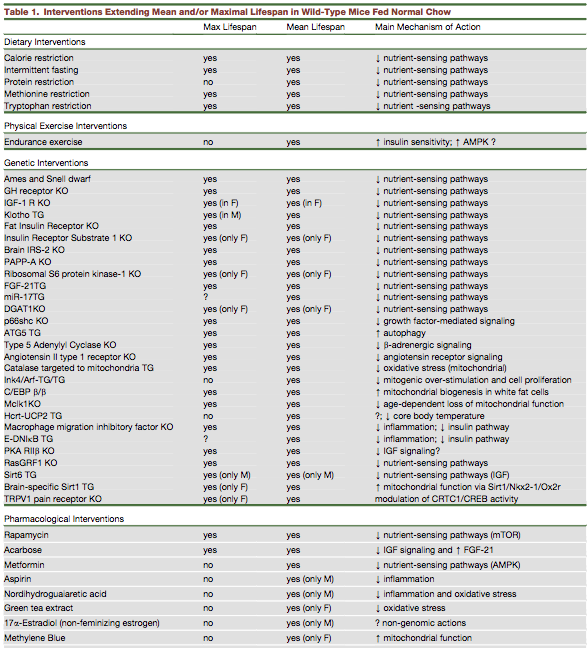
Did you notice something rather striking? Almost all of the interventions work through the same pathway — decreased nutrient sensing — which also includes decreased growth factor signalling and increased autophagy. As you may recall from our previous post on mTOR, the main 3 nutrient sensors of the human body, which is similar to most animals are
mTOR
AMPK
Insulin
Most of these interventions affect one or more of these pathways. With TOR, less is more.
Blocking mTOR improves protein handling, increases autophagy and
enhances stem cell function. That is, from all the animal research,
increased health span depends not on having more nutrients, it is having less. Increased longevity depends on decreasing
the nutrient sensors (lower mTOR and insulin, higher AMPK) at least
periodically. This is fascinating, because the most ancient dietary
intervention is fasting — a clear form of decreasing nutrient sensing
pathways. Humans have used fasting (or cleansing, detoxification,
purification or whatever you call it) as a method of increasing wellness
since antiquity. Benjamin Franklin, kind of a smart guy, said “The best
of all medicines is resting and fasting”
In
addition, there is a clear correlation between better mitochondrion
functioning and decreased nutrient sensors. Mitochondrion are the
powerplants of the cells, and it is obvious that cells need to have
power to work properly. Activation of SIRT1 and AMPK activates PGC-1a, a
key regulator of mitochondrial function, antioxidant defenses, and
fatty acid oxidation.
AMPK
is a highly conserved regulator of energy homeostasis and links
energetics to aging. AMPK is a sort of reverse fuel gauge of the cell.
ATP is the molecule that carries energy in a cell. When this level gets
low, AMPK goes up. AMPK induces mitochondrial biogenesis (creation of
new mitochondrion) as well as regulates mitochondrial metabolism and
dynamics. In the 2017 study, Weir et al show that AMPK can maintain
youthful mitochondrial network morphology even with aging. When they
exposed animals to Intermittent Fasting, there was a striking change in
mitochondrial networks. Both fission and fusion are required to maintain
health and lifespan.
Recent (2017 Weir et al)
work highlights the key role that dietary restriction may increase
lifespan by affecting mitochondrial networks. Mitochondrion are part of
networks that can fuse together (fusion) or break apart (fission) in
constant remodeling. A dysregulation of these mitochondrial dynamics and
abnormal morphology (shape) of these mitochondrion are hallmarks of
aging and thought to contribute to many degenerative diseases such as
Alzheimers and Parkinsons. With age, many studies report increased
swollem fragmented mitochondria. Mitophagy, a process of degrading
damaged mitochondrion and recycling, plays an important role in keeping
the dynamics normal.
If this holds true for humans, then dietary interventions are the key to longevity.
This has refocused attention to meal frequency, timing and intermittent
fasting. During our evolutionary history, most large animals and humans
ate only intermittently. Long periods of starvation were normal,
whether due to seasonal changes or due to episodic weather events. Many
animals developed forms of quiescence in response to the onset of food
shortages. If food was not available, then most of the cells in our body
stop growing. Importantly, the same genes that control quiescence also
control lifespan. In rodents, fasting for 24 hours every other day or
twice weekly extends lifespan up to 30%. Chronic caloric restriction may
also have similar benefits. Fasting may promote mitochondrial function,
trigger autophagy and DNA repair pathways.
But
what is more controversial is whether the benefits relate to caloric
restriction in general, or whether it relates to specific nutrients. Original studies from 1985
suggested that it was calories, rather than protein. However, a point
overlooked originally was that these animals were not food restricted.
Subsequent studies, (eg. Grandison et al, 2009,)Solon-Biet 2014, Nakagawa 2012
and others pointed specifically to protein restriction as the key to
longevity in these animal studies. Most believe this is due to dietary
protein’s key regulatory effect on mTOR and IGF1. In humans, unlike
rodents, severe calorie restriction does not reduce serum iGF-1
concentration unless protein intake is also reduced.
Is
it all protein or certain amino acids? The answer is not known. In
animal studies the specific amino acid that is critical differs between
species. In humans, branched chain amino acids seem to be a particularly
strong activatory of mTOR.
Decreased Nutrients Sensors
Compared
to other dietary interventions, intermittent fasting appears to be far
more powerful because alone has the ability to affect all 3 nutrient sensors simultaneously,
as well as stimulate autophagy and mitophagy. mTOR is sensitive to
dietary protein. Insulin is sensitive to proteins and carbohydrates. So
eating a pure fat diet (not realistic) may lower mTOR and insulin, but
will not be able to raise AMPK, since that senses the energy status of
the cells. If you are eat a very high fat diet (ketogenic) your body
will still be able to metabolize this to energy — generating ATP and
lowering AMPK. Only 2 of the 3 nutrient sensing pathways have been
alerted. Only complete restriction of nutrients will have this effect
(ie. fasting).
Theoretically,
eating less frequently may significantly improve health. Most
omnivorous mammals eat only intermittently, since we tend not to live on
a Petri dish where nutrients are constantly available. Carnivores like
lions and tigers often eat once a week or less. Ancestral humans tend to
eat intermittently depending on food availability. Being able to
function at a high level, both physically and intellectually, for
extended fasting periods was fundamentally important to survival. This
explains our well developed systems for food storage (glycogen in the
liver, and body fat), and also our highly conserved nutrient sensors to
slow cellular growth during a period of low nutrient availability.
Things
changed somewhat with the agricultural revolution approximately 10,000
years ago. From a hunter-gatherer society, agriculture allowed
populations of humans to stay in one area and resulted in more stable
food availability. However, there would still be seasonal variation and
possibly long weeks or months where food is less available. There would
also be shorter periods of time, days — weeks, where food was
restricted.
Most
humans ate between 2–3 times per day. Without light, it would be
difficult to eat a ‘midnight’ snack in the pitch blackness. So early
humans still followed a tradition of a long overnight fasting
period — hence the term ‘break-fast’.
Different
nutrient sensors are sensitive to different time durations. That is, it
would be useful for our body to know whether nutrients were restricted
in the short term (overnight) in the medium durations (days) or long
durations (weeks — months, seasons). You can see that our human body has
evolved exactly those same capabilities in our nutrient sensors.
Insulin (short term)
mTOR (days)
AMPK (weeks)
Insulin
spikes quickly after a meal, but falls just as quickly during an
overnight fast. It responds primarily to carbohydrates and proteins.
While protein does not raise blood glucose, it raises insulin quite a
bit. It also raises glucagon, so that blood glucose stays stable. mTOR
is mostly sensitive to protein and particularly branched chain amino
acids. It does not fall as quickly and takes somewhere from 18–30 hours
to activate. AMPK is the reverse fuel gauge of the cell (AMPK goes up as
cellular energy stores of ATP deplete) and only increases with
prolonged energy deprivation. All macronutrients can contribute to ATP
production, so AMPK is sensitive to all macronutrients.
These
nutrient sensors overlap somewhat in their sensitivities and functions
but each is also unique. In this manner, our cells are able to gain
exquisite information about the particular macronutrient availability of
the outside world. Crafted by millions of years of evolution, the
biochemical wizardry of our nutrient sensors makes a mockery of our
comparatively dull brain that can only say ‘Look like food to Grok. Grok
eat.’ But we don’t need to understand all the complicated biology to
gain the benefits. We can begin to regain some of our lost ancient
wisdom by following the ancient food tradition of taking a break from
eating once in a while. Give yourself a chance to digest the food you’ve
eaten. Intermittent fasting. Boom.
While addressing students of final year engineering, I asked them a question. My question was:
“You
are driving a minibus. At first stop, 20 passengers get on the minibus.
At next stop, 8 people get off the minibus and 10 people get on the
minibus. What is the age of the driver?”
Some
of the answers were — about 50, about 40, do not know as the age is not
given in the question, like this, I received many wrong answers and
then I repeated the question again and after that I received the right
answer and that was their respective age.
One of my teachers asked once the following question:
If a black man marries a white lady and produces a baby, what will be the color of his teeth?
Everybody answered, of course, baby will have white teeth and teacher answered all of you are wrong as baby will not have any teeth at the time of birth.
Once one of the trainers asked a class following question:
Munna
worked at a fish shop. His height was 5’6”, his waist was 36”. He
worked 10 hours a day and earned 100 Rs per day. What did he weigh?
Everybody
started calculating Munna’s weight by doing arithmetic and establishing
relation between given digits. Then one person got up and said, “He weighed fish”. Ah! All students sighed. The question was not what his weight was; it was what he weighed!
While teaching the students of B.Tech 3rd year, I asked the question:-
A
farmer has five stacks of wheat in one field and 11 stacks of wheat in
another field. How many wheat stacks would he have if he combined them
all into one field?
All students answered, “It will be definitely 16”. I answered, “All of you are wrong. The correct answer is one stack as these had been combined”.
Above questions and answers bring out the importance of active listening
which is a structured way of listening and responding to others. It
focuses attention on the speaker. Suspending your likes & dislikes
are important to focus on the speaker. Active listening involves the
following:
Observe — non-verbal behavior
Focus — Do not do anything else
Acknowledge — Acknowledge the message
Acronym of LISTEN is given as under:-
L — Look interested
I — Involve totally
S — Stay focused
T — Test your understanding
E — Evaluate the message
N — Neutralize your feelings
Every good conversation starts with good listening. It is pertinent to quote Stephen R Covey,
“Most people do not listen
With intent to understand,
They listen with intent to reply”
Hearing vs. listening:-
Listening and hearing are not the same. Listening is a conscious, active process with the mind. The Hearing is with senses.
Listening = Hearing + Focusing on message + Comprehending and Interpreting + Analyzing & Evaluating
We are given two ears but only one mouth because listening is twice as difficult as talking.
Active listening was given utmost importance in ancient India. Thew Vedas used to be called as “Shruti”.
Vedas
were never printed as disciples learn by listening and chanting the
sutras of the same. Intense active listening was practiced by all in day
to day life in ancient India.
In
Mahabharat, there is an interesting story of Abhimanyu. While he was in
his mother’s womb, Arjuna explained the process of entering in the
“Chakarvuh” (Labyrinth) to Subhadra (Abhimanyu’s mother). The listening
was so intense and active that Abhimanyu while in womb had also learnt
the same but unfortunately when he was explaining the process of
breaking the labyrinth (Chakarvyuh), Subhadra was not awake and that had
resulted very costly to Pandavas as Abhimanyu easily entered the
Chakarvyuh formed by Kauravas but as he was not knowing how to break it
and move out of it, he was killed. The story brings out the importance
of active listening.
There
is another story from Mahabharat itself which also brings out the
importance of active listening. Krishna wanted that Dronacharya who was
fighting a ferocious battle should be killed and therefore he requested
Yudhisthir to announce “Ashwasthama hato naro va kunjro” i.e.,
Ashwasthama had been killed whether human being or elephant.
Dronacharya heard the news of the death of his dearest son and stopped
fighting and that is the time Dhristdhumn killed Dronacharya. This was
the turning point of battle of Mahabharat.
In
Vietnam War, the American army was fighting a fierce battle for
capturing a post. It was a battle where they fought tooth and nail to
capture the dominating piece of ground. They were fighting last man last
round battle. They requested for reinforcement on Radio Telephony — “Send reinforcement on an Op-immediate basis”. But the person who received the message interpreted it wrongly as “Send five dollar six cents on an op-immediate basis” and reinforcement was not dispatched and American lost the operation and posts too.
Above stories gives the lesson, “Success of an operation depends on good listening capability”.
Somebody has rightly said;
“Speak in such a way
That other love to listen to you
Listen in such a way
That other love to speak to you”
10 steps of listening:
· Focus on being interested
· Start by asking questions
· Look for commonalities
· Tune in with all your attention
· Communicate you are listening with a nod
· Paraphrase what speaker says
· Validate the speaker’s emotions
· Maintain eye contact
· Let go of your own agenda
· Turn off the TV
Six Distinct Components of Listening:-
Hearing — Process of receiving sound or other stimuli
Attending — Focusing attention on external stimuli
Interpreting — The process of decoding the symbols or behavior attended to
Evaluating — The process of deciding the value of the info to receiver
Remembering — The process of placing the appropriate information into the short term or long term storage
Responding — The process of giving feedback to the source and/or another receiver
There is a difference between truly listening and waiting for your turn to talk. It is pertinent to quote Dean Jackson, “Listening is an art that requires attention over talents, spirit over ego, others over self”.
‘To
do’ lists can be deadening and demotivating. We all have things we have
to do and some of those things are routine and don’t set the world on
fire. But all too often we allow those things to take far too much time
and energy. So what can we do to transform ‘to do’ lists so we don’t get
stuck spending most of our time on the small, time-consuming stuff?
1. Think about your use of time
A
great journalling exercise I did recently was to make a huge list of
all the ways I spend my time. Then I divided the list into three groups:
essential tasks that use my skills and are enjoyable (B)
the core goals that I’m most passionate about (A)
For
me, the category C activities are things like emails and routine admin.
This includes organising book launches, doing business accounts, buying
train tickets etc.
I
estimated I was spending around 40% of my time on category C
activities. With another 40% on work, that left 20% of my time for
family, relaxation, writing … How can core goals and values be so
squeezed and thrive? Of course, they can’t. So the questions then
became, what could I eliminate? What could I automate or streamline? And
what could I delegate?
One
of the things I noticed was that I was repeating the same information
to lots of people in serial emails. I set about writing a series of
information sheets for authors. These covered what to expect during the
publishing process, information for launches etc.
They are all online and available for authors to download on a resource page.
We
added an invaluable office manager to our team at Cinnamon Press. We
employed a virtual assistant to do a routine task uploading competition
details. And I started time blocking so that emails are all answered
once a day. I batched other admin too, so I’m not wasting time going
back and forth between different types of activity.
My
category B is either work-related (editing and mentoring, for example).
Category B activities are harder to limit in some ways as they are more
essential and more enjoyable.
I
love my work, but I don’t want to be co-terminus with it. Having
supportive authors who help with these tasks makes a huge difference. I
gain a lot from editing the work of others, but I’m also grateful to
have trusted editors to delegate part of the process to.
I
get huge satisfaction from teaching and mentoring, but sharing the load
is also rewarding. I have no desire to cut the category B activities
from my timetable, but a team can achieve much more than an individual.
Once again, time-blocking enables me edit and mentor when I’m most
focussed.
And
I’m learning to say no. Loving my work does not mean I have to take on
more and more until it overwhelms me. Greg McKeown asks:
Have
you ever said yes when you meant no, simply to avoid conflict or
friction? … the very thought of saying no brings us physical discomfort.
We feel guilty. We don’t want to let someone down. … But these emotions
muddle our clarity. They distract us from the reality of the fact that
either we can say no and regret it for a few minutes or say yes and
regret it for days, weeks, months or even years.
We
all have the same amount of time each day, but how we use it makes the
difference. We can spend a bigger percentage of our time on the
important things if:
we eliminate non essential activities (no one needs to be available to a phone or messages every minute of the day)
streamline and/or delegate some of the routine activities
use blocks of time for different types of activity so you focus on the important things first and one task at a time
build a team to share the more essential and rewarding work
don’t imagine we can do it all and learn to say no
These
strategies have helped me shift from spending 40% of my time on the
routine ‘to do’ list to around 20% and I aim to get that down further
this year.
This
frees much more time for editing and mentoring, but also for my
category A activities. These include writing, travel, learning, family
time and relaxation.
2. Think about why certain activities are important to you
We
all have different goals, different category A activities that are more
‘quest’ than ‘to do’. It’s sad that the pace of life often relegates
these to the ‘add-ons’ that we hardly have any time for. But the more
passionate we are about these things, the less we will find excuses for
not doing them.
As I said in recent post:
Your goals should be your passion and, if they are, then it’s no longer a matter of forcing yourself on by dogged willpower.
It helps to know why we we value certain activities over others. This is what Benjamin Hardy advises:
Think about what it is you want, and ask yourself this simple question:
What about ___________ is important to me?
If your goal is to work from home, then ask yourself the question:
What about “working from home” is important to me?
Your answer might be something like, “to have a more flexible schedule.”
You then put THAT into the previous question.
It’s good to go at least 7-questions deep into this exercise.
Don’t overthink it. Let the answers come and move on and you’ll find your thinking is much clearer than you imagined.
For me:
Writing
is the most meaningful and transformative activity I undertake. It’s
fundamental to how I reflecting on life and connect with others.
Becoming a different story is my life’s work.
Travel puts me in unfamiliar places and situations. This in turn stimulates creativity, writing, thought and deeper work.
Family (including
an extended family of close friends) makes my world make sense. These
are the people who teach me to live from abundance rather than scarcity.
These are the people who confirm for my that generosity is the key
virtue.
Keeping fit
facilitates other goals. I’m less than 5 feet tall and have a slow
metabolism so to maintain my energy I need to be fit, of moderate
weight, flexible and well-nourished. It’s about valuing my most basic
resource: myself, so that I can give.
Personal development
is also foundational to my goals. When my daily rituals, habits,
learning, attention to values and relaxation are in harmony, the rest
follows.
If
we are clear about what matters most and why these things matter, we
are more likely to live life as an exciting quest rather than a tedious
to do list.
3. Think about building your life on values rather than ‘oughts’
When
we face a long list of things we have to do, resistance sets in. Life
becomes drudgery sustained by a diminishing supply of willpower. Even if
we manage to achieve everything on the list, we’re not likely to take
much pleasure of pride from it.
When
we manage our time by eliminating, streamlining, delegating, sharing,
time blocking and saying no, we find we have ‘more time’.
When we know what we are passionate about and why, we release energy that is much more effective than willpower.
And
when we act from our deepest values rather than ‘oughts’ imposed on us
from outside, then this energy increases beyond our imagining.
Living
from values gives us this bigger vision. Living from values comes from
intrinsic motivation rather than from something imposed on us.
As
with goals, we will each have different value sets. But something I’ve
found useful is to use a system attributed to Benjamin Franklin. He
decided on thirteen key virtues and each week of the year would focus on
one of them so that over the year he’d concentrate on each value four
times.
I’ve
written my values into a tiny book (less than two inches square) that I
can carry with me. The first two for me are generosity and abundance.
It was fascinating to spend time journalling to reach my list of
thirteen. And starting each day thinking about how I can show that value
in my life is much more motivating than starting the day thinking about
a to do list. It doesn’t mean that there are no routine jobs to do, but
it keep them in perspective.
4. Think about taking time out
When
you know how you want to live and why; when you know the values your
life rests on, life becomes a quest rather than a mundane list of
demands on your time. This is exhilarating and motivating and it demands
that we redirect our energy to what matters to us. How do we do that?
i. We need to take space to think
I’m currently rereading Virginia Woolf’s A Room of One’s Own—
it’s an important text and the idea that we need a dedicated space in
which to write is essential. Over the last week I’ve set up a dedicated
writing room in which to work. It has 23 years of past journals, all the
books I’ve bought but still need to read, and important texts that have
informed my current thinking. It’s a place I can go to think or write.
If you can’t take a whole room, find a desk, a corner, any space that
you can call your own and where you can think and write.
ii. We need to create a mindset that helps us to focus
Whatever
your daily commitments, journalling morning and evening can make all
the difference. Five minutes of writing about how you envisage your
future. Five minutes of reflecting on how you have used your time, lived
your ‘why’ or values, makes an enormous impact on how you see the world
and interact with it. Take time every day to affirm and reflect and
watch your world change.
Environment is crucial to our perspective and when we take control of it, things happen.,
iii. We need time in other environments
This
is why travel is so important to me. It places me in unfamiliar places
and stimulates creativity, writing, thought and deeper work. If you
can’t leave the country, go for a long walk; swap houses with a friend
for a week. Do something that shifts your perspective and in the
unfamiliar situation you will find yourself having new thoughts.
In short
If
you want your life to be a quest rather than a mere ‘to do’ list; and
want to make a difference, there are a few simple strategies:
think about your use of time — you have as much time as anyone else and it’s up to you how you use it.
think about why certain activities are important to you — dig deep until you find what matters to you.
think about your values and build your life around intrinsic motivation, not what someone says you ‘ought’ to do.
think
about taking time out, whether in daily journalling or unfamiliar
environments that challenge you to adopt new perspectives.
When you begin to make these changes you’ll find life is no longer a mundane to do list, but a quest of your own making. Enjoy!
Call to action
If you’d like to keep thinking differently about writing, creativity and life, please sign up to follow my blog and for the Becoming a Different Story Newsletter.
There are so many great lessons we all learn from life. I personally made a list with
some of the most important ones so far, lessons that had a great impact
in my life. These lessons have helped me become the person I am today. I
know there are more to come and I am ready, opened and receptive to
them all.
Enjoy.. 😃
1. We get treated in life the way we teach others to treat us.
People will treat you the way you allow them to treat you. Respect and love yourself and others will do the same.
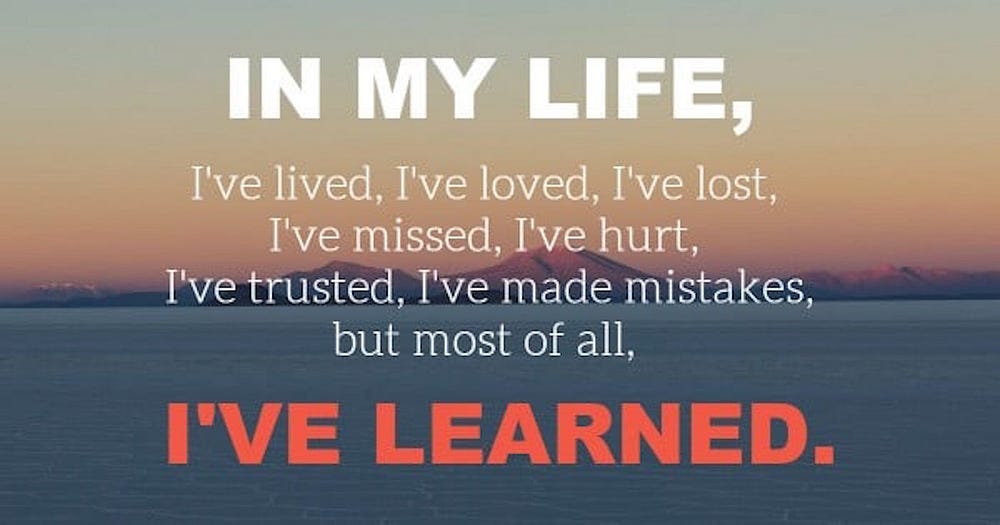
2. There are no mistakes, only lessons we need to master.
If
you learn from everything that happens to you, you will discover that
there is no such thing as mistakes, only lessons to be learned. And if
you don’t, chances are that your life will look at 40 the same way it did when you were 20. And at 60 the way it looked when you were 40…
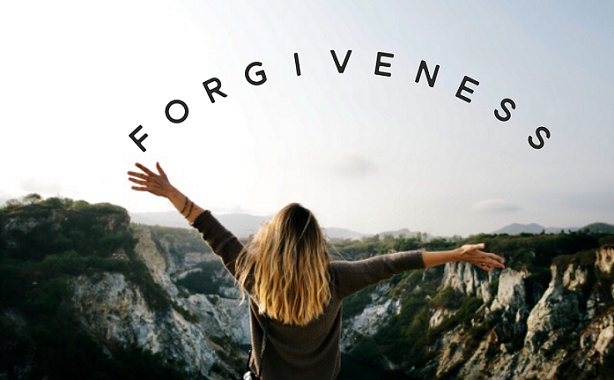
3. Forgiveness is a gift you give to yourself.
“Forgiveness
is a gift you give to yourself, to be at peace, to be happy and to be
able to sleep at night. You don’t forgive because you are weak but
because you are strong enough to realize that only by giving up on
resentment you will be happy. If you hold on to poisonous thoughts like
hate, anger, and resentment toward someone, you will end up poisoning
yourself more than you poison the other person, and you will be very
unhappy.”
4. What you resist, persists.
What
you focus on expands and what you resist, not only does it persist, but
it also grows in size. And if you want to shrink something and make it
disappear from your life, you need to stop feeding it by fighting
against it.
5. Life is all about the journey and less about the destination.
A
lot of times we get so focused on our big dreams and goals, that we
forget to enjoy this beautiful journey called life. Always remember that
life is all about this moment. Life is all about the journey and less
about the destination.
So
take a deep cleansing breath and allow yourself to be present in
everything you do. Allow yourself to enjoy each second of your life — to
observe the world around you, the people present in your life and the
beauty that is present within and all around you…
6. People always deserve a second chance.
The
moment you forgive somebody, chances are that you will also give them a
second chance, a chance to be near you, without trying to remind them
of what they did to you, treating them not as they are, or as they once
were, but rather as you want them to be. By doing this, you are also
allowing them to grow and to become better and better every day. Your
ego might tell you to “let these people go”
but what does your heart tell you? We are all humans, we all make
mistakes, and we all deserve a second chance, and why not, maybe a
third, fourth, a sixth and a seventh…
7. If you don’t believe in yourself, nobody will.
Don’t
expect others to see gold where you can only see dust. If you don’t
believe in yourself, if you don’t believe that you are capable, a worthy
human being, chances are that nobody will. You will act on that belief
and people will treat you based on what you think about yourself, based
on how you treat yourself and based on how you act and behave in the
world.
8. Our attitude towards life will determine life’s attitude toward us…
If
you think life is unfair, and that bad thing always happen to you,
chances are that life will treat you unfairly, and you will always have
many reasons to complain about. Because just like there is a law of
gravity, there is also a law of attraction, and based on this law, you
attract in your life, that, which you think about all day long, you
attract that, which you are, because you see, like attracts like.
When life puts you in tough situations, Don’t say Why me ? Just say Try me..
9. If you love yourself, chances are that others will also love you.
It’s
all about self-love, it all starts with self-love. If you don’t have
the love for yourself, how can you expect to get it from somebody else?
Love yourself and others will love you also.
10. The world has plenty of information but not “enough inspirations”.
If
you think about it, now with the technological revolution, we get
access to so much information. Let’s take for example a tiny chip. How
much information can you store on it? Isn’t it incredible? We have more
information than ever… but when it comes to inspiration (in- spirit) I
would say that we have a deficit. We focus too much on the outside and
not enough on the inside. We can’t seem to understand that it all starts
from within. If the inside is a mess, the outside will also be a mess.
Listen to your heart, listen to your intuition and know that:
“The only real valuable thing is intuition.” — Albert Einstein
11. The world won’t change if you don’t change.
You
hear people all the time complaining about how crazy the world is and
how they want it to change, but if you tell them to make the first step…
“What? Me? Do you think there is
something wrong with me? I am perfect, there is nothing I need to
change. These people are crazy and they need to change, not me! They are
the ones who are destroying us all, not me… Those ***** !”
You
see, the outside world is a reflection of who we all are on the inside,
and all this madness that is taking place around us, is a result of our
collective consciousness, and unfortunately it’s a very polluted
consciousness. It’s not just them, it’s us, we all. If we want the world
to change, we have to start with ourselves and trust me, there is
something wrong with many of us. With you, with me, with he and she…
12. Loneliness is different from solitude.
There
is a difference between being lonely and being in solitude. When you
are in solitude, you take advantage of it to get in touch with your inner self,
to meditate and to quiet your mind, and that constant need to be around
others in order for you to no longer feel lonely, will disappear.
Wayne Dyer talks about this in such a wonderful way, saying that “we can never be lonely if we like the person we’re alone with”.
If you like yourself, if you have no problem with your own person, if
you have accepted yourself completely, you will be content with having
some quiet time, away from all the noise. You will feel happy when alone
and also when surrounded by other people.
13. The more we express our gratitude, the more things we will have to be grateful for.
The
law of attraction works in all that is good and also in all that is
bad, and it’s only up to us whether we choose to focus our attention on
the negative or on the positive. Focus your attention on the many great
things you have and you are grateful for, and you will see that the more
you do that, the more reasons you will have to express your gratitude
for.
14. Patience is a virtue.
In order for things to happen, in order for anything to happen, we need to be patient. We first plant the seed of Greatness,Goodness and then we wait for it to grow, we allow it to grow; we take care & nurture it and we protect it. Great things take time and we need to learn how to give time.
15. Courage is not the absence of fear.
Fear, that crazy fear who won’t allow us to move forward,
who won’t allow us to grow and transform our lives and of those around
us will always be present in our lives. Even though many of us know that
fear does not exist and that fear is only in our mind, we choose to be
paralyzed by it and we choose to allow it to control our lives, our
dreams, our goals and the level of our happiness. Fear will be present
whenever you want to stretch, whenever you want to get out of your comfort zone
and whenever you want to do more, be more, have more. What we need to
do is look beyond it, and always be aware of the fact that most of the
things we fear never happen, because FEAR is nothing more than False Expectation Appearing Real.
One Last thing..
What is one lesson you have learned from life that completely changed and transformed you?
If
you found this helpful, please help in spreading this message by
recommending this post. Also, feel free to share your own ideas about
this in the responses below. Thanks for reading 😀…
The
amount of bad writing advice out there is astounding. People who have
never published anything selling courses on how to make a career as a
writer. Terribly written Medium articles telling you how to improve your
prose. Marketing books from writers who not only haven’t sold many
books — but their own marketing books don’t sell. All this bad advice
adds up and makes a harder thing — an already difficult industry to
navigate — even harder.
Over the last year, I’ve been lucky enough to interview some of the best writers on the planet for WritingRoutines.com. It was the opportunity of a lifetime to be able to ask Pulitzer Prize winners, #1 New York Times
best-selling authors, brilliant novelists, talented journalists and
expert communicators about how they practice their craft. I got valuable
lessons from each one. I’ve collected a few of the best below,
alongside some of the insights — or hacks as we call them today to get
more people to click — from writers I wish were still alive to interview
or ones I wish to interview someday if the opportunity presents itself.
I hope you learn as much from them as I did. Enjoy!
***
Devote Yourself to Someone Greater First
“If
I am asked today to advise a young writer who has not yet made up his
mind what way to go, I would try to persuade him to devote himself first
to the work of someone greater, interpreting or translating him. If you
are a beginner there is more security in such self-sacrifice than in
your own creativity and nothing you ever do with all your heart is done
in vain.”
— Stefan Zweig, author of The World of Yesterday and in the 1920’s and 1930’s was one of the most popular authors in the world
Wake Up Early And Read, Read, Read
“I
wake up around 5am. I have 2–3 cups of coffee. I read and read and read
for two hours. I read high quality literary fiction to be inspired,
high quality non-fiction about a topic I am fascinated by in order to
learn, I read inspirational or spiritual writing to feel that special
something inside, and often I will spend some time studying a game. Then
I might read the literary fiction some more. At some point, I get the
urge or the itch to put the books away. I go to my computer and start to
write.”
“It
was a time everyone was pressing wonderful houses on us. ‘I have a
perfectly marvellous house for you to write in,’ they’d say. Of course
no one needs marvellous houses to write in. I still knew that much. All
you needed was one room. But somehow the next house always beckoned.”
— Budd Schulberg, author of What Makes Sammy Run? and the Academy Award-winning screenplay for On the Waterfront
Edit Ten Times
“I
repeatedly edit it many times, at least ten. I just keep on doing it,
until I can’t think of further improvements. I can’t say that is a
process in any formal sense, simply a recognition that the “process” to
date hasn’t worked very well and so it must continue. I don’t pretend
this is efficient.”
— Tyler Cowen, economics professor, author of Average Is Over and contributor to the New York Times, Wall Street Journal, Newsweek and many other publications
Nobody Gets Talker’s Block
“No
one ever gets talker’s block. No one wakes up in the morning, discovers
he has nothing to say and sits quietly, for days or weeks, until the
muse hits, until the moment is right, until all the craziness in his
life has died down.”
— Seth Godin, New York Times bestselling author of Purple Cow and more than 20 other books
Do the Three Passes of Editing
“[My
editing] rests on three passes. The first pass is when you write the
best chapter you can. The second pass comes later once the whole book
(or whole part of the book containing the chapter) is done. During this
pass, I come back to the chapter on my computer and cut and tighten. The
final pass is when I read through a printed version of the chapter on
paper. Reading on paper is necessary if you’re going to root out odd
constructions or minor errors.”
“The
way out of this mess is through. A friend of mine who used to do
long-distance running gave me some advice on dealing with pain as a
writer. “What do you do about the cramps?” I asked. I was noticing they
hit my in the gut usually at the three or four mile mark. I thought he’d
have some great advice on how to avoid them altogether. In fact, I
assumed this was the case. His answer surprised me, though. ‘Cramps?
What do I do? I keep running, and eventually they go away. I run through
the cramps.’ What do I do when I feel blocked? I write through the
block.”
“I’m
an “absolute quiet” kind of person. If I’m writing at home, and there’s
any noise at all, such as my wonderful hubby puttering around and
coincidentally clearing his throat, I wear my Peltor Sport Ultimate 10 Hearing Protector Earmuffs.
I’m so used to them that when I need to concentrate, I put them on even
when there isn’t any noise. Earmuffs are like a signal to my
brain — Okay, focus! On planes, I often wear noise canceling
headphones.”
“It
really depends on the genre of work I’m doing–I always try to keep
models in mind, though the model will change depending on what I’m
working on. For the book on Cato the Younger, Jimmy Soni and I were constantly referring to Tom Holland’s book on the Roman Republic, Rubicon; for our book on Claude Shannon, to James Gleick’s The Information and Sylvia Nasar’s A Beautiful Mind.For my academic work, people like Danielle Allen are great models.”
“Don’t
lament so much about how your career is going to turn out. You don’t
have a career. You have a life. Do the work. Keep the faith. Be true
blue. You are a writer because you write. Keep writing and quit your
bitching. Your book has a birthday. You don’t know what it is yet.”
“Writer’s
block is miserable and part of it can be just being in a really bad
place. Sometimes if you’re just in a bad mental place, it doesn’t matter
what work you put in. You have to fix bigger things than your writing.”
— Hari Kondabolu, the comic who the New York Times called “one of the most necessary political comedians working today.”
Get a Giant Sketchpad
“Notebooks
have always been big for me, both in the early stages of a new project
and as a way to get myself unstuck if I’m struggling. But I have giant,
chicken-scratch handwriting, and would always end up jotting down
thoughts over half a dozen pages and then never really looking at them
again. I have probably fifty illegible notebooks sitting in desk
drawers, and I would easily have filled fifty more had I not been
introduced to the most elegant solution by a friend, the author Ashley
Cardiff: A sketchpad. A 9-by-12-inch artist’s sketchpad. This has been
my great revelation. It’s unlined so I can read my bad handwriting and
large enough that I can group several ideas together on the same page.
Plus, it gives me an excuse to buy fancy mechanical pencils.”
— Liana Maeby, author of South on Highland, which actor/writer BJ Novak called “the kind of book kids will steal from each other.”
It’s All Material
“I’m
never not working on material. Every second of my existence, I am
thinking, ‘Can I do something with that?’” [By the way, this advice echoes a phrase I’ve learned from author Robert Greene,
“It’s all material.” Meaning everything bad that happens, everything
frustrating or delayed or disappointing — all of it can be fuel for a
book. It can teach you something that helps you improve your business,
it can become a story you pass along to a friend.]
— Jerry Seinfeld, creator of Seinfeld and named by Comedy Central the “12th Greatest Stand-up Comedian of All Time.”
Understand How the Pieces Fit Together
“To
write a clean and fluent piece of any kind, you have to understand how
its various parts fit together — how a change here will affect something
over there. With a short piece, you never lose sight of the whole
because you can read and reread it many times as you work. That’s what I
do. I make a change and then I read the whole piece to see how it
works. But I can’t do that with a book, so I have to find other ways to
stay oriented. I reread or skim sections of the book that I know relate
to the part I’m working on, I keep notes about the larger structure, and
I use Word’s phrase-search function to move around and check up on
things. I also make a huge effort to commit as much of the book as I can
to memory. It’s exhausting and it seems psychologically damaging in
some way, but it helps me to understand when jokes need to be repeated,
how much space needs to intervene between similar kinds of scenes, how
ideas should be patterned, etc.”
— Aaron Thier, author of Mr. Eternity and recipient of a literature fellowship from the National Endowment for the Arts
Run to Keep Yourself Sane
“The
twin activities of running and writing keep the writer reasonably sane
and with the hope, however illusory and temporary, of control.” [This is
not unlike many other writers — including Murakami and Malcolm
Gladwell — who use running as a coping mechanism.]
— Joyce Carol Oates, author of over 40 novels, including Them, winner of the National Book Award
Before You Write, Crystallize Your Thinking
“If
I’m just starting, I never consider the page blank. I’ve been writing
in my head long before I sit down at the keyboard. In fact, I sometimes
start inadvertently, by describing to someone what I’m doing.
Conversation often crystallizes my own thinking far more effectively
than solitary reflection. When I put the first words down, I know
they’re likely to change, which I find liberating — no need to get it
perfect the first time. But I want the first sentence to set a tone or
indicate a theme for that chapter, so I have to start with a clear sense
of the meaning of the events that follow, and how I want the reader to
feel.”
“Don’t
start writing the play at once, but get a little notebook and put down
everything you think about your play in the notebook, just as the ideas
come to you without rhyme or reason especially. Let the play accumulate,
as I call it; let it percolate and stew in your mind; and write down
any ideas, bits of dialogue, descriptions, words — anything you think
you might be able to use. Many of these things will come to you
unconsciously while you are walking home from school, bathing, mowing
the lawn; be sure to get them all into your notebook.”
— E.P. Conkle, professor emeritus of drama whose plays have been produced on Broadway
Take the Necessary Medicine
“I
tend to edit heavily and repeatedly as I go along, so I don’t make the
distinction, at least by myself. For the books that I’ve written for a
larger public, however, I’ve had the help of an immensely gifted editor
(Alane Mason, at Norton), so there I do separate out the tasks: in
effect my own writing/editing; and then a further editing after
receiving her suggestions. I tend to hate the latter experience, though I
recognize that it is almost invariably good — a bit like swallowing
disagreeable but essential medicine.”
“When
I have writer’s block it is because I have not done enough research or I
have not thought hard enough about the subject about which I’m writing.
That’s a signal for me to go back to the archives or to go back into my
thoughts and think through what it is I am supposed to be doing.”
“What
am I trying to say? What words will express it? What image or idiom
will make it clearer? Is this image fresh enough to have an effect?”
Then finish with these final two questions: ‘Could I put it more
shortly? Have I said anything that is avoidably ugly?’”
“Writers
are usually encouraged to write a “vomit draft” and just get something
out, however terrible it is, in order to overcome The Fear, get some
momentum, and move to more of an editing mindset, where’s it’s less
scary to make progress. I don’t do that. I think that’s just a trick to
try and lower the stakes so you can overcome procrastination and The
Fear. And while it’s good for that, I think it’s bad in the long haul
because you’re producing a lot of junk and that’s going to be hard to
fully clean up. I treat writing a lot more like architecture. You
wouldn’t work without a blueprint, construct a crappy building, then
knock it down and build a better one. That would be ridiculous. You’d
put together a really tight blueprint, then construct the building once,
the right way, and if it needs tweaks, they’re relatively small. As the
old saying goes: ‘Measure twice, cut once.’”
“Never
stop when you are stuck. You may not be able to solve the problem, but
turn aside and write something else. Do not stop altogether.”
— Jeanette Winterson, a two-time winner of the Lambda Literary Award and author best known forOranges Are Not the Only Fruit, which was adapted into a BBC drama
You Don’t Need to be Kissed by a Muse
When
asked if writing comes easy: “Haha, no, I’ve not been kissed by a muse.
For me, writing is a craft that needs constant honing.”
“I’ve
got a theory that most writers are either frustrated musicians or
painters — and which of them you are depends on whether you write for
the ear or the eye. As a former musician and former speechwriter, I
definitely write for the ear. I listen to music all the time for
inspiration and energy. I tend to make playlists as the sound track for
writing different books. They serve as snapshots in time. So, I’ve got
one for Wingnuts — lots of The National, Drive-By-Truckers, Radiohead
and Randy Newman — and one for Washington’s Farewell that’s more
classical, jazz, the Americana series by Chris Thile, Yo-Yo Ma and Edgar
Meyer and the soundtrack to Hamilton.”
“I
try to imagine comments, questions, and criticisms that the book will
generate. Then I try to rehearse the reply or answer. My friends are
great critics of my writing and I always make sure they have read the
drafts and galleys and been brutally frank with me about their
reactions. They know I can take it.”
“I
remember Salman Rushdie telling me how he gives it the first energy of
the day. As soon as he gets up, he goes to his office and starts
writing. He’s still in his pajamas. He believes there is a “little
package of creative energy that was nourished by sleep,” and he doesn’t
want to waste it. He works for an hour or two and then goes to brush his
teeth. I have a very similar approach. Only I brush my teeth before I
start. I guess that’s my pre-writing ritual.”
— Cal Fussman, best known for the “What I’ve Learned”Esquire column and a master interviewer who has talked to the likes of Mikhail Gorbachev, Muhammad Ali, John Wooden, Richard Branson