Music

Showing posts with label Music. Show all posts

Saturday, January 20, 2018

How to be a leader in the Fourth Industrial Revolution


Currently, many jobs involve long commutes and little opportunity for professional development. Image: REUTERS/Simon Dawson
Jennifer Artley, President, Americas, BT Group Plc

We often underestimate the scale and speed of change that occurred in the 20th century. Wave upon wave of scientific discovery and technological advance has transformed many aspects of our daily and working lives. As we strike out into the digital age it is our responsibility as business leaders to navigate these changes with integrity and to provide positive, impactful leadership as the business landscape takes a new shape.
Currently, many jobs involve long commutes, hard physical labor, or low pay, and little opportunity for professional development or personal fulfilment. But what if that all could change? The digital age will create an opportunity to reinvent work and to reinvent the workplace.
Connectivity is a by-product of technology. It leads to a more inclusive workspace, a chance for co-workers to collaborate despite miles and oceans between them. The digital era now allows us to work anywhere at any time, playing a vital role in the work/life balance for families. It is now fully possible to swap long commutes to the office for the precious moments of being available to run our kids to school and still be online for a full day of work.
While we are improving our lifestyles in some ways, there are many of us who feel uneasy in the face of such momentous and rapid change. We have seen examples in the news of companies that have automated labor-intensive tasks and reduced their workforce as a result. It’s only natural to wonder if our jobs are vulnerable.
It’s impossible to predict the future, but we can look to the past to find similarities that might provide indicators of where we are heading. The Industrial Revolution of the 1900s brought forth new technologies and different ways of working. Many skilled workers found themselves replaced by machines.
While there were certainly displacements during this shift, the situation created an opportunity for education, previously not available for agricultural workers living in rural areas, and prompted the adoption of a whole new skill set needed to handle the then-modern machinery.
We certainly will face our own set of labour-force consequences as this Digital Revolution progresses. But, if history is to be our guide, business leaders must consider what skill sets will be most favourable, and then help their employees develop those proficiencies.
Supercharged human beings and a more human leadership
Technology democratises human capabilities — physical and intellectual. We might be able to hand over labor-intensive or highly analytical tasks to machines and robots. We’ll likely use digital technologies such as artificial intelligence and machine learning to boost the skills, talent and outputs of our people.
In some sectors and some markets, a lack of IT skills is already holding back digital transformation. Many governments and employers, including BT, are actively encouraging young people to study science, math, and engineering in order to increase the pool of future candidates.
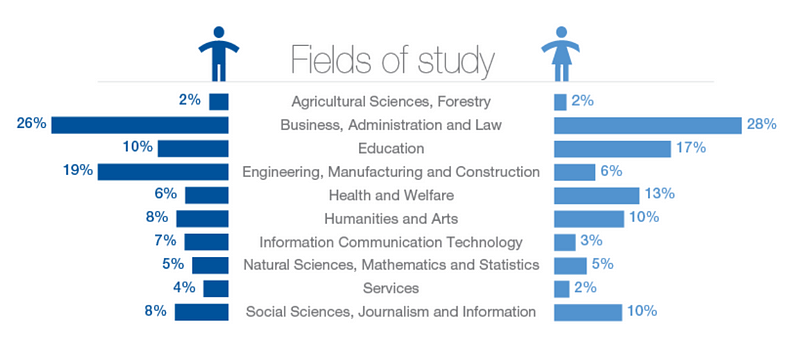
Image: Global Gender Gap Index, 2017, World Economic Forum
We can also fill the pipeline by attracting more women into the technology industry. As of now, women are drastically under-represented in the global technology sphere — just 24% of the information and communication technology (ICT) workforce is female, according to the World Economic Forum report, The Industry Gender Gap.
Jobs should always go to the best and most-qualified candidate, but it is important that we not overlooks the rich differences between men and women, and the space where diversity of thought and approach encourage creativity and innovation.While we don’t need everyone to be a software engineer, we do need employees who can learn, who can share, who can connect the dots and build good relationships with colleagues inside and outside of the organisation. Just as important, we need employees who understand how technology and society interact to drive progress for all stakeholders.
If we need employees who can do all of that, then we need leaders to match. We will need to learn new ways of leading: how to successfully manage people who are not sitting in the office where you can see them; how to measure and reward in a virtual work place and how to virtually connect diverse skill sets that will lead to optimum results.
As Professor Klaus Schwab notes, “We need leaders who are emotionally intelligent, and able to model and champion co-operative working. They’ll coach, rather than command; they’ll be driven by empathy, not ego. The digital revolution needs a different, more human kind of leadership”.

Tuesday, January 16, 2018

Winning The War Of Depression.


Photo by Paola Chaaya on Unsplash
We are born to disappointments. All of us meet them. Some are more sensitive to their point and bitter than others. We are often lofty in our wish, or sanguine in our expectation, that disappointments cannot but come. They come from foes and friends. They come in prosperity and adversity.

There are two sides to the events which occur and which seem so discouraging to us a dark side and a bright side. We are prone to look only on the dark side, to see only what is gloomy and discouraging. We find a melancholy satisfaction in being miserable, and in making ourselves more unhappy, as if we had been wronged, and as if there were a kind of virtue in dejection and gloom — in refusing, to be comforted. We keep chewing some bitter morsel and rolling it under our tongues so as to suck all the bitterness out of it that we can. Many of us are in great darkness, without knowing, or being able to discover the reason.
A bee has an eye, for I do not know how many facets, which multiply the one thing it looks at into an enormous number. Some of us have eyes made on that fashion, or rather we manufacture for our eyes spectacles on that plan, by which we look at our griefs or our depressing circumstances, and see them multiplied and nothing but them.
We are not merely burdened, we are possessed by a feverish uncertainty. We no longer look at things calmly and therefore truly, and everything appears to us in monstrous and distorted guise. There is no more fatal minister in human life than the disquieted eye. So long as the eye can gaze at things with a cool and quiet vision we see things in their true perspective and proportion. But when the eye is shaken into restlessness its focus is perverted, and everything is seen awry. The disquieted soul is not only possessed of a restless eye, it is the possessor of a nerveless hand.
Nothing is so bad as a continued and allowed downheartedness. The conviction that the circumstances around us are stronger than we can handle. There are times when life itself becomes burdensome and is often shortened, by excessive grief. It magnifies troubles. It drags at and prevents work. It shadows blessings, making the hard things in life prominent rather than the ameliorating things. By recognition of the fact that downheartedness is worst for us, we ought to esteem it as bad for us as malignant tumour and do all we can to cure it before it grows and becomes fatal.

Some people constantly depreciate themselves, and they are thought sincere and humble persons. The truth is it is nothing more than a habit, or worse, an affected self-depreciation. The feeling of self-depreciation pervades the soul in the presence or recollection of some higher examples in matters of life and ambition. An artist of sensitive appreciation of superiority in the presence of a genuine piece of art depreciates to the dust his own performances. A poet with a true poetic sense, when they read or hear some grand poetry, feel very low in their own view. So is it in other things in life.
We Are Human. We Can’t Do Everything. We Can’t Control Everything. We Can’t Be Everywhere. We Can’t Understand Everything. We Can’t Be Someone Else. We Can Be What We Are. We Can Be The Best Of What We Are.
Learnings
  1. We cannot control our thoughts nor our moods directly. We can do a great deal to regulate, modify and diminish those of them that need diminishing. Increase those thoughts that need to be increased, by looking at the reasons for them.
  2. Question yourselves about your moods, and especially about your sad moods, and you will have gone a long way to make yourselves bigger and happier people than you have ever been before.
  3. Heaviness of heart is often caused by bringing the future into the present. We go out to meet the cares and difficulties of tomorrow, while we are bearing and battling with those of today. Planning is good. Over-anxiety is a pain. Sorrow in prospect is much more bitter and grievous than it is in actual experience.
  4. We are worth very little unless there is a tribunal in us to which we bring up our feelings and make them justify their existence and tell us what they mean by their noise and their complaining.
  5. Everything has two handles. The aspect of any event depends largely on the beholder’s point of view. There’s nothing either good or bad, but thinking makes it so.
  6. Despondency must have a cause. If we can discover it, in any case, the old proverb holds good that a knowledge of the disease is half its cure.
  7. What can your anxiety do for you? Can it avert what you dread? No. But it hastens it. In many respects, our health, our outward well-being, and that of our household are committed to our own keeping and can be safely kept only by a self-collected mind and a quiet heart.
  8. Look at the past and it will answer. The vast preponderance with us has always been on the side of happiness. If we have been long of this foreboding habit, not one in a hundred of the sorrows that we have apprehended has reached us. Those, also, that have overtaken us have been lighter than we feared.
  9. No effort at tranquilizing our hearts is wholly lost. Did you ever see a child upon a swing? Each oscillation goes a little higher. Each starts from the same lowest point, but the elevation on either side increases with each renewed effort until at last the destined height is reached. So we may if I might so say, by degrees, by reiterated efforts, swing ourselves and stand high above all that breeds agitation and gloom.
  10. Outward trouble will not hurt us much so long as it keeps to the outward. The sailor cares not because the green waves with crested heads curl over and dash against the ship, shaking it from stem to stern. Trouble for the sailor is when from one to another the whisper passes through the ship, “We have sprung a leak.” The water in the hold is more dreaded than all the ocean without. Let not what is outside and temporal affect you on the inside.

Thursday, January 11, 2018

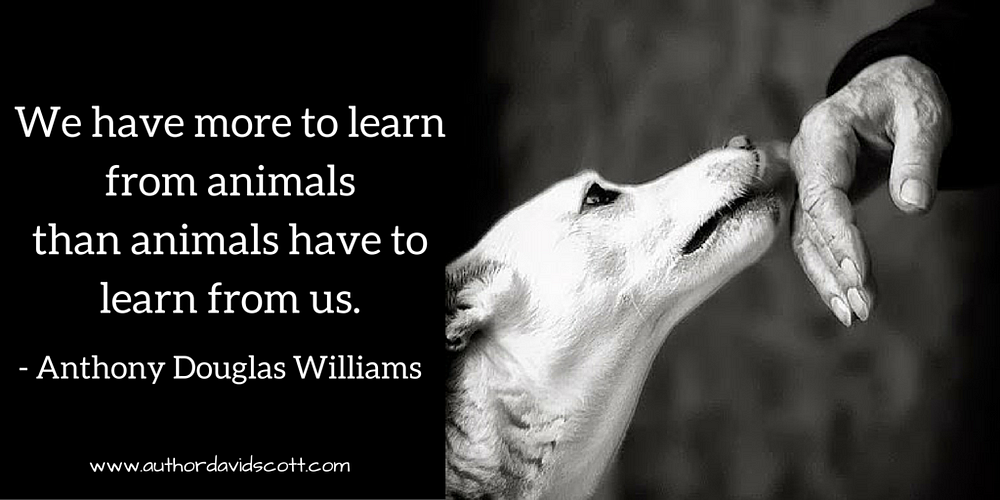
12 LIFE LESSONS TO LEARN FROM 12 ANIMALS


Image Courtesy:authordavidscott.com
Those who teach the most about humanity, aren’t always humans— Donald L. Hicks
  • GIRAFFE
Never mind how hard you fall, always remember to pick yourself up and get back on your feet. When a baby giraffe is born, he falls from an altitude but manages to stand in his own feet.
  • EAGLE
Eagles have excellent vision and concentration. To catch their prey, they focus on it with laser like intensity, and set out to get it. We should also do the same with our goals, by focusing on one task at a time. Many obstacles will come in our way to distract us but we should stay focused on our goal. Give our full effort to it until the task is accomplished.
  • DOG
Source : youtube.com
Dogs are the only animal that is committed and loyal towards their taker. They teach us the loyalty and commitment towards our work also teaches us to Love Unconditionally …
  • CHAMELEON
Chameleons are mostly known for their ability to adapt to their surroundings in order to catch their preys. Just like that, we should also be adaptable & flexible to our surroundings in order to achieve our goal.
  • WOLF
Wolves can live in any situation. They can make the most of the available resources. Similarly, we humans should also try to make ourselves comfortable in every circumstances life puts us in.
  • DONKEY
Donkeys know the value of hard work and they know how to keep calm in tough times. Likewise, we can also deal calmly with our lives when the time is tough.
  • SHEEP
Sheep’s are the symbol of innocence and purity. But on the other hand, they are also known for making sacrifices. Similar is the case with us, in life we also have to make many sacrifices but that doesn’t mean we have come to an end in life.
  • CAMEL
Camels know how to survive in toughest conditions. They keep moving until they reach their destinations. We humans should also keep moving until we reach our destination i.e. our goal.
  • COW
Cows are generous, patient, selfless and loving. Cows have a carefree attitude and they give love to others. Just like cows, we all should try to be patient in every circumstances of life and we should live in harmony with others.
  • PIGS
We can learn a very important lesson from pigs. To love yourself…and be proud of it. To accept yourself, to accept what you are and accept the way you are.Simply saying Be Yourself.
  • ANTS
Ants do teamwork. Ants work well together. They do not stop until they accomplish their work.You Can Find More here….
BUTTERFLY
They don’t harm others. Butterflies pass through so many painful stages of their life then also they don’t harm others but simply live their life. Similarly, if we can silently endure our hardships without hurting others then that adds beauty to our hardship and above all makes us a better human being.

Wednesday, January 10, 2018

EVERYDAY DO SOMETHING THAT WILL INCH YOU CLOSER TO A BETTER TOMORROW


Never give up. Today is hard, tomorrow will be worse, but the day after tomorrow will be sunshine-Jack Ma
Life Evolves! Our perception towards life is different in different phases of our life, be it our childhood days, teen days or as an adult. Every act we perform today impacts our life in one way or other.
We are all now busy in building a better future for ourselves. To get a better tomorrow means to do something Everyday, do something which will improve us, make us a better person.
Everyone wants to have a better future, but does everyone get it?
There are many obstacles which come in the way of building a better tomorrow. But it depends on you, how hard do you push when you face obstacles? How many times do you get back afterlife has beaten you down time and time again?
The quality of your life, quality of your future depends on the effort you put today.

GIVE UP ON THESE IN ORDER TO IMPROVE YOURSELF:

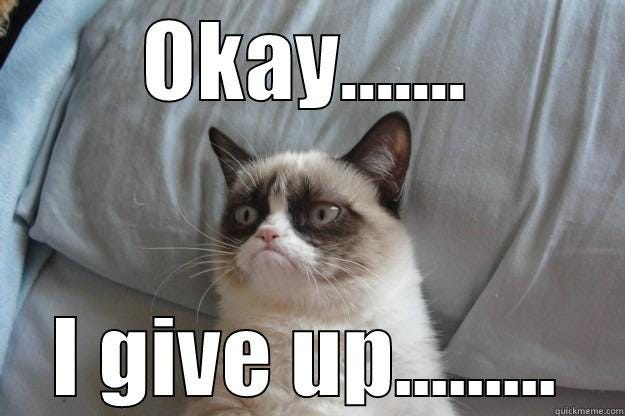
Image Courtesy: Quickmeme
  • Give up Your Need of Approval from others
  • Give Up Taking “No” As an Answer
  • Give Up Distinguishing Between Your Private and Work Life
  • Give Up Your Reluctance to Ask For Help
  • Give Up Fixing Your Weaknesses
  • Give up your excuses
  • Give up multitasking
  • Give Up Your Dependency on Willpower
  • Give Up Waiting for Luck
  • Give up Other People’s Versions of Success
  • Stop associating with Toxic People
  • Believing you’re not up for the challenge
  • Undervaluing what you have
  • Competing with other people
  • Seeking permission from others
  • Ignoring the vision you have for your future
  • Waiting to start
  • Not setting yourself up to win before you start

HOW TO IMPROVE YOURSELF:

1. Appreciate the under-appreciated:
Some jobs require more effort than skill. The difference is in the effort. All around you are people who work hard with little or no recognition. Vow to be the person who recognizes at least one of them every day.
Do more than say “thanks” to a person who does a thankless job. Exchange a kind word. Not only will you give respect, you’ll also gain the best kind of respect — the respect that comes from making a difference, however fleeting, in another person’s life.
2. Answer the “unasked” question:
For a variety of reasons — maybe they’re hesitant, or insecure, or shy — people often ask a different question than the one they really want answered.
Behind many questions is an unasked question. Pay attention so you can answer that question; that is the answer the other person doesn’t just want to hear… but needs to hear.
3. Don’t wait for anything:
You don’t have to wait to be discovered. You don’t have to wait for an okay. You don’t have to wait for someone else to help you. You can just do whatever you want to do. You may not succeed. But you don’t have to wait.
4. Appreciate whatever you have:
You have big plans. You have big goals. You’re never satisfied, because satisfaction breeds complacency. So most of the time you’re unhappy because you think more about what you have not achieved, have not done, and do not have.
Take a moment and think about what you do have, professionally and personally. At this moment you have more than at one time you ever thought possible. Sure, always strive for more… but always take a moment to realize that all the things you have, especially your relationships, are more important than anything you want to have.
Appreciate whatever you have, because it’s real, and it’s awesome and it’s YOURS.
5. Love your work:
Love your work, when you’re working, that feeling shows in everything you say and do. Love is a feeling, and feelings are often selfish. Turn your feelings into an action. Actively love the people you love. Show them you love them by words and deeds.
6. Be Yourself:
You worry about what other people think. Yet no matter how hard you try, you can’t be all things to all people. But you can be as many things as possible to the people you love. And you can become the best version of yourself.
Be yourself, that’s the one thing you can always do better than anyone else.
7. Set Goals:
Set goals for yourself, where you want to see yourself after 6months, one year, or 2years. Don’t get upset if you can’t do this right away. Start small and just begin to visualize.
8. Accept Failure
Newsflash you are going to fail. You are going to fail many times in life. Failing is Okay. In fact, you should embrace failure. When you stretch beyond your comfort zone, you are growing as a person. It is only natural that you will fail. Don’t fall for the lie that failing is bad.
9. Learn a New Skill
Learning a new skill breeds confidence in us. When we learn something new, we get excited and are eager to learn more. This increases our self confidence and we grow and want to learn more. It’s a cycle that fuels itself.
So what is it that you have always wanted to learn but always put off? Write a short list of things and then start working on learning those new skills
10. Don’t waste Time:
Take some time to understand how you waste time and become more productive with your time. Read more. Learn about something new. Spend more time with loved ones. These are self growth activities that will lead to happiness and success.
11. Deal with Negative Thoughts and Emotions:
You will always have critics, including yourself. You need to learn to deal with any negative thoughts and emotions you have.
At first, you may find this difficult to do. But over time, controlling your thoughts will become easier.
Understand that negative thoughts will always be with us.
12. Surround yourself with Positive People:
If you are always hanging around with unmotivated people, you too will be unmotivated to succeed in life. On the other hand, if you hang around with successful people, you too will find success.
13. Reflect:
At the end of the day, reflect on what happened. Was it a good day? Even if bad things happened, find ways to spin them into something positive. In other words, don’t let the negative thoughts take root in your mind. Be thankful for all that happened to you today and vow to be an even better person tomorrow.
14. Overcome your Fears:
All of us have fears. Fear of uncertainty, fear of public speaking, fear of risk… All our fears keep us in the same position and prevent us from growing. Recognize that your fears reflect areas where you can grow. I always think of fears as the compass for growth. If I have a fear about something, it represents something I’ve yet to address, and addressing it helps me to grow.
15. Ask for feedback:
As much as we try to improve, we will always have blind spots. Asking for feedback gives us an additional perspective. Some people to approach will be friends, family, colleagues, boss, or even acquaintances, since they will have no preset bias and can give their feedback objectively.

ASK YOURSELF:

If what you are doing today is getting you closer to where you want to be tomorrow?
How much effort you put in today to guarantee the future? To guarantee the empire that you dreamed of as a kid?
Most of us claim that we have been working hard because we got tired.
You worked until you got tired. Tired is not equal to hard work. It’s how hard you work after you get tired. When you get tired, that is when the real work starts.
If you want better than average, you have to work harder than the average to get the desired result in the future. If you want greatness, your effort must be greater than great. Your level of effort equals your level of results.
Give your all every day, every minute of every day. Your best effort in each present moment, will lead to your best future moments.
Leave the past behind, so you can focus on your future. We must let go of our past pain, our struggle, our story, not because it wasn’t important but because your future is more important.
Leave the darkness of your past behind so you can focus on letting the light of your future.

DO THESE THINGS FOR A BETTER TOMORROW:

  • Learn to love yourself, because if you appreciate the person you are, you will be able to ooze love and appreciation to everyone else around you. You won’t have moments of insecurities or uncertainty.
  • Get rid of the things you don’t need in your life and replace them with things that bring you happiness and success.
  • Put your best foot forward and never let yourself turn up under dressed and without the enthusiasm your life deserves.
  • Be happy for yourself and for others.
  • Create opportunities for yourself and others
  • Never sacrifice your integrity.
  • Change the behaviors you have that you don’t like, don’t just accept them.
  • Challenge yourself and push yourself to do better, to be better and to make a difference to the world you live in.
  • Love unconditionally in a way that people will remember you for long after you have left this world.

LET’S TAKE EXAMPLE OF MICHAEL PHELPS

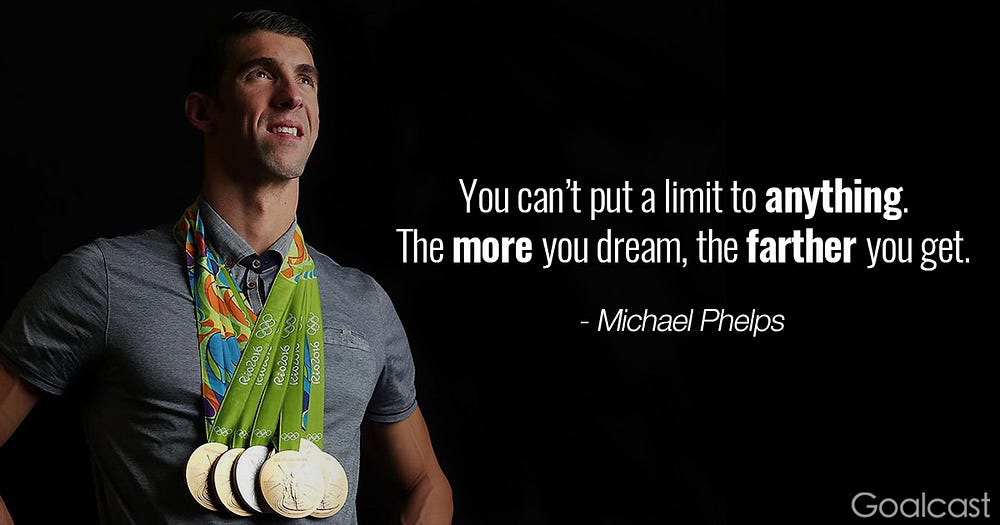
Michael Phelps is considered the greatest Olympian swimmer of all time. Everyone thought that no swimmer would be able to win 8 gold medals in just one Olympic Games. Michael did just that and he has 19 Olympic medals, 15 of which are gold! The remarkable thing about him is that as a child he suffered from ADHD and was on medication for some of that time. Most people assume that people with ADHD suffer from restlessness, impulsiveness and a very short attention span. But they also have an incredible capacity to remain hyper focused on an activity they are passionate about. Michael has been able to use this with enormous success. By channeling his energy and focus, he has been able to exploit the positive side of ADHD.
Phelps has shown that he can beat the most disciplined and strongest swimmers in the world and is an inspiring example to anyone who suffers from a mental disorder or other disability. He has another secret in that he uses the power of visualizing success before he starts any swim. He started this process when he was only 7 years old. He realized there were no limits to success and once you are passionate about your objective, nothing can stop you.

CONCLUSION

ALWAYS REMEMBER:
· The pain that you feel today will be the strength that you will feel tomorrow.
· The future depends on what you do today.
· Do something today that your future self will thank you for.
· You can’t have a better tomorrow if you are thinking about yesterday all the time.
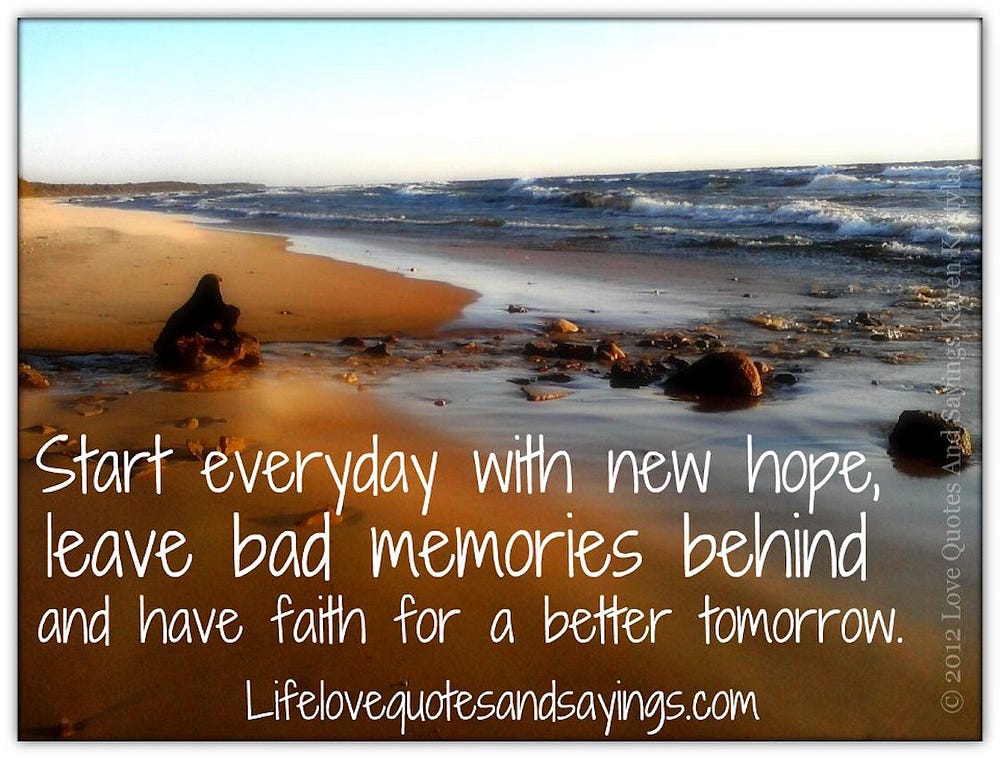
· Start everyday with a new hope, leave bad memories behind, and have faith for a better tomorrow.

If you found this helpful, please help in spreading this message by recommending this post. Also, feel free to share your own ideas about this in the responses below. Thanks for reading 😀…

Why Most People Won’t Ever Achieve Greatness


100/100 people can achieve greatness. Here’s why most won’t.

Anyone can achieve greatness. Anyone.
Greatness is relative, yes. The results might look different; for some, simply quitting an addiction means greatness. For others, creating a Fortune 500 company means greatness.
Anyone can do this. But most people won’t.
I’m not talking about simple averages and logistics, where “obviously everyone can’t be in the top 5%.” That’s bull. If you take a class of 100 students, 100 students could achieve greatness.
This is because we all have a choice, every moment of every day. As author Rebecca Eanes once wrote, “In between every action and reaction, there is a space.” In this moment, you choose how you will react.
This moment is very small, sometimes small enough we don’t believe it’s there. This is where phrases like “I had no choice” or “I couldn’t help it” come from. Yes, you could. You just chose not to. Stop lying to yourself.
More and more people are hiding behind the excuse that their behaviors, actions, and choices are out of their control. They claim the economy, Donald Trump, their boss, their landlord, the cops, societal norms, and a hundred other things control their life.
It’s time to unlearn this prison of a belief. Not dissect it, or analyze it, or debate it.
Just completely unlearn it.

Why Is So Much of the World Mediocre?

“Good is the enemy of great. And that is one of the key reasons why we have so little that becomes great. We don’t have great schools, principally because we have good schools. We don’t have great government, principally because we have good government. Few people attain great lives, in large part because it is just so easy to settle for a good life.” -Jim Collins
You may wonder: if 100 out of 100 people could achieve greatness, why do so few ever do?
It’s not even that they tried and failed, either; most people never even try at all. They spend their lives without even as much as an attempt to create their masterpiece.
Why do so few people ever achieve greatness (even when they could)?
It’s a good question. The answer is simple:
Because it’s easier to let someone else call the shots.
And as long as someone else is calling the shots, greatness isn’t attainable.
It’s scary to be the CEO of your life. It’s an enormous responsibility. It means you can’t blame other people for your problems anymore — every failure, every missed opportunity, and every failed attempt is on you.
Most people don’t want this heavy responsibility. So they begin stacking excuses like bricks, sealing themselves inside a box of explanations and rationalizations.
To this, author David Schwartz once quipped:
“The fellow who has gone nowhere and has no plans for getting anywhere always has a bookful of reasons to explain why.”
For most people, it’s just easier to blame unchangeable external factors for their lack of success.
It becomes extremely difficult to help people get out of this limiting mindset, too. In his book, Choose Yourself, James Altucher wrote: “If someone insists they need to be in prison even though the door is unlocked, then I am not going to argue. They are free to stay in prison.”
Why is so much of the world mediocre?
Because they choose to be.
Anyone can achieve greatness. And anyone who claims they can’t is simply trying to explain why they can’t leave their cell — even though the door is unlocked.
“The moment you accept total responsibility for EVERYTHING in your life is the day you claim the power the change ANYTHING in your life.” -Hal Elrod
Photo by Warren Wong on Unsplash

Increase Your Clarity to Avoid Settling For Second-Best

“We are kept from our goal not by obstacles but by a clear path to a lesser goal.” Robert Brault
No one wakes up, brushes their teeth, and puffs out their chest with a confident smile and yells, “Today, I am going to SUCK!”
I mean, maybe some people do.
No — most people would claim they want to live exciting, extraordinary lives. They might even appear to work very hard at it. But they never really make any progress.
These people make up what author Hal Elrod once labeled the “Mediocre Majority.” These are people that, despite their good intentions, still end up settling for second-best.
Their problem isn’t that they willingly and intentionally dive face-first into a brick wall of mediocrity. Their problem is that the path to mediocrity is simply more clear than the path to greatness.
You follow the path that is most clear.
And since most people have marked the path to mediocrity pretty well, that’s the one most people follow. It’s what they know.
If you want to live an extraordinary life, you need to develop clarity on exactly how to do that.
Extremely successful people have high levels of clarity on everything that is most important. These top-tier individuals know if you don’t know where you’re headed, there’s no telling where you’ll end up.
In the famous words of Bilbo Baggins:
“It’s a dangerous business, Frodo, going out your door. You step onto the road, and if you don’t keep your feet, there’s no knowing where you might be swept off to.”
Finding clarity isn’t always easy. In the past 5 years, I’ve had at least a dozen different ideas for my I wanted to do with my life — a Navy SEAL, a novelist, a career coach, even a chef at a 5-star restaurant. “Clarity” was rarely available.
Yet clarity is exactly what you need if you want to end up settling for the mediocrity most people slowly slip into. (This 20-minute exercise was incredibly helpful for me).

How to Achieve Greatness, Starting Today

“If you want to live an exceptional and extraordinary life, you have to give up many of the things that are part of a normal one.” -Srinivas Rao
Achieving greatness is simply a matter of consistently going from point A to point B, every single day.
In the words of Tim Grover, personal trainer to Michael Jordan and Kobe Bryant:
“People are always asking me about the secrets and tricks I use to get results. Sorry if this disappoints you: there are no secrets. There are no tricks. It’s simple. Ask yourself where you are now, and where you want to be instead. Ask yourself what you’re willing to do to get there. Then make a plan to get there. Act on it.”
This isn’t sexy advice. There are no shortcuts or “hacks.” It’s not easy.
But it’s simple: consistent progress, every day.
What does “greatness” mean to you? No one else can define that for you.
Once you determine what that means, what can you do today to get a little closer there?
By the way, we’ve stumbled upon the very formula that is responsible for the greatest accomplishments by the most successful the world has ever witnessed:
Moving one step closer, every day.
That’s it.
Hundreds other the world’s most prolific creators, rulers, humanitarians, and leaders have been saying this in different ways for thousands of years. Their advice is just as refreshingly relevant today as it was then. It will be in the year 3000, too.

In Conclusion

“Greatness is not a function of circumstance. Greatness, it turns out, is largely a matter of conscious choice, and discipline.” -Jim Collins
Greatness doesn’t happen by chance.
Settling for mediocrity doesn’t, either.
They’re both choices. Both require work. Sometimes, it takes just as much work — maybe more — to remain in mediocrity. Sitting with the mental stress and disappointment of mediocrity is an enormous daily drain.
If you’re reading this, you have a choice today — to move from point A to point B; to take a step closer to personal evolution.
Most people won’t ever achieve greatness.
But you can. And all you need to do is take one step today.

Tuesday, January 9, 2018

How To Develop Amazing Confidence In All Aspects Of Life


Can You Feign Confidence?

“Optimism is the faith that leads to achievement. Nothing can be done without hope and confidence.” — Helen Keller
In order to develop amazing confidence in aspects of life, you’ll need to relinquish the need for control and allow life to lead you where it needs to.
After all, confidence is a state of mind whereby your attitudes and beliefs correspond with your actions.
It appears in many forms, although you can easily recognise it in someone’s body language and verbal cues.
Life can impair your confidence during difficult times. Moreover, you may have faced hardships long ago which may affect parts of your present life.
“Confidence is a somatic memory of competence. Interestingly, research shows that even if we have an inflated sense of that earlier competence, it still serves as a resource of confidence now,” states Linda Graham MFT in Bouncing Back: Rewiring Your Brain for Maximum Resilience and Well.
You cannot feign confidence.
Perhaps for the short-term. But over the long-term, confidence must originate from within and be accompanied by a desire for self-improvement.
To develop confidence, take massive action frequently. It is no use sitting back hoping for things to change while doing little about it.
Action creates momentum and reinforces self-belief and the feedback from minor successes that contributes to lasting confidence.
Many believe a confident leader is an extrovert, one who is self-important although this is usually not the case.
Confident people have a high emotional intelligence (EQ) and are empathic, compassionate and modest. This flies in the face of what narcissists consider confident; one who is self-involved and regards their personal achievements over others.
It is sensible to cultivate a compassionate side and nurture it if you wish to gain confidence in life.

The Power Of Positive Self Talk

“All you need in this life is ignorance and confidence, and then success is sure.” — Mark Twain
Your inner talk should reflect a success mindset because you get to be your own motivator and leader. It is vital to approach this with the right frame of mind, rather than exercising military-style motivation, which only works temporarily.
Setbacks and disappointments are inevitable in the game of life. Do not allow frustrations to impact your confidence, but accept them as feedback.
Successful people have overcome innumerable obstacles and prevailed.
“Confidence allows you to sail into the uncharted places, and meet up with those dragons without having to get burned,” affirms author Colette Baron Reid in Uncharted: The Journey Through Uncertainty to Infinite Possibility.
Be familiar with your internal dialogue. Look for possibilities within your failures, and I assure you there is something to be gained even in the direst conditions.
Successful people see opportunity in the bleakest conditions and take advantage of it, leaving no time to contemplate what might have been.
Confidence arises when you connect with your deepest intentions and pursue it vehemently.
You cannot help but grow passionately towards something you enjoy. The better you become, the more confidence you will gain.
This will flow into other areas of your life, so if you are confident in your career this is likely to reflect in other life zones.
Confidence means being content with your uncertainties and shortcomings. It involves working in partnership with these attributes but not allowing them to subdue you.
To build lasting confidence, develop a degree of focus, commitment and dedication. Find an unwavering commitment to see something through until the end.
Those who give up halfway, take a blow to their confidence because they reinforce a defeatist attitude. However, even if you fail yet see the task through to completion you’ll grow confident knowing you’re moving closer to victory.
Author Larry Weidel says in Serial Winner: 5 Actions to Create Your Cycle of Success, “The best form of confidence is the confidence that comes from achievement.”

An Unwavering Commitment

“Believe in yourself! Have faith in your abilities! Without a humble but reasonable confidence in your own powers you cannot be successful or happy.” — Norman Vincent Peale
Self-confidence proceeds from pursuing goals greater than yourself and maturing into them. Whilst you may or may not succeed, the personal growth that takes place is paramount to the person you will become.
Ultimately, confidence appears as you inch closer to victory, rather than admit defeat.
Develop a growth mindset instead of a fixed mindset advocates Stanford University psychologist Carol Dweck. She states, “A remarkable thing I’ve learned from my research is that in the growth mindset, you don’t always need confidence.”
I spoke earlier of the need to cultivate powerful self-talk. This is a catalyst for the confident person because they prime their subconscious mind to be on the lookout for success.
Motivational speaker Tony Robbins believes that success leaves clues.
Referring to the fixed mindset, those who torment themselves because of previous failures focus on their faults instead of the lessons gained. This delays progress because attention is given to what is not working, which then becomes a person’s reference point.
True confidence stems from knowing yourself beyond the superficial likes and dislikes. You understand aspects of your character and manage your weaknesses while exploiting your strengths.
In Steven Covey’s acclaimed book, The Seven Habits Of Highly Effective People two habits emerge essential to lasting confidence: Be Proactive and Put First Things First.
The proactive person takes charge of their life. They are accountable for their actions and make decisions based on the outcomes, regardless of whether they are successful.
To Put First Things First, manage yourself to the best of your ability and concentrate on what is important. Prioritise your day-to-day activities in the pursuit of your objectives with an unwavering commitment, notwithstanding impediments and roadblocks.
Remember, “Confidence is the belief that no matter what happens, you’ll find a way,” states author Larry Weidel.
Confidence arises when you overcome your limitations.
This requires conquering your fears so they don’t overpower you. What you give life to occupies importance in your mind.
I enjoy the wisdom echoed by author Bernard Roth in The Achievement Habit: Stop Wishing, Start Doing and Take Command of Your Life: “Make a pact with yourself to not use reasons unless you have to. This is actually an incredibly empowering position to come from. Be confident enough in your actions not to need to explain yourself. Trust yourself and act.”
With that premise, I invite you to find the confidence to live a truly amazing life with a powerful state of mind.

Sunday, January 7, 2018

12 Questions That Will Change Your Life


The instinct is to look for answers, but the truth is that questions that teach us most. It can also be that the rhetorical questions — the ones that don’t even seem to have answers — that push and push the hardest. Who do you think you are? What does all this mean? Why? Why? Why?
The right question at the right time can change the course of a life, can still a turbulent mind, or heal an angry heart. While every situation can generate its own, there are twelve questions, I think, that deserve to be asked not just once but many times over the course of a lifetime, some even many times over the course of the day.
I have gathered them from some of the wisest philosophers, most incisive thinkers, greatest leaders and most awesome badasses that ever lived. I’m not saying I know the answer to any of them, but I can say there is value in letting them challenge you. If you let them. If you let them do their work on you — and let them change you.
Start now by asking:

Who Do You Spend Time With?

Goethe would say “Tell me who you spend time with and I will tell you who you are.” Who we know and what we do that influences more than any other factor, who we will become. Because what you do puts you around people, and the people you’re around affects what you do.
Think about your friends and colleagues: do they inspire you, validate you, or drag you down? We seem to understand that a young kid who spends time with kids who don’t want to go anywhere in life, probably isn’t going to go anywhere in life. What we understand less is that an adult who spends time with other adults who tolerate crappy jobs, or unhappy lifestyles is going to find themselves making similar choices.
Same goes for what you read, what you watch, what you think about. Your life comes to resemble its environment (Ben Hardy calls this the proximity effect). So choose your surroundings wisely.

Is This In My Control?

Epictetus says that the chief task of the philosopher is to make the distinction between what is in their control and what is not — what is up to us and what is not up to us? We waste incredible amounts of time on the latter and leave so many opportunities on the table by mislabeling the former.
Our actions, our thoughts, our feelings, these are up to us. Other people, the weather, external events, these are not. But here’s where it comes full circle: our responses to other people, the weather, external events are in our control. Making this distinction will make you happier, make you stronger and make you more successful if only because it concentrates your resources in the places where they matter.

What Does Your Ideal Day Look Like?

If you don’t know what your ideal day looks like, how are you ever going to make decisions or plans for ensuring that you actually get to experience them on a regular basis? It’s important to take an inventory of the most enjoyable and satisfying days of your life.
What did you do?
Why did you like them?
Now be sure that your job, personal life, even the place you’ve chosen to live takes you towards these, not away from them. If you don’t want an office, don’t set up an office. I run my company remotely. If you enjoy being in harness and that’s what makes you feel good, then you’ll probably need something that has a lot of responsibilities and set requirements.
If you enjoy influence more than material success, then make sure you pick something that allows for that. If you’re a quiet person, then you need a lifestyle that will let you be quiet — not one that forces you to be constantly not yourself. If you thrive on attention and collaboration, then pick accordingly. If you want to live in the same place for a long time, maybe buy a house. If you don’t — God, please don’t. And on and on and on.

To Be Or To Do?

One of the best strategists of the last century, John Boyd, would ask the promising young acolytes under him: “To be or to do? Which way will you go?”
That is, will you choose to fall in love with the image of how success looks like or you focus on a higher purpose?
Will you pick obsessing over your title, number of fans, size of paycheck or on real, tangible accomplishment? He said that in life there is a roll call and it sorts people by their answer to this question, the doers and those who simply pretend.
Which will you be?
Which have you been?

If I Am Not For Me, Who Is? If I Am Only For Me, Who Am I?

The alternative translation of that last part is “If I am only only for me, what am I?” The answer is “the worst.” The question comes from Hillel the Elder (also happens to be a favorite quote of Reid Hoffman, the venture capitalist). It doesn’t make you a bad person to want to be remembered.
To want to make it to the top.
To provide for yourself and your family.
But if this is all you want it is a problem.
There is a balance.
Think of someone like General George Marshall, winner of the Nobel Peace Prize for the Marshall Plan, who had the same traits that everyone has — ego, self-​interest, pride, dignity, ambition — but they were “tempered by a sense of humility and selflessness.”
When he was practically offered the command of the troops on D-Day he told President Roosevelt: “The decision is yours, Mr. President; my wishes have nothing to do with the matter.” It came to be that Eisenhower led the invasion and performed with excellence, Marshall’s opportunity to change history came soon after — winning the peace prize and saving Europe as Secretary of State.

What Am I Missing By Choosing To Worry or Be Afraid?

As Gavin de Becker writes in The Gift of Fear, “When you worry, ask yourself, ‘What am I choosing to not see right now?’ What important things are you missing because you chose worry over introspection, alertness or wisdom?” Another way of putting it: Does getting upset provide you with more options?
Obstacles in life make us emotional, but the only way we’ll survive or overcome them is by keeping those distracting emotions in check — if we can keep steady no matter what happens, no matter how much external events may fluctuate.
The Greeks had a word for this: apatheia. It’s the kind of calm equanimity that comes with the absence of irrational or extreme emotions. And so when you find yourself indulging in those emotions, one way to get yourself back on track is simply by reminding yourself of the cost they incur: That you’re missing something by being nervous, scared, or anxious. That you’re taking your eye off the ball to do it.
Can you afford that?
Probably not.

Am I Doing My Job?

The three-word command from Bill Belichick, Nick Saban, Sean Payton, Jason Garrett: Do Your Job. The last thing the great John Wooden would say to his players in the locker room before a game was, “Well, I’ve done my job.” So the question is: Are you doing yours?
Do you even know what that job is? It’s important to remember that we can be very busy — exhaustingly busy — and still not be doing our job. We can be caught up in the things that don’t matter, we can be interfering and encroaching on someone else’s job, we can be just plain procrastinating. All these things keep us working — but not on the job that actually matters.

What Is The Most Important Thing?

If you don’t know what the most important thing is to you, how do you know if you’re putting it first? How do you know if you’re taking the right steps to get it. Maybe the most important thing to you is family.
Awesome, so that’s your priority. What it means is that not only do you have to start measuring yourself by family-related metrics, but you have to stop comparing yourself to people with different priorities. Maybe money is the most important thing to you.
That’s perfectly fine. Know that and own it — as Michael Lewis writes, the problem is the lying to yourself. You have to know and own whatever it is. Only then can you understand what matters and what doesn’t.
Only then can you say no — can you opt out of stupid races that don’t matter, or exist.
Only then is it easy to ignore “successful” people, because most of the time they aren’t — at least relative to you, and often even to themselves. Only then you can develop the quiet confidence that Seneca called euthymia  — “the belief that you’re on the right path and not led astray by the many tracks which cross yours of people who are hopelessly lost.”

Who Is This For?

If you’re making something, selling something, trying to reach people you have to be able to answer this question. It is shocking how many entrepreneurs, writers, salesman, even politicians never bother to stop and go: Who the hell is my audience here?
The result is that the message is out of tune or the wrong group is targeted (and failure usually follows). Every creative must stop and really think about who their audience is.
What do these people want?
What do they need?
What value am I offering them?
Don’t try to get lucky. Don’t follow your hunch. Get it right. Ask the question, make sure the answer is clear.

Does This Actually Matter?

The reason that wise people never let the very real fact of their mortality slip too far from their mind (memento mori) is because it helps them ask this question: Given the shortness of life, does this thing I’m thinking about, worrying about, fighting about, throwing myself into even fucking matter?
Sadly, the answer is usually no.
We want to ask ourselves this question before we throw good time after bad, before we waste more life than we have to. “You could leave life right now,” Marcus Aurelius reminded himself, “Let that determine what you do and say and think.” In light of that, does this thing you’re so worked up about actually matter?
As Stephen Colbert, a man who has experienced unimaginable tragedy has recounted, “Momentary disappointments can be seen,’ as my mother used to say when we had a heart-breaker, ‘in the light of eternity.
This moment is nothing in the light of eternity,’ and that opens you up to the next moment if you don’t put too much weight on the moment where you are failing right now.”

Will This Be Alive Time or Dead Time?

Early on in my career I had a pivotal conversation with author Robert Greene. I was working full-time at a really good job but planning my next move, saving my money and thinking about what I might do next.
I told him I wanted to write a book one day, but I wasn’t sure what, how or when or what about. He told me, Ryan, there are two types of time: Dead time — where we are just waiting and Alive time — where we are learning and active and leveraging. And then he left it there with me to decide which I would choose. Alive time or Dead Time?
So let that question catch you the next time you find yourself sitting on your hands or goofing off as you wait. Let it jolt you back into line. Pick up a book, pick up a pen and get back to work. Resist the temptation to get distracted with silly politics or wanderlust. Make the most of every moment as you prepare for the next move or the next event. If you want to be productive, be fully alive.

Is This Who I Want To Be?

Our mind has the cunning ability to make the distinction between what we do and who we are. The problem is that this is complete nonsense. You can’t be a good person if your actions are consistently bad. You can’t be a hardworking person if you take every shortcut you can.
It doesn’t matter that you say you love someone, it only matters if you show that you love them. Remember Cheryl Strayed’s line: “In your twenties you’re in the process of becoming who you are, so you might as well not be an asshole.”
This is true for life itself. You are what you do — so ask yourself whenever you’re doing something: Is this reflective of the person I want to be? That I see myself to be?
How we do anything is how we do everything. It is who we are. So ask this question about every action, thought and word. Because it adds up in a way that no amount of self-image or belief ever will.
**
Last question. Sort of. It comes from the great Viktor Frankl, the psychotherapist who survived the Auschwitz and wrote many beautiful books. He tried, as best he could, to try to address that perennial question that every philosopher and hungry young person has struggled with: What is the meaning of life?
Frankl struggled with this question too, surely the horrors of a concentration camp and the loss of one’s entire existence will do that to you. But he found that the answer was simple, though there was a problem how the question was posed. You see, he said, it is not us who get to demand of the world, “What is the meaning of life?”
Rather, he said, life is demanding that we answer the question with the actions and decisions we make. That we create meaning in our choices and our beliefs. I think we create it in doing our best to challenge ourselves with the questions above:
What am I for?
What is my job?
Who do I want to be?
What’s up to me?
What does a good day look like?
Some are simpler than others, sure, but the answers rarely are — and the act of asking is the most important thing.