Recognize you have control of this, if nothing else — Michael Marcus Jan 10 By JESHOOTScom on Pixabay I rem...
Business
5/Cars/feat-tab
Search This Blog
Author Details
Templatesyard is a blogger resources site is a provider of high quality blogger template with premium looking layout and robust design. The main mission of templatesyard is to provide the best quality blogger templates.
It
is not the strongest of the species that survives, nor the most
intelligent that survives. It is the one that is most adaptable to
change -Charles Darwin
Charles Darwin theory states, 'Survival of the Fittest’, which means that the fit survives till the end.
If we do not adapt changes prevailing in our life, we might not be able to survive Irrespective of our HIGH IQ and EQ…
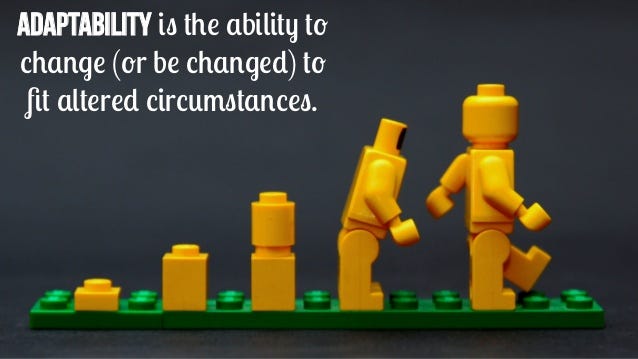
Adaptability
is the ability of an individual to respond to his changing environment,
it shows the ability to learn & improve from experiences.
By
being adaptable, we can easily survive, adopt new changes, learn new
skills, gain practical knowledge, and be successful in our work. In many
organizations, logic is the only rule, where emotions does not have any role to play….
Adaptive quotient(AQ) individual can offer a practical path to solving problems, they have the capacity to handle changes and are open to new ideas. They take on new challenges at a shorter notice and deal with changing priorities.
But if, an individual is intellectually intelligent it means, his/her
knowledge is limited to only a particular part of his/her skill. It’s
not a complete measure of a person’s worth. It indicates only one
limited type of ability.
I’m ready to play a bet …that adaptability quotient (AQ) will soon become the primaryindicator of success, with IQ and EQ both taking a backseat to how quickly we’re able to keep up with constant changing world.
EQ & IQ are important, but it’s only two legs of the stool. What I Learnt by Reading Books of great People is both IQ and EQ are not fixed properties, but rather can be developed through dedication and hard work. I guess…AQ
works similarly — some of us are born with higher AQ potential, but
each of us can work to alter it over the lifetime. We can see example
around us like We all have that friend who dislikes changes and another
friend who thrives on the new experiences. This leads me to suspect that
we are already subliminally aware that AQ exists
and that it has variance, but we’re not talking about it. Furthermore,
we don’t have a hardcore way to test or improve it.
The reason I say So is because when I used Google to search for “adaptability quotient” …. I received short Inc article written by the leader of a change-management consulting firm, along with a 2011 Harvard Business Review article titled “Adaptability: The New Competitive Advantage” (worth a read). Beyond those, other are useless…
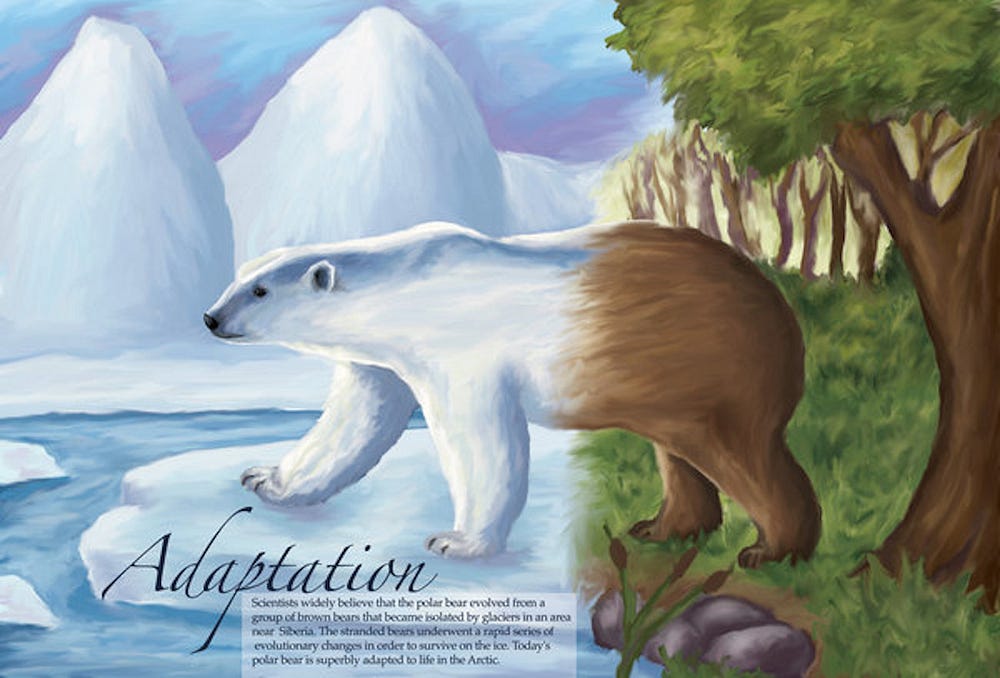
Adaptation
gives an opportunity to grow. It gives us more experience. We are
living in the age of technology, where everything is changing. It does
not matter how much we try to get used to things, every new day will
bring a new challenge.
Creative Destruction
According to Why Nations Fail by
Daron Acemoglu and James Robinson the reason nations fail or succeed is
political institutions. They theorize that there are two kinds — “extractive” institutions in which a “small” group of individuals do their best to exploit the rest of the population, and “inclusive” institutions in which “many” people are included in the process of governing.
The reason that inclusive states are far more successful than extractive ones is Creative Destruction. It
means challenging vested interests to develop a better way of doing
things. It means replacing the old with the new, new sectors attract
resources from old ones, new firms takes business from established ones,
new technologies make existing skills and machines obsolete.
Here is a Real Life Example for Creative Destruction… Fortune 500 firms 1955 v. 2016: Only 12% remain, thanks to the creative destruction that fuels economic prosperity
First case where Apple was designing iPhone and Second case where Nokia was selling half a billion phones each year.
Google bought
a company called Android and announced an Open Handset Alliance, a
grouping of industry players who would come together to build an open
source OS for smartphones. Nokia was invited to join but refused to
demean itself.
Soon after Apple launched an Apps Store that began to take off, attracting tens of thousands of developers, and then customers.
Within two years of these events Nokia was already in crisis. In
2007, Nokia had a market capitalization of €110 billion; by May 2012
this had fallen to €14.8 billion. Those figures illustrate the extent of
the decline over 5 years, years in which Apple and Android came to
dominate smartphones.Nokia/Symbian also launched an Apps Store, Horizon,
now happily forgotten, and after six months it had the sum total of 60
apps in it.
And
Nokia launched its own Apps and Content store – Ovi, in 2009. But Nokia
had no real platform experience to compare with Apple’s. The platform
was shaky and it tried to launch simultaneously in 35 countries –
because that’s what dominant players do. It was a disaster and the tech
press called it out as such. Nokia was faced with a gale of criticism
for the first time.
2) RYAN DAHL— Creator of Node.js and Now a AI & ML Researcher at Google Brain
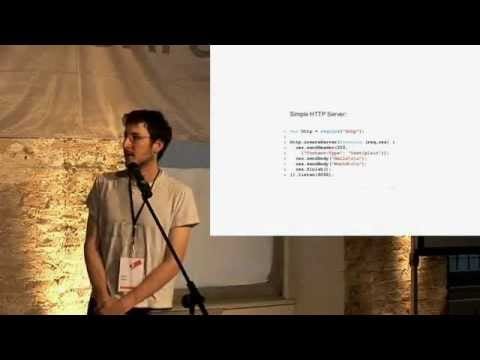
Ryan Presenting the Original Node.js Paper
Dahl grew up in San Diego, California. His mother got an Apple 2C when he was six years old, one of his first experiences with technology. Ryan attended community college in San Diego and later transferred into UCSD where he studied mathematics. He went on to attend grad school for Mathematics at the University of Rochester where he studied algebraic topology, which he once found “very abstract and beautiful” for a couple of years but later got bored of it because “it was not so applicable to real life.”
Once he realized that he did not want to be amathematician for the rest of his life, he dropped out of the PhD program and bought a one-way ticket to South America and lived there for a year, where he found a job as a web developer. He worked on a Ruby on Rails website for a snowboard company
Ryan Got into JavaScript Development around 2007–2008 , The Hottest topic for the season during that time for JavaScript plus ASync I/O.
Coming From a Non Software Background , It was Difficult for Him to
achieve Wonders in Computer science.. He Taught Himself Every bit of
Programming and Slowly and Steadily Developed a Programming Language
Named Node.jswhich is one of the Most Popular Programming Languages.
Image Courtesy : indeed.com
Ryan
Did not Stop , After Spending Years with the Node Community , He
Decided to Step away from the Node Project and Join The AI & ML
Revolution. He got into Google as a Software Engineer and Started
Working on Artificial Intelligence and Machine Learning .
This is Inspiring as Ryan being a Non Computer science grad Adapted to Industry Trends to gain Success…
This
is an Example of How People Have adapted to changes even if Their
Previous Background Did not Support that.This is an Example of HIGH AQ.
The New York Times published a fascinating article
last week on Robots and How Sweden Differ on thier Views.One of the
Swedes interviewed is Mika Perrson, a remote mine operator testing
self-driving vehicles to replace truck drivers.Below is the Link :-
“Mr.
Persson, 35, sits in front of four computer screens, one displaying the
loader he steers as it lifts freshly blasted rock containing silver,
zinc and lead. If he were down in the mine shaft operating the loader
manually, he would be inhaling dust and exhaust fumes. Instead, he
reclines in an office chair while using a joystick to control the
machine.” — New York Times
Persson
and the nation on the whole do not fear the automation of existing jobs
because of strong social safety nets — the government provides health
care and free education, plus employers finance extensive job training
programs.
According to the Swedish minister for employment and integration, “The jobs disappear, and then we train people for new jobs. We won’t protect jobs. But we will protect workers” (NYT). Furthermore, unions in Sweden “generally embrace automation as a competitive advantage that makes jobs more secure” (NYT). I think Sweden would receive an extraordinarily high AQ score.
Contrast
Sweden with the Rest of the World, however, and I become deeply
concerned about us. In Most of the countries, the healthcare system is
dependent on our employers, so “losing
a job can trigger a descent to catastrophic depths. It makes workers
reluctant to leave jobs to forge potentially more lucrative careers.”.
With this mindset, it’s no wonder that 80% of “Americans were ‘worried’ about a future in which robots and computers substitute for humans”(Pew Research survey in the NYT) as compared to the “80% of Swedish Population that express positive views about robots and artificial intelligence, according to a survey this year by the European Commission” (NYT).
Conclusion
Above
Examples are enough to convince me that we might be well on our way
toward a future High AQ being the Most important Factor :-
In a macro sense, I think Three things are likely to happen:
We will certainly agree that adaptability is an important indicator for future success and we need a metric for it — AQ.
A sizable industry will emerge to boost our AQ ..
A good Mix of EQ , IQ and AQ is Required for Long Term Success.
Yesterday
I got a phone call from a client, whom I built a Time Tracking system
for calculating the salaries of his ~800 employees.
Joe: Hi Shuki. Me: Hi Joe. Joe: Remember the app you built me the other day? Me: Of course. Joe: Can you build me an option to login as any user from my Admin panel? Me: Hmm. May I ask why? Joe: For QA testing, anyways there is no sensitive data. Me: I dunno. Joe: Common, you’ll find a way. Me: I’ll try.
In
the following post, I will follow my path to a solution, with the ideas
that came to my mind, and the problems with each of them, and in the
end I will share the final solution I came up with.
My first thought was that on the users page in the Admin panel, clicking any username will open a new window, and login as that user.
The problem:
My
site uses cookies to keep the user logged in, so if the Admin logs in
as a user, his cookies will be replaced, and he will have to re-login as
an Admin.
Now that I knew what I needed, I texted the DevHelps whatsapp group, where I got a quick and efficient solution.
If
you want to save parameters on the window, and can’t use cookies
because you want each window to have it’s own parameters, just use window.name — Bnaya Peretz.
So My final Solution Has the following steps.
On page loading check for a token saved in the window.name object, if it exists, auto-login. Otherwise continue to login page.
After successful login, save the token to window.name for reloading.
When the admin, clicks on a username, open a new window named with that user’s token, which will auto login as the user.
In the Admin panel display a popup to reload the page, and since window.name has the Admin’s token reloading will auto login as Admin.
‘To
do’ lists can be deadening and demotivating. We all have things we have
to do and some of those things are routine and don’t set the world on
fire. But all too often we allow those things to take far too much time
and energy. So what can we do to transform ‘to do’ lists so we don’t get
stuck spending most of our time on the small, time-consuming stuff?
1. Think about your use of time
A
great journalling exercise I did recently was to make a huge list of
all the ways I spend my time. Then I divided the list into three groups:
essential tasks that use my skills and are enjoyable (B)
the core goals that I’m most passionate about (A)
For
me, the category C activities are things like emails and routine admin.
This includes organising book launches, doing business accounts, buying
train tickets etc.
I
estimated I was spending around 40% of my time on category C
activities. With another 40% on work, that left 20% of my time for
family, relaxation, writing … How can core goals and values be so
squeezed and thrive? Of course, they can’t. So the questions then
became, what could I eliminate? What could I automate or streamline? And
what could I delegate?
One
of the things I noticed was that I was repeating the same information
to lots of people in serial emails. I set about writing a series of
information sheets for authors. These covered what to expect during the
publishing process, information for launches etc.
They are all online and available for authors to download on a resource page.
We
added an invaluable office manager to our team at Cinnamon Press. We
employed a virtual assistant to do a routine task uploading competition
details. And I started time blocking so that emails are all answered
once a day. I batched other admin too, so I’m not wasting time going
back and forth between different types of activity.
My
category B is either work-related (editing and mentoring, for example).
Category B activities are harder to limit in some ways as they are more
essential and more enjoyable.
I
love my work, but I don’t want to be co-terminus with it. Having
supportive authors who help with these tasks makes a huge difference. I
gain a lot from editing the work of others, but I’m also grateful to
have trusted editors to delegate part of the process to.
I
get huge satisfaction from teaching and mentoring, but sharing the load
is also rewarding. I have no desire to cut the category B activities
from my timetable, but a team can achieve much more than an individual.
Once again, time-blocking enables me edit and mentor when I’m most
focussed.
And
I’m learning to say no. Loving my work does not mean I have to take on
more and more until it overwhelms me. Greg McKeown asks:
Have
you ever said yes when you meant no, simply to avoid conflict or
friction? … the very thought of saying no brings us physical discomfort.
We feel guilty. We don’t want to let someone down. … But these emotions
muddle our clarity. They distract us from the reality of the fact that
either we can say no and regret it for a few minutes or say yes and
regret it for days, weeks, months or even years.
We
all have the same amount of time each day, but how we use it makes the
difference. We can spend a bigger percentage of our time on the
important things if:
we eliminate non essential activities (no one needs to be available to a phone or messages every minute of the day)
streamline and/or delegate some of the routine activities
use blocks of time for different types of activity so you focus on the important things first and one task at a time
build a team to share the more essential and rewarding work
don’t imagine we can do it all and learn to say no
These
strategies have helped me shift from spending 40% of my time on the
routine ‘to do’ list to around 20% and I aim to get that down further
this year.
This
frees much more time for editing and mentoring, but also for my
category A activities. These include writing, travel, learning, family
time and relaxation.
2. Think about why certain activities are important to you
We
all have different goals, different category A activities that are more
‘quest’ than ‘to do’. It’s sad that the pace of life often relegates
these to the ‘add-ons’ that we hardly have any time for. But the more
passionate we are about these things, the less we will find excuses for
not doing them.
As I said in recent post:
Your goals should be your passion and, if they are, then it’s no longer a matter of forcing yourself on by dogged willpower.
It helps to know why we we value certain activities over others. This is what Benjamin Hardy advises:
Think about what it is you want, and ask yourself this simple question:
What about ___________ is important to me?
If your goal is to work from home, then ask yourself the question:
What about “working from home” is important to me?
Your answer might be something like, “to have a more flexible schedule.”
You then put THAT into the previous question.
It’s good to go at least 7-questions deep into this exercise.
Don’t overthink it. Let the answers come and move on and you’ll find your thinking is much clearer than you imagined.
For me:
Writing
is the most meaningful and transformative activity I undertake. It’s
fundamental to how I reflecting on life and connect with others.
Becoming a different story is my life’s work.
Travel puts me in unfamiliar places and situations. This in turn stimulates creativity, writing, thought and deeper work.
Family (including
an extended family of close friends) makes my world make sense. These
are the people who teach me to live from abundance rather than scarcity.
These are the people who confirm for my that generosity is the key
virtue.
Keeping fit
facilitates other goals. I’m less than 5 feet tall and have a slow
metabolism so to maintain my energy I need to be fit, of moderate
weight, flexible and well-nourished. It’s about valuing my most basic
resource: myself, so that I can give.
Personal development
is also foundational to my goals. When my daily rituals, habits,
learning, attention to values and relaxation are in harmony, the rest
follows.
If
we are clear about what matters most and why these things matter, we
are more likely to live life as an exciting quest rather than a tedious
to do list.
3. Think about building your life on values rather than ‘oughts’
When
we face a long list of things we have to do, resistance sets in. Life
becomes drudgery sustained by a diminishing supply of willpower. Even if
we manage to achieve everything on the list, we’re not likely to take
much pleasure of pride from it.
When
we manage our time by eliminating, streamlining, delegating, sharing,
time blocking and saying no, we find we have ‘more time’.
When we know what we are passionate about and why, we release energy that is much more effective than willpower.
And
when we act from our deepest values rather than ‘oughts’ imposed on us
from outside, then this energy increases beyond our imagining.
Living
from values gives us this bigger vision. Living from values comes from
intrinsic motivation rather than from something imposed on us.
As
with goals, we will each have different value sets. But something I’ve
found useful is to use a system attributed to Benjamin Franklin. He
decided on thirteen key virtues and each week of the year would focus on
one of them so that over the year he’d concentrate on each value four
times.
I’ve
written my values into a tiny book (less than two inches square) that I
can carry with me. The first two for me are generosity and abundance.
It was fascinating to spend time journalling to reach my list of
thirteen. And starting each day thinking about how I can show that value
in my life is much more motivating than starting the day thinking about
a to do list. It doesn’t mean that there are no routine jobs to do, but
it keep them in perspective.
4. Think about taking time out
When
you know how you want to live and why; when you know the values your
life rests on, life becomes a quest rather than a mundane list of
demands on your time. This is exhilarating and motivating and it demands
that we redirect our energy to what matters to us. How do we do that?
i. We need to take space to think
I’m currently rereading Virginia Woolf’s A Room of One’s Own—
it’s an important text and the idea that we need a dedicated space in
which to write is essential. Over the last week I’ve set up a dedicated
writing room in which to work. It has 23 years of past journals, all the
books I’ve bought but still need to read, and important texts that have
informed my current thinking. It’s a place I can go to think or write.
If you can’t take a whole room, find a desk, a corner, any space that
you can call your own and where you can think and write.
ii. We need to create a mindset that helps us to focus
Whatever
your daily commitments, journalling morning and evening can make all
the difference. Five minutes of writing about how you envisage your
future. Five minutes of reflecting on how you have used your time, lived
your ‘why’ or values, makes an enormous impact on how you see the world
and interact with it. Take time every day to affirm and reflect and
watch your world change.
Environment is crucial to our perspective and when we take control of it, things happen.,
iii. We need time in other environments
This
is why travel is so important to me. It places me in unfamiliar places
and stimulates creativity, writing, thought and deeper work. If you
can’t leave the country, go for a long walk; swap houses with a friend
for a week. Do something that shifts your perspective and in the
unfamiliar situation you will find yourself having new thoughts.
In short
If
you want your life to be a quest rather than a mere ‘to do’ list; and
want to make a difference, there are a few simple strategies:
think about your use of time — you have as much time as anyone else and it’s up to you how you use it.
think about why certain activities are important to you — dig deep until you find what matters to you.
think about your values and build your life around intrinsic motivation, not what someone says you ‘ought’ to do.
think
about taking time out, whether in daily journalling or unfamiliar
environments that challenge you to adopt new perspectives.
When you begin to make these changes you’ll find life is no longer a mundane to do list, but a quest of your own making. Enjoy!
Call to action
If you’d like to keep thinking differently about writing, creativity and life, please sign up to follow my blog and for the Becoming a Different Story Newsletter.
These are the 3 areas to focus on in order to ensure your company’s success #ShortcutYourStartup
One
of the greatest feelings an entrepreneur can experience is when his or
her product or service finally gains traction and begins to gain product
market fit. It takes an immense amount of effort and time to get to
this stage, and you may be tempted to pause, reflect, and enjoy the
moment.
Don’t.
This
is the time when you should be putting your foot on the gas and trying
to relentlessly improve. This is one of the things we learned running
our company and something we talk a lot about in Shortcut Your Startup.
While
the marginal improvements may seem smaller at this stage compared to
the ones you faced when you were initially starting your company, the
magnitude of their effects will now be greater.
To
make this more palatable, consider the analogy on the power of compound
interest, or what Albert Einstein (may or may not have) called “the
eighth wonder of the world.” It’s well known that incrementally adding
to your retirement account when you’re just entering the workforce in
your 20s has huge ramifications on your savings when you retire 40–50
years later.
This
same logic applies to the incremental decisions you make at your
company — seemingly small improvements (and mistakes, too!) have huge
effects down the road.
From
our perspective as both the founders of VEEV and investors in companies
like Pinterest, Lyft, Bonobos, and Warby Parker, we realize how crucial
the small, 1 percent improvements can be to a company’s success.
We realize that these changes can be difficult to identify, so we have outlined 3 key areas to keep your eyes on:
Your Team
Your Product
Yourself
Your team is your company’s most important asset. Always think how it can be improved.
It’s
worth reiterating that your team is something that should always be
focused on building a culture of improvement. Specifically, we cannot
overstate the importance of hiring team members possessing an
ownership-building mindset, which means that they have a vested interest
in the company’s success and don’t solely focus on performing their
daily tasks.
Next, consistently test your product. Adopt the mind of a customer: what could be improved to make your life easier?
Testing
your product, your landing page, or your cart checkout page is often
easier said than done. We recommend dividing the responsibilities into
three parts. Assign somebody to own and oversee the test, another party to design the test, and a third one to analyze the results of the test.
Why?
Clearly dividing responsibilities engages more of your team and sets
the stage for your company to review its product more objectively and
critically. Iterations are a necessary part of any business, and your
team must have a systematic decision to implement and make sense of
these tests. While these processes will help keep track of your
business, we also must stress the importance of keeping track of
yourself.
Finally, continuously focus on improving yourself.
If
two of your goals are to improve your business and your team, it’s only
natural that you pay attention to improving yourself. This is something
that is always ongoing but is extremely worthwhile to pay attention to.
Know
your strengths and weaknesses. Beyond that, realize how your strengths
and weaknesses can affect your company. Part of your hiring strategy
should revolve around hiring team members that complement your skillset.
In addition to your strengths and weaknesses, seek to expand your
network. While connections in your industry are important, consider how
you can learn from others in a completely unrelated field, as invaluable
lessons aren’t solely constrained to your industry.
In
the end, launching your product, receiving favorable press, or reaching
a financial milestone is no reason to let up on the gas — in fact, it
is the time to keep pushing. This desire to constantly improve is a
shared trait of successful companies.
If
you focus on your product, your team, and yourself, your odds of
success will increase dramatically! We talk more about this in our book,
Shortcut Your Startup. Join the conversation!
As
we start the new year, many people are looking to lose weight. Fasting,
the voluntary abstention from eating is an ancient weight loss method
with a long track record of success. However, many people forget the
cardinal rule of fasting, or indeed, of any kind of dietary change — always make sure you are doing it safely.
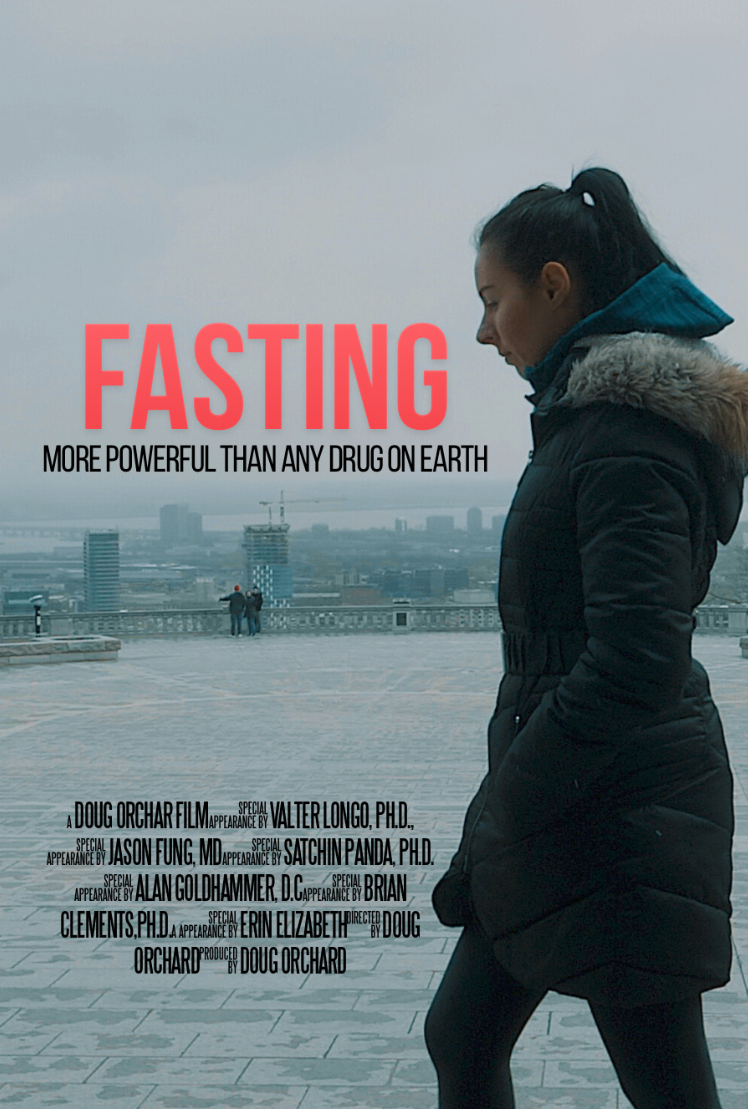
I highly recommend a great new documentary now available for purchase/ rent online called Fasting — The Movie.
It presents the science of fasting and how people can lose weight and
even reverse many metabolic diseases such as type 2 diabetes and its
related conditions. Given the importance of these diseases in modern day
medicine, this is nothing short of revolutionary. However, taken to an
extreme, fasting can also have its dangers. This is true not just for
fasting but for anything. If you take veganism to an extreme, you may
put yourself in danger, for example, of vitamin B12 deficiency. If you
take the low fat diet to an extreme, you are at danger of vitamin D
deficiency. If you take salt restriction to an extreme, you may be at
danger of volume depletion. If you take exercise to an extreme, you may
put yourself at danger of rhabdomyolysis (muscle breakdown). Everything
must be done responsibly, with knowledge and with common sense.
Fasting
is no different. Because fasting is already more intensive than most
diets, taking fasting to an extreme can be problematic. The movie goes
into some of the dangers of fasting and explores many of the variants of
fasting that are popular and may be beneficial for people. Simply put,
fasting is a weapon to be used in the fight against obesity related
conditions and perhaps some aging related conditions.
But,
like any weapon, it has two edges. It has real power, and that power
can be used constructively and it can also, in the wrong hands, be used
destructively. It is all a matter of context and applicability. Much of
the resurgence of interest in fasting as a therapeutic option centers
around intermittent fasting
— generally of shorter duration done consistently and frequently. The
5:2 diet, popularized by Dr. Michael Mosley is 2 days of fasting per
week, but those ‘fasting’ days still allows 500 calories per day. Time
restricted eating such as a 16:8 schedule, allows you to eat during only
8 hours of the day, so 16 hours are spent fasting. Many of the patients
in my Intensive Dietary Management program use 24 hour to 36 hour fasts 2–3 times per week, and this is done under medical supervision with their physician.
Certainly
I use extended fasting as well, but generally limited to 7–14 days,
only in the appropriate person and with supervision. Clients are always
instructed to stop immediately if not feeling well, and we also check in
with them regularly. Longer fasts have more power, but more risk. To
me, there is no reason to fast for 30 consecutive days just for the sake
of argument. Why not do 4 separate 7-day fasts instead? It will have
roughly the same beneficial health effects with far less risk.
By contrast, in Fasting — the movie, director Doug Orchard
tells the story of a young lady who decided to join a 30 day water-only
fasting retreat. As far as I can tell, there was no medical
supervision, and there was no bloodwork being checked and there was no
professional who even determined whether this was appropriate. One of my
primary rules for fasting is that if somebody is underweight or there
is concern about malnutrition, then they should not fast. Underweight is
defined by Body Mass Index < 18.5, but for a margin of safety, I
don’t recommend that anybody fast longer than 24 hours if they have a
BMI< 20. The reasoning seems rather obvious. During the fasting
period, the body must survive on the nutrients and energy stored. If you
have lots and lots of body fat (stored food energy), then you should be
fine. If you do NOT have lots and lots of body fat, then it’s NOT fine.
It’s stupid.
People
get into trouble with extended fasts because they don’t follow common
sense. Many of these fasting retreats offer 30 day water only fasts. If
you become depleted of sodium (quite common), there are no doctors there
to monitor for warning signs. If you become very weak and unable to get
out of bed, there is very clearly something wrong, and you should not
continue fasting. This is common sense. In my IDM program, clients know
that they may feel hungry, maybe a little irritable, constipated
perhaps, but they should not feel UNWELL. If you are really feeling
poorly, you must
stop. There is no reason to continue, because fasting is free. It is
far better to stop and try it again (if you want) in a few days when you
are feeling better. The problem with these fasting retreats is that
people have paid money to be there and therefore they push on far beyond
the limits of good safety practice and far beyond the limits of common
sense.
Further,
people undertake extreme fasting without any kind of preparation.
Instead of undertaking shorter fasts and gradually extending it, they
immediately opt for a full on water-only extended fast. This is like a
rookie mountaineer that decides that he/she will tackle Mount Everest,
without oxygen and push on to the summit irregardless of weather. The
experience mountaineer would immediately recognize this as a death wish,
but the rookie has no inkling of the dangers and may come home in a
body bag. It’s pure stupidity. Yet fasting clinics promote this very
same idea. Taking the most extreme fast (water-only fasting, as opposed
to allowing some bone broth or some caloric intake), to an extended
period of time (30 days instead of 1–2 days), in anybody irregardless of
whether this is medically appropriate, without any adequate medical
supervision or access to bloodwork? I can tell you right now, that’s
pure stupidity.
Consider
the story of the marathon. According to legend, in 490 BC the Greek
soldier Pheidippides ran approximately 26 miles from the battlefield
near the town of Marathon to Athens to deliver the news of the defeat of
the Persians. He shouted Niki! (Victory) and then promptly keeled over
and died.
Suppose
a sedentary, middle aged, out of shape man decided to run a full 26
miles at maximum speed tomorrow, without any type of preparation or
knowledge. He might very well keel over and die, too. Indeed, in 2014, a
42 year old man died after the London Marathon,
the event’s second death in 3 years. Later that year, a 31 year old man
and a 35 year old man died in a North Carolina event. Since marathon is
a relatively extreme event for most people, it takes some preparation
to do safely. That’s easy to understand so you don’t see hysterical
headlines saying “Running, the most dangerous thing ever”. If you want
to run a few minutes, that probably won’t kill you. Running a marathon
in an untrained state could very well do so.
So
the bottom line is that fasting, done properly and with knowledge and
experience is a powerful tool in the fight against metabolic disease and
obesity. But tools can cut both ways and can sometimes harm the user. A
chainsaw is a powerful tool for cutting trees. It may also kill you if
used improperly. But the proper lesson is not to abandon the chainsaw.
Instead, we need to learn how to properly use the tool. Fasting, used
responsibly can be a powerful force for health. Fasting, used
inappropriately can hurt or kill you. Fasting by starting out skipping a
meal here and there — good idea. Fasting by starting out 30 day water
only fast come hell or high water — bad idea. There’s a ton of free
information on fasting that I’ve written extensively on my blog. Just search for the 40+ posts I’ve labelled with ‘Fasting’. I’ve also posted free videos and podcasts, too. So cost is not an issue. Be safe, everybody.
Garry Kasparov, Serena Williams, James Patterson, Christina Aguilera, and others . . .
Note:
If you decide to purchase anything, using the links below, you’ll be
financially supporting the Personal Growth publication. Thanks for your
support.
At
age 22, Garry Kasparov became the youngest world chess champion. After
beating Bobby Fischer’s peak rating, he outranked his fiercest
competitors for over twenty years. Through detailed lessons, including
his favorite openings and advanced tactics, you will develop the
instincts and philosophy to become a stronger player.
Serena
Williams, the world’s #1 ranked women’s tennis player and winner of 23
Grand Slam singles titles, teaches you tennis and reveals the secrets of
her game. This is as close as you can get to a private lesson with one
of the world’s greatest tennis players.
James
Patterson, the author of 19 consecutive №1 New York Times bestsellers,
reveals his tricks of the trade for the very first time. In this course,
he guides you through every part of the book writing process.
Join
Herbie at the piano as he shares his approach to improvisation,
composition, and harmony. Gain access to 10+ original piano
transcriptions, including 5 exclusive solo performances.
One
of Steve’s first gigs was at the drive-in movies. When the audience
liked a joke, they honked. In this class, Steve shares insights from
performing for cars and humans over a 50-year career spanning sold-out
arenas and blockbuster films. Learn how to find your voice, gather
material, develop an act, and take your comedy to the next level.
At
19 years old, Frank Gehry was a truck driver taking sculpture classes
at night school. His vision for what architecture could accomplish went
on to reshape city skylines, and the imaginations of artists and
designers around the world. Now this master builder invites you into his
never-before-seen model archive for a look into his creative process.
Judy
Blume broke the rules. Her refreshingly honest children’s books were
banned by hundreds of libraries — and loved by generations of readers,
who bought 85 million copies. In her first online class, the
award-winning author teaches you how to invent vivid characters, write
realistic dialogue, and turn your experiences into stories people will
treasure.
Annie
was the first woman to be named chief photographer at Rolling Stone. In
her first online class, Annie shows us that what makes a picture
stunning isn’t the gear or technology — it’s the story. Annie teaches
you her philosophy on photography — how to develop concepts, work with
subjects, shoot with natural light, and bring images to life in
post-production.
For
the first time, the Oscar nominated star teaches how he creates
memorable characters, powerful performances, and a long-lasting career.
Learn to master auditions, analyze scripts, and find the truth in every
role you play.
This
is Gordon Ramsay like you’ve never experienced. The seven-star Michelin
chef takes you into his home kitchen to learn everything from kitchen
setup and buying the freshest ingredients to constructing unforgettable
dishes. In this MasterClass, you’re not just learning recipes, you’re
learning how to take your cooking to the next level.
Dr.
Jane Goodall teaches how you can conserve the environment. She also
shares her research on the behavioral patterns of chimpanzees and what
they taught her about conservation. You’ll learn how to “act locally”
and protect the planet.
Aaron Sorkin wrote his first movie on cocktail napkins. Those napkins turned into A Few Good Men, starring Jack Nicholson. Now, the Academy Award winning writer of The West Wing and The Social Network
is teaching screenwriting. You’ll learn his rules of storytelling,
dialogue, character development, and what makes a script actually sell.
Join
Stephen on the court in his first-ever online class as he teaches you
how to improve your shooting mechanics, and leads you through
ball-handling, footwork, and scoring drills. Then see the game through
Stephen’s eyes as he analyzes NBA game footage to help you elevate your
basketball IQ.
Christina
teaches you how to expand your range, find your voice, and master the
techniques that have earned her six Grammy Awards. You’ll learn warm-up
exercises, breath control, vibrato, her signature growls, and hear
Christina break down her biggest hits.
When
the legendary director Werner Herzog was 19, he stole a camera and made
his first movie. 70 films and 50 awards later, Werner is teaching
documentary and feature filmmaking. You’ll learn storytelling,
cinematography, locations, self-financing, documentary interview
techniques, and how to bring your ideas to life.