Lean Startup

Showing posts with label Lean Startup. Show all posts

Wednesday, March 21, 2018

Your Success in Life


Without It, You’re Dead In the Water



You have to set big, hairy, and audacious goals to do great things.
But setting the goals themselves is only the first part of the equation. If you want to do anything great, you have to learn the art of following through.
That’s where we slip — because taking action is scary. It takes tenacity to follow through on our goals and you need the audacity to set a huge scary goal down and tell the world you’re going to achieve it no matter what.
It takes guts to claim a piece of the pie for your own. But you know what else it takes, and a lot of it?
It takes patience. So much patience. It can take years of patience, or even a decade of grueling work before you start to reap big results from all the time and hard work you’ve put in, and it can be frustrating as hell.
The solution? Learn how to be more patient than everybody else and revel in the hard work, no matter what anyone else tells you to do. That’s the only way to reach your personal success.

There’s No Clear-Cut, Easy Way to Success

You’ve heard all the clichés. Rome wasn’t built in a day, it’s a marathon not a sprint, you need 10,000 hours to be great, etc.
None of that helps, though. Neither does telling you to be patient because you want it all to come true now.
Who wouldn’t want that, right?
But even when looking down the vast tunnel where the light at the end signifies your future success, you still wonder why despite your best efforts, it’s just not happening for you. It’s only human to wonder and beat ourselves up for not being successful yet, after all.
I don’t care what you’re doing. Working on a novel, building an audience, creating a body of work… it all takes time. But time is our greatest asset. We have lots of it, even though we squander a lot of it.
The question becomes how to best use the time we have to fuel our progress, rather than hinder it.

How do you use your time?

How do you try to be patient, despite your best efforts to rush the job?
Ten steps over ten days are better than 1,000 steps in one day without any follow up for a month. Going small has its advantages and you can build it into something big.
But going big right out of the gate? It’s only a recipe for disaster and a guaranteed way to burnout.
I used to think I should only write epic, long-form content. Stuff that was at least a thousand words but preferably two to three thousand words long. So I’d occasionally write, waiting for the spark of a bright idea to take hold of me that was worthy of an ‘epic’ post.
It didn’t take long for these huge expectations to become too much and drive me into an oblivion of not creating a damn thing for weeks and months to come. Which wasn’t good for anybody, especially my own self-confidence.
My own vision of success had crippled me into a state of non-creation, a state of perpetual writer’s block; I was stuck in a fog of my own doubts, completely lost with nowhere to go but forward.
But I didn’t want to move forward. I just wanted to stay right here, doing what I always did… even though the spark was all but extinguished.

Block Out the Noise and Quiet Your Mind

Everyone has their own ideas of how you should best do something. Whatever you’re doing, there are hundreds or thousands of books on it, regardless of the size of your niche. Even with the internet, there are blogs on every topic imaginable, either small, free blogs or self-hosted personal blogs or posts right here on Medium.
The problem is they often contradict each other because advice is a dime a dozen these days. But being patient will never change. Patience is a virtue, yes, but let me be clear — there’s a difference between patience and hesitation. Between going for it and waiting it out.
Being patient is accepting that great things take a long time to build. And hesitation is looking down the hole of what you’d have to do to get to where you want to be and stopping dead in your tracks. Patience is accepting that creating your best work is going to take a while, and living with that — not complaining about it and bemoaning your situation, but just putting your head down and doing the work regardless of the outcome it gives you.
If you’re not patient and don’t give yourself fully to the work, you’ll never get anywhere at all. And even if you do, you won’t be able to sustain enough forward momentum to keep going every day. That’s part of the reason why blogging almost every day is helpful because it forces me to keep going no matter what.
Because no matter how good I thought yesterday’s piece was and how bad today’s is, I keep going. That’s all any of us can do.
Without that persistent plodding forward, I’d be stuck. I’d never learn to be patient with the process and accept the results as they come.
Despite the cost it takes, unless you’re doing the necessary work to keep yourself going every day, you’re only dooming yourself to fail and never reach your dreams at all.
Remember that, so when someone questions why you’re not where they think you should be, you can safely ignore them. Because there is only doing the work, and not doing it. And when you’re doing it, nothing else really matters.
Weirdly enough, when you consistently do the work over time, magic will start to appear in your life. If you have the patience and the awareness to see it, that alone will be enough to keep you going for the rest of your life to come.

Source

Monday, February 19, 2018

Keep Going When Everyone Is Doubting You.


We’ve all experienced this. We get worked up about a new idea or project and see so much potential in it. Most people, when they get an idea, they are eager to share it with their peers and family. After sharing it, the response they hear is brutal. It’s like a swift kick in the head.
“I don’t think that’s a good idea”
“It might not work out and you’ll be broke”

 “Maybe you should stick to your job and not take the risk”
It’s almost a shocker that the people we assume are going to support us under any circumstance are the first ones to put massive disbelief in our ideas, goals, and dreams.
In this world, it is almost impossible to stay away from judgment, criticism, and all around negativity. Often times, it is the people we are closest to that cause us to lose sight of our goals or give up completely.
If you’re creating anything different than the norm, it’s almost a guarantee that you will be laughed at in some way. People will doubt you from the very beginning of your new project or idea.
To succeed in life you must be able to completely silence any form of judgment or hate, even from your friends and family. The main reason your family is concerned is they don’t want to see you fail or be disappointed. They love you and only want the best for you.
They will think you’re out of your mind for wanting to risk starting a business that might fail, quit your job, or become self-dependent. What they don’t know is that you enjoy the challenge. The risk of making it or losing it all is what makes you feel alive. Nobody can see the fire inside you and it’s up to you to keep it aflame no matter what is happening around you.
For entrepreneurs, the real disappoint comes from not even trying. Being tied down to a 9–5 and working for another individual is a calamity for entrepreneurs.
The number one reason people like to judge your ambitions and goals is that they aren’t doing anything for themselves. They are content with their accomplishments and by putting you down, they appear less like they are doing nothing with their lives.
The truth is, they aren’t capable of doing anything extraordinary so they want to judge anyone else is who is striving to become successful and build something outstanding.
Laughing at someone for wanting to be a bigger person than they are is a one-way ticket to showing you are settling. It’s essentially a way for someone to get praise for only wanting the bare minimum.
“You can’t do this” — “That’s a dumb idea” could be translated to “I can’t do it so I’m going to put you down for doing it”.
When do I tell my significant other? My family? My friends?
The issue with telling people right away is you could face them putting you down and ultimately, cause you to not feel encouraged anymore.
You should feel comfortable telling them right away. That is, only, if you can 100% keep going regardless of what they say about your new idea, business plan, or future aspirations.
Being able to remain focused and silence any doubt is crucial to succeeding in life. If you want your dreams to come true you must believe in yourself when nobody around you does. Have faith in yourself and remember that everyone starts at stage 1. All great businesses, projects, and companies began with an idea from someone who was originally unqualified.
If you care a lot about your families opinion and don’t see yourself being able to move forward after what they say, waiting to tell them could be the best option. There is no loss for telling them after it’s established or it’s become clear that you’re committed to your goal, idea, or project.
There is one thing that will never change. As soon as your idea starts paying the bills, your family will never doubt you or question your actions ever again.
“Family and friends won’t support you until strangers start celebrating you” Brian Street.
Greatness doesn’t go unnoticed and some ambitions you just can’t keep quiet.
Understand that your relatives and family members are always on your side. It may seem like they are against you with some of their statements but it’s only because they simply don’t understand and know what brings you joy in life.
They may have grown up with the idea of the “American Dream” as getting a degree, getting a “high” paying job, getting married, having kids, growing old, and retiring. For some of us, a lot of that sounds like a disaster.
Family members don’t seem to realize that being in the same position 5 years from now will be the ultimate failure and unhappiness for most of us.
Those who listen to their families opinions (If they are not encouraging) will never see a breakthrough. Those who said “I’m going to do this anyway with or without your support” will achieve what they are working towards.
There’s nothing more disappointing than looking in the mirror and seeing the exact same person you were 5 years ago.

Conclusion:

People are going to criticize you REGARDLESS of what you do. Why not at least do something extraordinary? If you take massive action, silence any doubt, have a definite purpose, you are virtually unstoppable.
If there is someone doubting you, criticizing you, laughing at you, or judging your goals — good, that means they are big enough and worth fighting for.
Use doubt as motivation to prove them wrong. Don’t let anyone tell you that you aren’t capable of doing something incredible with your life.

Sunday, February 4, 2018

7 Tips to Enhance Mobile Interactions


The quality of mobile design can be measured simply. When the process of usage is so smooth and effortless that people don’t even think about it, it is the sign of the professional design work. On the other hand, if there are some problems in the interaction system, users will definitely notice them and won’t be pleased about it.
Mobile apps are expected to be clear and easy to operate so that they could be effectively used anytime and anyplace. Designers’ task is to create an intuitive interface which will guide users within the app helping them operate its functionality without problems. In this article, we describe the essential aspects of the effective mobile interaction system along with the tips helping designers to create intuitive design.
Navigation in UI

Increase learnability

Every designer strives at creating a unique product with original interactions and navigation systems. Such an approach allows standing out a crowd and being noticeable on the market. However, creating absolutely new environment designers have to think how users will adjust to it.
If the interaction system of a mobile application has no logic and sequence or it doesn’t respond to needs of the target audience, it may be frustrating and annoying. That condition is critical for UX, so people will simply give up on trying to decipher an app and quit it.
To avoid this kind of outcome, designers need to care about learnability of the interactive elements. Learnability stands for how easy tasks can be attained during the first usage and how quickly users learn from the previous experience. To increase learnability, designers need to keep it simple and clear helping quickly adjust to it. Also, the system should be consistent and logical so that users could identify the repeating patterns and use a mobile app intuitively.

Consider multiple holds

We all are different in many ways, even how we hold smartphones. The way of holding smartphones depends on various factors including the situation and conditions in which the app is used as well as the task we need to accomplish.
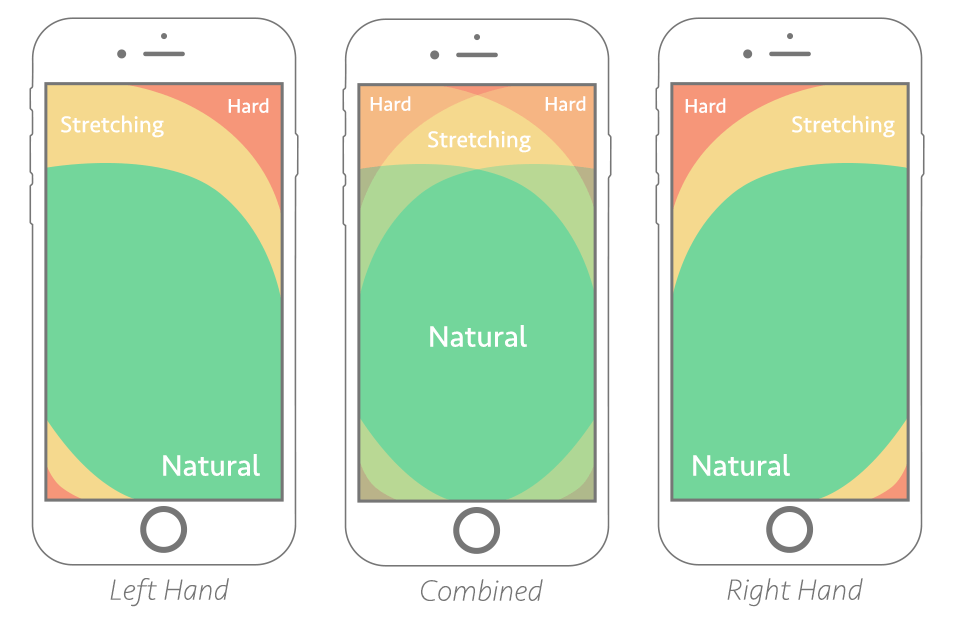
There are three common types of holding a mobile. The first is when we take it with one hand and navigate it with a thumb. Another way is to hold a smartphone in one hand and interact with it with the forefinger of the other hand. Also, the type which is common for chatting people is holding a phone in two hands using both thumbs for actions. Of course, there are other types of holds but these three are thought to be the most common.
Source
Source
Considering this fact, designers have to figure out if the layout elements placed effectively for different holds. One-handed hold requires special attention since it has the most limited space of reach. To make the interaction process within a mobile app effortless it may be a good idea to put the key components at the bottom of the screen so that users would be able to reach tap areas easily. In addition, the interactive elements should be big enough so there would be no chance for a mistap.
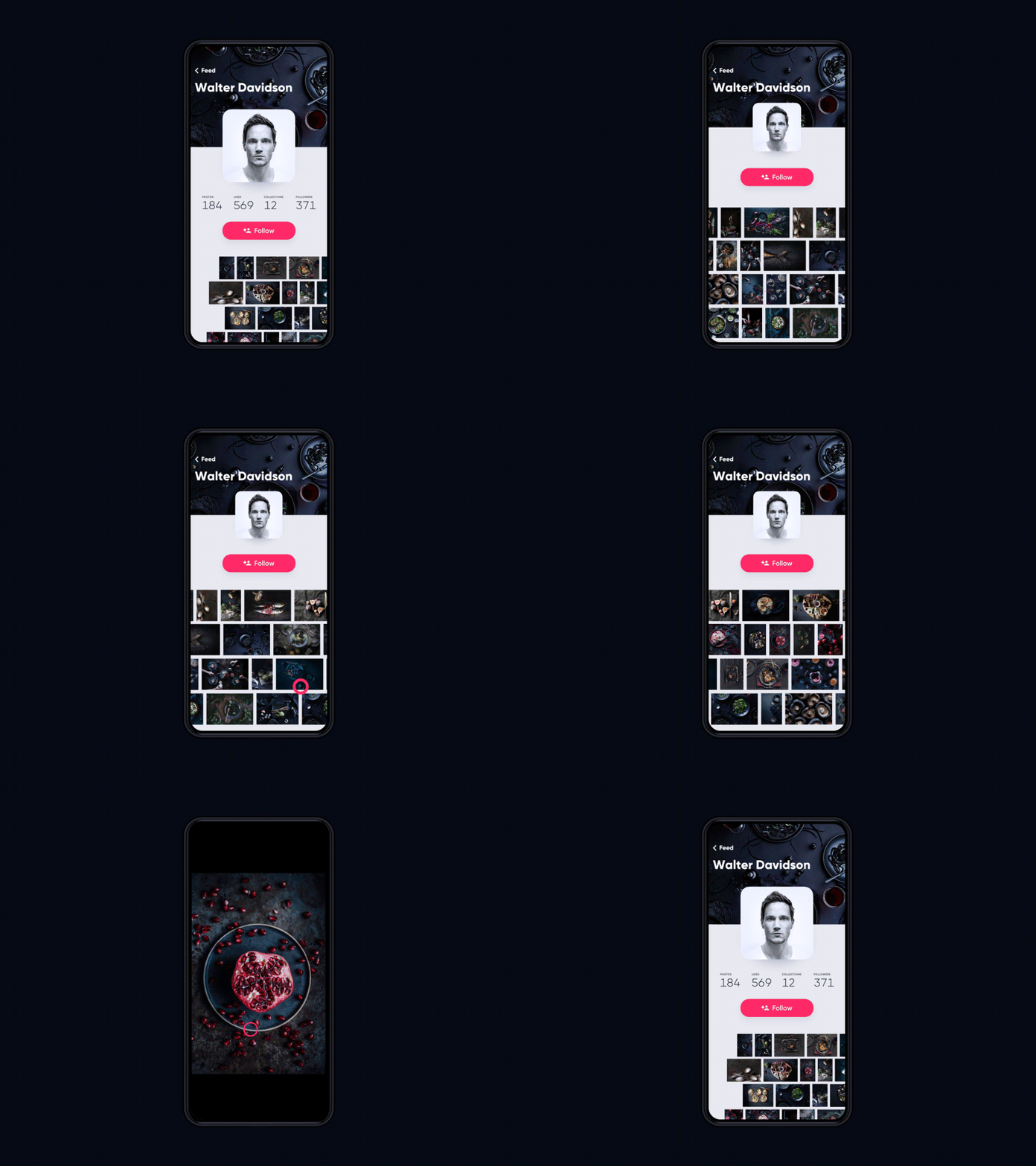
Upper App

Apply recognition patterns

When a new app can be used intuitively it means that the designer did a good job. To provide intuitive interactions, UI design has to contain recognition patterns. They are the elements which users are already familiar with and those which give slight hints on how an app works. The thing is that using an application we are expecting to see certain things associated with the definite kind of product. For example, working with e-commerce apps we are used to seeing cart icons along with CTA buttons “Buy”. Familiar elements in a new app make people feel more confident in their actions.
Users become accustomed to things quickly and their absence makes them feel uncomfortable. That’s why, if you plan to use custom interactive elements, don’t forget to add some standard components. This way a new application won’t overwhelm with an absolutely unfamiliar environment and will help to learn quickly.
Jewellery Ecommerce App

Make a clean UI

A big pitfall of mobile UI design is small screens of the devices. Designers have to figure out how to include all content in a short space without turning user interface into clutter. Clean UI design helps effectively interact with a product since all the core elements can be easily reached.
To create neat mobile UI it is recommended to use icons as interactive components. Copy elements often can be too big for the small screen, so icons are a sufficient alternative. They can explain a function visualizing it with simple shapes and it helps to save the space on the screen. However, during usability testing, it should be thoroughly checked if the icons are perceived appropriately and transfer the right message.

Decrease the number of actions

Probably, many of us have the experience of using an annoying mobile app which made us take a long way before we could finally accomplish the task. It may often be caused by ineffective interaction system which employs too many actions and the unnecessary functionality.
Mobile apps usually serve as problem-solving assistants, so it’s vital for them to be designed ergonomically. It means that designers have to apply only core functional elements which will get the users right to the point they needed. Minimum of actions won’t make your product look primitive. It will help a mobile app be effective and pleasing in usage. Remember that people mostly rate the quality of an application not by extraordinary features but how helpful it is.
Photo App

Add game mechanics

Based on the facts described above, we can say that an effective mobile interaction system should be simple and clear to use so that it could be operated without problems.
However, simplifying the interface it’s vital not make it boring. Apps which seem ordinary have fewer chances to gain users’ attention. That’s why it’s important to bring some emotional aspects into applications that look standard at the first glance.
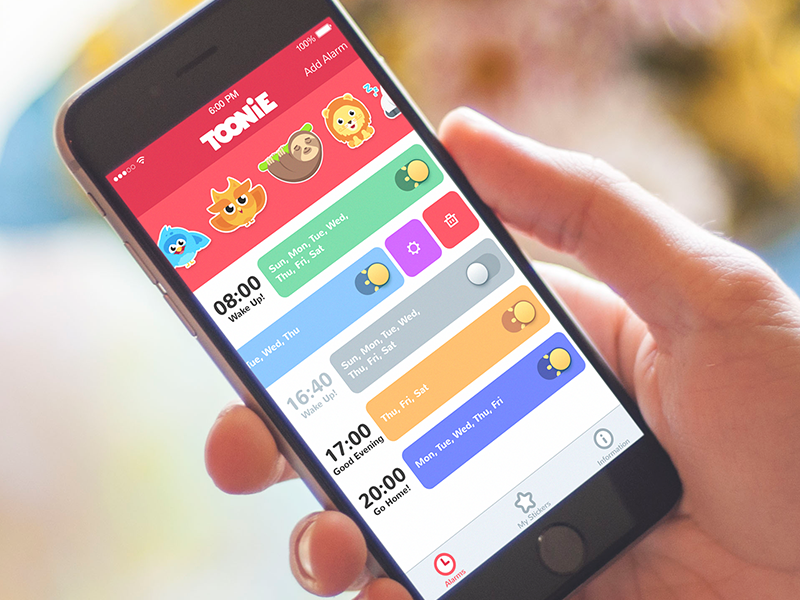
To make the process interesting and catchy, it may be a good idea to use gamification. It is the technique of exerting game mechanics into the non-game environment like mobile applications. Various challenges and leaderboards along with the awards and stickers motivate users to interact with a product more and come back to it constantly.
What’s more, implementing a game mechanic called a user journey is an effective way to create clear layout and transitions. A journey is user’s progression stages at the time of usage. Designers create UX that way so that people could go step-by-step through the various features which gradually change depending on needs of the target audience. An approach helps to avoid problems with incomprehensible interactions and functions.
Last but not least, gamification adds the element of fun. Users enjoy entertainment, challenges, and competitive spirit similar to video games, so they are encouraged to go back. People always need some kind of recreational activity so that they could escape from everyday routine for a bit. By adding the fun element into a casual application, you help to reduce some stress and relax for a moment.
Toonie Alarm

Don’t forget about testing

Mobile interaction design aims at creating a user-friendly product which will be pleasant to use under different circumstances. But how can a designer define if an app is usable enough and distinguish possible problems in UX? This is when usability testing comes into play.
Usability testing is an essential stage in creating mobile apps helping to evaluate it by testing on the potential audience. It is usually conducted at the UX building stage before a project goes to the development team so that inefficient solutions could be changed easier and faster.
Various usability testing methods allow identifying problems and bugs and quickly eliminate them. This way designers can improve all the aspects of UX ensuring user satisfaction.
So, before you deliver a project to the development team remember to handle testing. Test it by yourself, on your colleagues, on the potential users and then you’ll get the desired outcome.
Urban Sketcher App
A simple mobile interaction system is not that easy to create. It requires hard work, concentration and lots of practice before you receive sufficient results. Stay tuned!

Friday, February 2, 2018

How To Talk To A Woman


Bulletproof advice for fellas.


You’ve probably seen it by now — that YouTube vid that careens through 10 painstaking hours of walking through NYC as a woman. In it, she — all while avoiding eye contact — runs a gauntlet of come-ons, creepings, catcalls and conversation non-starters. A lot of them say “hello” or call her “beautiful.” I dare you to watch it without wincing.
You might be saying to yourself, “Well … I don’t see what’s so bad about saying hello or paying a compliment.” I think that’s a valid point and one worth addressing. We’ll do so here.

In one-on one conversation, there are two parties: The initiator (the one who starts the conversation) and the receptor (the one who needs to choose whether to engage or ignore the initiation). When men approach women — with a hello, or a compliment, or a subtle “Dammmmmmn grrrrrrrrl” — they are initiating. Now the burden is on the woman to address it. There are times when men approach women in such an over-the-top fashion that women are left with no choice but to engage. This is, obviously, problematic. Now there are expectations placed upon a woman without her consent. That’s the first issue with saying hello or paying an unsolicited compliment.
The second issue revolves around the past informing the present. Often times, men who approach women in a seemingly innocuous fashion are viewed unfavorably, because quite often, other fellas before them have lobbed the same friendly “Hello” like a grenade — a grenade which later explodes into unwarranted sexual advances and uncomfortable flirting. Because of this, any man who assumes the role of initiator will be viewed as “that guy.” If you take nothing else away from this column, it’s this: Don’t be “that guy.”

Women don’t have time to deal with whatever shit you may or may not throw at them, and they sure as hell don’t have time to decide whether or not you may or may not throw shit their way. Ignoring your advances is nothing personal: It’s merely an algorithm they’ve developed that helps them mitigate risk. It’s not all that dissimilar to locking your door at night or changing the channel the minute you hear the words “LaVar Ball.”
So if you can try viewing the interaction through that lens, you can see that women are probably pretty tired of having to fend off initiators with silence, strength and occasionally spray. Now that you know, now you don’t have to drive women panda-shit insane on comment threads, asking for a hard, fast man/woman interaction code of ethics some 472 pages thick … like these enterprising young Romeos did:
When did a man saying anything to a woman in public become a “catcall”?
If you are interested in approaching someone you are attracted to, must you also approach everyone else, so the person you’re attracted to doesn’t get the wrong idea?
Why does finding someone attractive and wanting to say “hello” to them have “sexual undertones”? Why is wanting to strike up a conversation with someone you find attractive a bad intention?
Why automatically assume it to be “catcalling” or sexual harassment?
How would someone who finds another person attractive initiate contact with that person? If “hello,” with no follow up if ignored, crosses the line into catcalling and harassment, what wouldn’t be catcalling or harassment?
Yikes. Sit this one out slugger. Let me help you.

As established earlier, women get to choose who they wish to interact with moment-to-moment, day-to-day. Until you receive a very, very clear signal that they wish to engage you, (like a “hello” or a warm unsolicited smile), then they have not selected you for a speaking role in that scene. You’re an extra. Speak when spoken to — and, yes, sometimes that speaking is non-verbal. Listen with your eyes. Let’s open it up for questions.

Q: What if I want to talk to a woman and she says nothing?

Maybe she spilled coffee on her favorite shirt that morning. Maybe she’s really digging this episode of “All Songs Considered.” Maybe she’s pissed at her boss. Maybe you’re wearing cargo shorts. In any case … that’s not your concern. You can move on. Someone, somewhere, will say hello to you first.

Q: What if a lot of women say nothing to me?

Find a way to be interesting. Read a new book. Listen to a new podcast. Take a Portuguese language immersion classic. Cook a mean pad thai. Start cross-fit. Get your dream job. Go to grad school. Invite your friends to a whiskey tasting. Mentor some kids. Walk shelter dogs. Backpack through Asia. Meditate. Brew a tasty IPA. Bike across town. Pick up a guitar. Paint the skyline. Create. Make. Do. Share. Experience. Oh … and stop wearing cargo shorts.

Q: What if I do all those things already and no women give me the green light to say ‘hi?’

You’re a liar. Or you have a face tattoo.

Friday, January 26, 2018

The Voice All Creative People Will Understand (and must overcome)


“I am garbage.”
That’s what I thought when I first saw the message.
Feedback had finally come back on my big writing project. Long story short — my client didn’t like where we were going so far.
In the note he said this:
“It doesn’t move me.”
Which, probably, is the worst thing any person who does creative work could ever hear. The proverbial knife to the heart.
What’s worse?
After I read it, the cold realization struck: I had been expecting this.

On some level, every creative person is waiting for someone to tell us we are crap.
We are P.T. Barnum, fooling our consumers until one of them says “hang on, this isn’t quite right.”
At which point, we are relieved to give up the ghost:
“At last. THIS person understands me! Thank God you’ve identified me as the fraud I really am!”
It’s as if every demon from your old gym teacher, every breakup, every doubt, every admonishment from your parents is waiting in the corner of your mind, waiting for you to slip up.
See, I just tried and failed 3 times to spell “admonishment” correctly. A part of me wondered if a real writer would have that problem.
Blah.

So what to do?
Hustle your way past it?
I’ve tried that before. The string always snaps.
Pretend the voice doesn’t exist?
HA! Maybe I will also remove one of my fingers.
Choose a different career or calling?
I wish. The fact of the matter is I simply cannot. Were I to choose a management career at Burger King, I would be writing tweets on napkins, scribbling poems on packets of ketchup, and daydreaming during cleanup hour.
Instead, I like to think of what artist Sol Lewitt told a sculptor Eva Hesse, when she was struggling with her work, with feelings of doubt and disgrace, of angst and agony.
“Maybe you need your agony to accomplish what you do.”

Art will never be a simple task. Its very nature demands a new effort from you — not once, not twice, but EVERY time.
You die EVERY time.
You challenge assumptions EVERY time.
You hear the voice EVERY time.
You become a new person EVERY time.
(This is what happens if you’re doing it right)
I can’t pretend your journey is going to get easier.
All I can do is say this:
I understand. I feel it too.

There’s another line in Sol Lewitt’s letter. It goes like this:
“Maybe you need your agony to accomplish what you do.
“But it is painful, I know.”
Lewitt is well known in the art world. Among other things, he had success in photography, building sculptures, drawing on walls, and architecture. His work is in museum. Perhaps the strongest testament to his legacy is this — he is dead, and we am still talking about him.
Despite all that, he still felt the voice. He knew what it was like to feel less than enough.
And that makes me a little less lonely.
Much love,

Monday, January 22, 2018

If You Hate Your Job, Read This.


I promise it’s not a webinar funnel…


If you’re reading this, you’re not alone. Overall, 32% of Americans are also looking to get out and away from their current job situations.The strugglebus is at full capacity.Being in a job situation that you hate is one of the most demoralizing experiences that a person can face. That’s why this piece of content exists. To liberate your soul.However, before we get started, keep in mind that quitting your job isn’t always the solution. Nor is quitting immediately after finishing this article, even if you really really really feel like it.Some healthy alternatives to quitting are:Having a conversation with your supervisor or boss to work out the issue Considering if you’re actually working hard enough for the things you want Joining another department or asking for different responsibilities Leaving your current company shouldn’t be a spur of the moment decision you make because one or two small and insignificant things happened that made you upset. That being said, there is absolutely nothing wrong with leaving a toxic job situation. Being in a workplace or job position that is physically harmful, emotionally taxing, not paying you what you’re worth (merit based), or isn’t offering an opportunity for growth, is a losing game. Head for the hills.

“But how do I tell if I need a new job or not?”

Reasonable question.
It can be difficult to determine which signs point to needing to leave your job, especially if you are on the fence and this is your first time having to make a decision like this.
Here are some questions to help point you in the right direction:
  • In 5 years, where do you see yourself within the company? Are you content with that thought?
  • Do you get joy or fulfillment out of the results you produce?
  • Do you partake in self-destructive behaviors (drinking, binge watching television, overeating, crying, etc) after or before work to mask or deal with the stress?
  • Do you agree with the company’s values, ethics, and projections for the future?
  • Are your bosses and supervisors encouraging, responsible, mentorship oriented, and invested in your success?
If you’re coming up with a bunch of nos…then it might be time. Quitting your job isn’t always easy, but doing so can be liberating and help you find a healthier and more professional path that will ultimately lead to a better life.
Here’s how to do it the right way.

How To Leave Your Current Job The Right Way

Step 1. Realize It’s Time To Move On

The first and most important step to finally leaving your job is realizing that the job you currently have isn’t all that great.
You’ve got to come to the understanding that your potential isn’t being fostered, the future isn’t all that promising, and/or you have passions that lie elsewhere. These are all factors that your current situation isn’t providing for you.
This life is all about perspective. If you have the attitude that you’re lucky to be making $10.50 an hour at Taco Bell for the next 5 years then there’s really nothing anybody can do for you. If you’re content with that situation then great, that’s amazing. At the end of the day, you have to do you and know yourself.
I commend positivity and support making the most out of every situation.
BUT, if you’re not lying to yourself (like the people who are pretending to be happy with that situation I just described), and you’re actually discontent and complaining about it all the time, then you’ve got to realize that part of the problem is the fact that you don’t understand why your job is so toxic.
If you aren’t convinced that your current position is wrong and that there are better opportunities out there, you will continue to rationalize and make reasons to stay.
Take a good hard look at yourself. Think about what you want out of your professional life and what kind of life you want your future self to have. Consider your work performance, skill sets, interests, and contributions to your company and the world.
If you know you’re worth more or feel like something’s missing, you’re definitely ready for the next step.

Step 2. Figure Out What You’re Supposed To Be Doing Instead

Thinking that you’re better than your current position or situation is all well and dandy, but there is a bigger picture to consider. You’ve got to realize what direction you want to head in if you’re unsatisfied with the current one.
Where are you going to go and what are you going to do after the breakup?
You’ve probably been working at dead end jobs that you hate or that don’t pay you well for a while now so you have probably forgotten (or never taken the time to understand) what you actually enjoy doing.
Your concept of who you are and what things matter most are likely not that concrete in your mind because of a lack of will or opportunity to deeply consider them.
This is hugely problematic because if you don’t know what you want to do with yourself then you run the risk of getting stuck again when you move on to the next job. So it’s important to be self-aware and figure out exactly what you want.

Here’s how to do that:

  1. Think about what you do in your spare time. What do you do on the weekends? What do you do that gives you a sense of joy?
  2. Open your mind up to every possibility. If you could have an unlimited amount of time, no responsibilities, and money didn’t matter what you would be doing? Do not limit these thoughts.
  3. Sit down with a piece of paper and a pencil in your hand and write down 25 dream jobs. I’m serious. 25 things that you could be doing with your life that would make you wildly happy and fulfilled. It doesn’t matter how outlandish or ridiculous they seem.
  4. Jump on LinkedIn and map out real world jobs that correspond to your dream job(s). Put these in a column to the right of your dream jobs or on a separate piece of paper. Each “real” job should correspond to one of your dream jobs. When doing this exercise, look out for job environments, role descriptions, and company mission statements that align with your values.
Now you’ve got a picture of what kind of alternatives are possible and how close those opportunities are to your dreams. Those are the kind of jobs you should be going after.
Moving along.

Step 3. Seek Out Other Opportunities (In Real Life)

No, this is not the point where you quit your job…
Take a deep breath.
However, this is the point where you start doing this thing called putting in effort and actually applying for different new job positions. Remember all of those jobs you found on LinkedIn and Indeed?
Start applying for them.
As long as they fulfill the requirements you decided would inspire, energize and fulfill you, put in an application. Don’t apply for anything just to get slightly higher pay or some other incremental improvement over your last job.
If you do, you run the risk of backtracking and winding up in the same situation you’re working so hard to get out of. If you’ve found jobs that match up with your interests, apply.
When going through this application process, do yourself a favor and apply to 20 of those jobs. That’s right, 20. Just because you’ve reached enlightenment and decided which direction to take your life in, doesn’t mean you’ll have a straight shot to your dreams. You have a much better chance of succeeding when you cast a wide net.
Also, the regular rules of job searching still apply. So be sure to cover the basics like representing yourself correctly and having a standout resume. You will give yourself the best chance to win.
“Awesome. Thanks, Ken. I’m totally gonna get the job now on my first try!”
Not so fast.
It is very much within the realm of possibility that you will apply and not get any of the jobs. DO NOT let this discourage you. Pursuing your passions and making your dreams happen takes time and dedication. Be willing to suffer through the temporary discomfort because it will be worth it in the end.
Simply going through the process of searching is giving yourself hope for a better future and your painting a better picture of what’s possible for yourself. Every experience going forward will be a learning one.
Part of getting your dream job is actually putting in the work and not giving up until you get there. If it was supposed to be easy……well…you know the rest. That’s why it’s not necessarily good for everyone to quit right away before they find the new better position.
Some of you will quit, be super inspired for a week, not find the new better job for a while, get discouraged, and then go right back to the old and unfulfilling job simply because you need a way to make ends meet. Or because you’re unwilling to give up temporary luxuries for the future good.
That’s a one-way ticket right back into the situation you tried to escape from and you’ll be just as disappointed as you were before.
Those of you who choose to stick it out, you get it. Proceed.

Step 4. Be Confident In Yourself & Your Decision

It’s important to know exactly who you are. In fact, self — esteem is the most important aspect of this whole process.
You need to become a straight up sage guru of internal peace and confidence.
This is a huge decision, and if you’ve been more or less following the status quo your entire life, it’s going to come with a good amount of stress and indecision. That’s where your trust in yourself and knowing that you have more to offer the world comes in. You owe it to yourself to make sure that you’re fulfilled and content with your life.
If at any point during the decision-making process you start to develop doubt or talk down to yourself, stop and take a deep breath. Look yourself in the nearest mirror and remind yourself how capable you are. Then moonwalk back to reality.
Realize your passion. Believe in it. Trust your abilities. Have faith in the journey.
For some of you, it’s going to be hard to make the decision to leave. Either you think that you and your coworkers are family, that your job needs you and in 60 years everything will be alright once you get that assistant manager position.
But the truth is, if you’re miserable at work, not getting treated properly, and you don’t have a promising future there, it’s not the right place for you.
Also, this is going to be hard to hear, but you’re most likely replaceable.
At the end of the day, they are a business so understand that you leaving is alright as long as you do it properly. When you leave, make sure that you have a sincere conversation with your boss or supervisor. Keep it classy.
Never burn bridges if you can help it.
That’s about it. You’ve done it. You’re free from your job (or at least you just got really pumped walking through all of the steps and know how to do it properly). Congratulations!

Thanks for reading this! If you liked it, please give up to 50 claps to show your support so I can afford to keep dedicating time to write.

Friday, January 19, 2018

6 Tech Tips for Building a Successful Startup


How many times have you seen news about a new, cutting-edge startup before finding out a few months later that it’s dead? The remains of their websites are filled with goodbye messages, also known as “post-mortems,” where leaders share their regrets and reasons for failure, making sure to inform customers that they will be receiving refunds soon.
The main reason startups fail is the lack of market demand. Remember those overpriced juicing machines that created a backlash after the users realized you could squeeze their custom juice packs by hand? A similar fate awaited the creators of the infamous Bodega vending machine, who insensitively considered brick-and-mortar bodegas an inconvenience rather than the livelihood of numerous small business owners.
But we won’t talk about conducting initial market analysis and exploring customer needs here, even though these factors are vital for a startup’s survival and success. Today we focus on the engineering side of the problem. Let’s skip the stage where you shape your innovative idea and dive directly into the technicalities of creating a startup that will stay afloat through the anticipated challenges.

Prototype at early stages

You may be thinking that creating a working prototype is not the action that starts your business. Instead you may want to acquire some capital before plunging into app development. That’s probably because you have an inaccurate understanding of what a prototype is supposed to be.
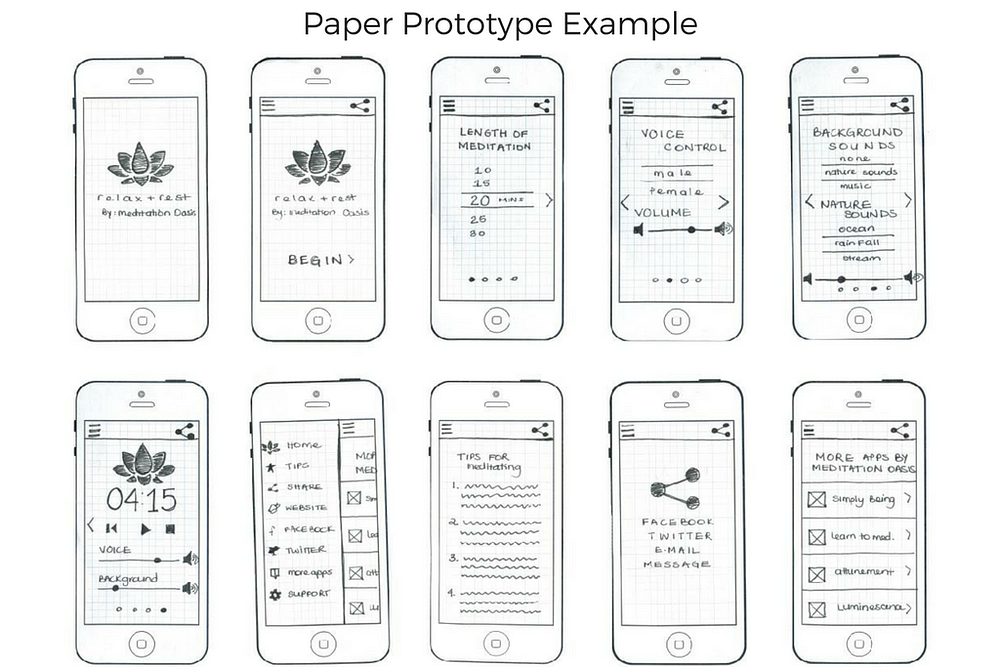
A prototype is a simple interface that allows your audience to interact with a product visually. Prototypes don’t need to perform any functions. They are flexible and easy to create, especially with the help of already existing tools such as UXPin, Axure, or many others.
Paper prototype for a relaxation app
Source
Having a prototype at the earliest stages is helpful for multiple reasons:
  1. Prototype as a presentation for investors
If you have an innovative idea for an app, it’s easier to show investors how exactly it will work instead of trying to explain everything using words only. Often, you won’t need to impress them with quality design and animations, especially if you’re showing it to your 3Fs: Friends, Family, and Fools — the initial supporters of your new idea. Instead of looking like just a person with an idea, you can present a plan and a working process that’s easy to adjust. If you decide to create a high-fidelity interactive prototype, you can use special software and hand investors an iPhone to show a fully interactive screen without doing any coding.
2. Going through research and exploration
The hardest stage of creating a helpful prototype is not the technical part, but the ideation. If you’re not a tech-savvy person familiar with the ins and outs of the app development, you may have a problem designing wireframes that actually make sense. Prototyping will help you learn what types of screens, actions, and alerts your product needs and will allow you to bring your idea into a physical form.
3. Gathering the opinions of potential users
Regardless of how well you researched the market and how detailed your buyer persona is, the best way to learn about your customers’ interests is to directly demonstrate how the product will help them. By gathering the immediate feedback before the programming stage, you significantly cut the time spent developing unnecessary features. This, of course, doesn’t spare you from testing and UX evaluation of an actual working product.
A prototype is the first version of a product, a sketch of your vision. Twenty-nine percent of startups fail because they run out of cash. One of the ways to prevent this is to be prepared for when you do start spending money. Your prototype will pave the way for your MVP — minimum viable product — that version of your idea that holds only the vital features to be verified by customers and investors. (Check out our informative article on creating an MVP.) Such a step-by-step approach to figuring out the basics of a product will help you stay focused on your initial goals and communicate your ideas to your team more clearly.

Adopt the Lean Startup methodology

The startup building process has no framework that will work in each case, so you’ll have to adopt iterative approaches. To enhance your startup’s survival prospect enabling you to apply gained insight to quickly improve, use the Lean startup methodology.
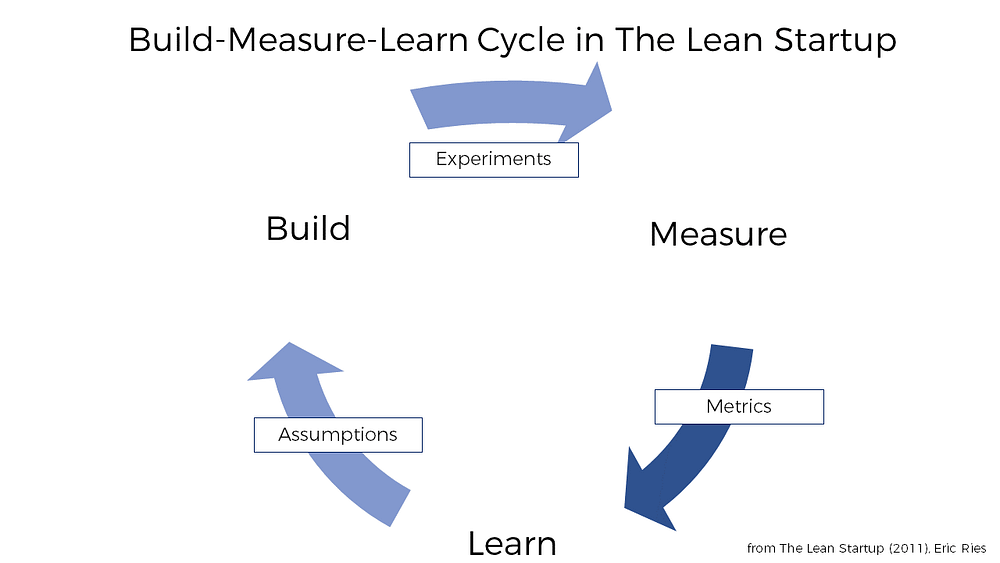
In the Lean Startup world, you work by the build-measure-learn approach — a way to effectively leverage your resources and make use of feedback. Rather than trusting assumptions, you build an MVP and learn from it by gathering feedback and measuring KPIs. The cycle continues until you reach a total understanding with users, letting that intelligence tech you how to create a viable product.
Build-Measure-Learn cycle in the Lean Startup methodology
Source:
The Lean Startup (2011), Eric Ries
The Lean startup principles dictate the importance of listening to your audience, actively learning, and making your development cycles fast. Here, you don’t aspire to build a perfect product and don’t write clunky business plans. Instead you use key performance indicators (KPIs) and adopt a continuous deployment approach.
In his book The Lean Startup, Eric Ries defines four principles of creating and managing a Lean startup:
  1. Eliminate uncertainty. In the highly uncertain startup environment, the Lean approach allows you to create assumptions about the real world, stay flexible, and use tools such as the Business Model Canvas for continuously testing you vision.
  2. Work smarter not harder. Don’t ask yourself how can we build this product? Question whether you should build this product at all. And if you do build it, how to make it sustainable. Don’t spend months perfecting the product before showing it to a potential audience and find out that they weren’t interested in the first place.
  3. Develop an MVP. An MVP is a core component of the build-measure-learn cycle. Your MVP is the spark that starts your engine and allows you to begin measuring and learning.
  4. Validated learning. To demonstrate the progress of your startup, work on the things your customers need. Adapt your plan step-by-step and be ready to change direction if the feedback tells you to.
The one step you can’t miss is a team. To successfully create and run a Lean startup, you must establish non-siloed relationships in your business where all members are data-oriented, cooperative, and cross-functional.

Outsource technical staff

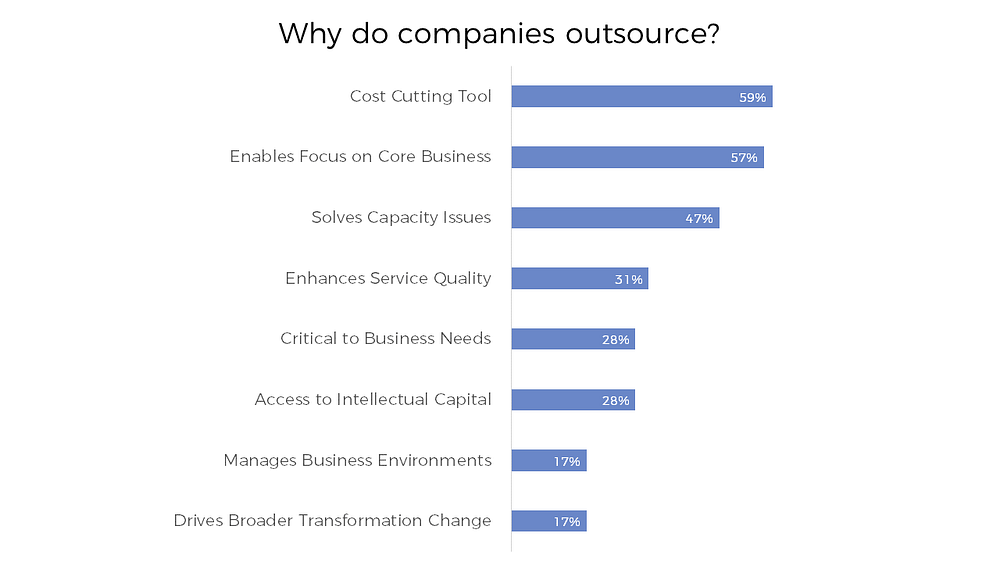
Did you know that at the dawn of their evolution, Slack, Skype, GitHub, and even Google used outsourced development? Having developers in-house is a big advantage, but not everyone can afford to hire senior programming staff at the early stages of the business. Let’s talk about the benefits of using outsourced technical staff:
Why companies outsource
Source:
Deloitte’s 2016 Global Outsourcing Survey
Keeping costs low. You can save up to 60 percent in operational costs with outsourcing. As you may know, a salary is only about a third of an employee’s compensation. The rest goes to taxes, vacations, retirement plans, etc. With offshore staff, you’ll be able to find skilled programmers for a lower price. While you’ll have to pay for Total Cost of Engagement including travel expenses, any communication problems, or additional management on top, you’ll still spend about two times less than at home, given that you reside in North America or Western Europe.
Finding expertise. You can widen your talent pool and find the experts in your specific field easier than by sticking to local vendors only.
Focusing on the growth. Launching a startup requires lots of dedicated time and energy to make important decisions, innovate, and generally do what your team does best. By outsourcing you get an opportunity to figure out how to make your business better and entrust technicalities to someone else.
However, to make sure that your outsourcing activities bring you the desired value, you should know how to choose and manage your partner.
  1. Define outsourcing goals and metrics. Clarify what expectations you have for a vendor, which tasks you want to assign to an outsourced team, and how you’re going to control the work. An experienced partner will gladly discuss with you every detail and suggest the best framework for successful cooperation.
  2. Make the right choice. Word of mouth is the best recommendation you can get for choosing a business partner. See what clients like you say about the company in question and find feedback at B2B rating websites such as Clutch.co.
  3. Have someone to internally manage outsourced relationships. Outsourced or not, the technical part of your initiative is a big one and requires management from your side. Someone has to conduct scheduled weekly meetings to verify the work done, answer the team’s questions, and provide instructions.

Start with scale in mind

The Social Radio, an app allowing you to listen to tweets, shut down due to scalability problems. In their post-mortem, the founders shared that they didn’t know how to scale the app and weren’t ready to maintain it anymore.
This is a common problem for new ideas without established use cases. Even though the people kept using the product, the team didn’t come up with a strategy to help it stay afloat.
So, how exactly do you prepare your product to scale up before you decide to do so?
  1. Determine scaling potential. Is there a way to broaden your audience and make your product valuable to a larger group of people in the future? What about opportunities for additional funding? Can you see where your startup will be in three years or five years? These are the basic questions you should ask yourself.
  2. Spend extra time setting up your business. You wouldn’t hire workers before drawing a plan of a future building. If you take care of the cloud storage and sales infrastructure from the ground up, you will be able to grow, market, and hire faster, thus streamlining the scale up. Automate your organizational and onboarding operations. Don’t try to be an expert in every field and use software to manage your financial data like the invoicing platform offered by QuickBooks.
  3. Grow outwards, not upwards. Expand horizontally to keep the change gradual and under control. When you see that your model works for one group of users, try to replicate the success with another group and learn to personalize service to serve them both. Instead of acquiring more customers for the sake of growth, gradually increase your staff, services, and geographic coverage.
  4. Subtract as necessary. Sometimes, less is more. At the early stage, your tasks and operations may still be minimal but they shouldn’t necessarily magnify with growth. New processes will replace or completely get rid of old ones, and the old ones will slow you down if you stay too focused on additions.
The key to scalability is to think big. You don’t have to consider each future expectation in your prototype, but make sure you’re ready to scale at any moment.

Prioritize customer experience

Great ideas don’t mean anything if they don’t create an amazing experience around them. An excellent experience cultivates an active and vocal audience, and sets you apart from competing businesses in the field. The experience provided by leading companies like Amazon and Google sets the customers’ expectation bar high, so other companies fail to deliver on them. Research shows that 25 percent of customers switch to a competitor after just one bad experience.
In their guide to customer experience, McKinsey highlighted three stages towards a customer-centered organization:
Observe. The customer journey is a series of touchpoints from the first time a user becomes aware of your product to onboarding and transaction. Focusing only on one of these points and failing to see the whole journey can result in satisfactory individual experience but disappointment overall. Use analytical tools and metrics to determine what truly matters to your audience and stay consistently good throughout the whole experience end to end.
Customer Journey vs Touchpoints
Shape. Returning to the Lean approach, design customer interactions according to the feedback and continue refining processes as you receive more data from the customers. The technology behind a personalized customer experience will help you automatically customize the content according to a user’s input.
Perform. Keep a user-centered approach at the foundation of your business. Use the existing customer journey to align your operational processes and empower your employees to deliver on user expectations. Link the metrics that measure customer success to your business outcomes and employee KPIs.
Regardless of your unique business goals and needs, excellent customer experience is equally important to all startups. Instead of trying to fix the customer and make them submit to your rules, change your company and eliminate the problem in the first place.

Set the feedback loop

We’ve already established that the iterative process is essential for a startup and the learning part of your build-measure-learn cycle is supported by the feedback you’ll receive from your audience. There are numerous channels to help you connect with users and you can use all of them at the same time.
Crowdfunding. Platforms for crowdfunding are the number one place to connect with your target audience and learn about their interests and struggles. Choose a website where your customer group resides and where similar projects run their campaigns. This is where you will display your prototype and MVP to help investors find and support the launch of your product. Write a strong message, share your page across social media, and monitor the public reaction and commentary. Don’t go straight to Kickstarter but research your options for possible perks. For instance, Indiegogo allows you to collect the money even if you don’t reach the funding goal, and EquityNet doesn’t charge any fees.
Website or app analytics. Users can tell you a lot even if they’re not telling you anything directly. By regularly reviewing your site’s traffic on Google Analytics or Kissmetrics, you may find out how often they visit the FAQ page or whether it takes too long to find the “contact us” section. By following a user’s journey on a site, you can learn at which point they leave the page and what stops them, for example, from finishing the purchase. These interactions will tell you the things that a customer won’t be able to describe in an interview.
Comment section. Allow users to give you feedback in context and while they’re browsing your site. Use simple forms to encourage people to share concerns and current questions without contacting you via email. This way you’ll be able to both get back to your prospective customers and learn what questions you’ve left unanswered.
Social media. Social channels help your customers contact you in a quick and informal way and make it easier to have an honest conversation. By tracking your mentions, you can react to complaints promptly, engage in discussions, and learn about both positive and negative experience with your product.
Buffer actively reacts to help messages on Twitter
Surveys. Constructing an engaging survey is not a simple task, especially considering that people are not always honest when answering questions anonymously. Marketers use surveys to learn about attitudes to a brand, segment the customers, or help prioritize features with task analysis. To make sure the response you’ll receive is actually helpful, create purposeful questions. For instance, don’t ask how a customer found your website if you don’t know how to use this information in the future. Also, don’t bombard users with a list of open-ended questions. Rather provide them with options and save the descriptive ones for last. Make sure you time your surveys right: Don’t ask your first-time visitors about the experience with the product right away.
Usability tests. By observing how your customers perform the tasks and taking notice of all inconveniences, you’ll be able to find the faults in your design and recognize what can be improved. Read our previous article about conducting usability testing and effectively using the gathered insight to learn even more.
Customer Advisory Board. Members of the CAB are the people who have already committed to your product. They are the executives from your customer companies and the members of your loyal customer base who can give you valuable and detailed feedback. Since they’re interested in helping you grow and provide better service, you can always expect recommendations of substance and worthwhile advice from them. A customer advisory board is usually convened once or twice a year for long discussion sessions that lead to strategic changes.

“Be flexible, but stick to your principles.”

Eleanor Roosevelt
Startup projects are born from passion but driven by discipline and the right strategy. You can’t afford for your idea to die out just because you weren’t focused enough on your own success and spent too much energy overlooking what competitors are doing.
The inability to be flexible made a lot of startups become extinct. Be ready to adapt and change when customer feedback starts dictating your new direction. If the change is promising to help you deliver better experience and expand, embrace it and adjust your company. Empower staff with metrics that will keep them motivated and focused on the desired outcome. Prepare to scale beforehand and create conditions to make this process painless and gradual. And if you want to stay loyal to your idea, check your assumptions early on to make sure there’s a demand for the product you’re trying to create.

Originally published at AltexSoft’s blog: “6 Tech Tips for Building a Successful Startup

This story is published in The Startup,