relationship

Showing posts with label relationship. Show all posts

Sunday, January 28, 2018

How To Build Your Self Esteem


step away from the affirmations


mural: Andrew Burke
“To be healthy, functioning individuals, we need to feel good about ourselves. To feel good about ourselves, we need to feel that our time and energy is spent meaningfully. Meaning is the fuel of our minds. When you run out of it, everything else stops working.”
Most of us struggle with self esteem. Many of us are fortunate enough to realize this, and some of us care enough to try to fix it.
The problem, however, is with the majority of the resources available to us — especially online. I am pretty sure these articles are 100% written by people who have serious self esteem issues, regurgitated from everyone else who has self esteem issues, on down the cycle to readers with self esteem issues, who think it’s just their fault for not being able to apply them and successfully boost their self esteem.
But of course not. Because none of this is how self esteem works.

First, let’s talk about what self esteem ISN’T:

Self esteem is not selfishness or narcissism

Having to say this makes me impatient, because if people don’t innately “get it,” they fight it blindly, emotionally, tooth and nail. And I understand, because there are a lot of emotions on the line here (see: entire post) so I’m just going to tread lightly and quickly when I say:
Self love and self esteem are not selfishness.
On the contrary, selfish people have desperately low self esteem and self love, which is why they overcompensate, demand, and have nothing left to give others.

Self esteem is not a series of “dont’s”

Most self esteem articles cheerily suggest things like, “Don’t have negative self talk. Don’t compare yourself to others. Don’t put yourself down. Don’t doubt yourself,” like “just don’t have low self esteem!”
These aren’t solutions.
  1. The brain struggles with the word “don’t,” and when you focus on the negative, you’re still focusing on the thing. The brain interprets the sentence as an imperative, like: “ah, okay, negative self talk. Got it!” The brain is baby Groot.
  2. The way we talk to ourself is a reflection of self esteem, not the root. It’s effect, not cause. It helps, of course, but it’s not the core. And fixing the core will fix the way we think and talk about ourselves.
  3. Nature abhors a vacuum. If you don’t have something positive at the ready, the old stuff will just rush back in.

Self esteem does not come from others

It’s not anyone’s job to make you feel good about yourself. It can only come from you.
Some articles suggest that readers should “learn to accept compliments” — several even went so far as to suggest that you approach others and “ask them what they like about you.”
Trying to build self esteem through “others’ compliments” is like trying to learn how to walk by being carried.
Only you control of your self-acceptance and self-love.

Self esteem is not in “self help”

This is just an extension of the above.
Self help reinforces perceptions of inferiority and shame. It plays on insecurities and fabricates solutions that don’t serve real needs. It encourages avoidance.
It’s like how MayoClinic convinces us we’re dying more than it actually, directly remedies health problems. Engaging will eventually make us absorb all these negatives. We are not more powerful than what we give attention.
Self help just replaces one external influence for another. We’re still grasping for some authority figure, some omnipotent voice, to tell us what to do.
This of course includes this very post. Which is ironic, but at least honest and warm-hearted, because I wrote this only after doing tons of similar reading myself, and I write hoping we all resolve this.

Self help will never help

When I was getting my business off the ground, in the 3 dark months of “white noise” after quitting my job but before getting my first customer, isolated and running mostly on “faith” alone, someone asked me, “what kind of music do you listen to during the day?” I told them, “on good days, upbeat music. On bad days, chill music. And I know it’s an ugly day when I resort to motivational videos on YouTube.”
Those videos got me nowhere — except maybe through the day.
You want to know what finally kicked my self esteem back into gear? When I started making sales. Once that happened, I never watched another motivational, “self-help” video.

Self esteem is not about “pampering”

My god, if we could all stop with the “indulgences” and “little day to day pleasures;” if only we could stop thinking “self love” is about “treating ourselves,” or “scheduling time every day for fun and relaxation.”
“Real self-love isn’t about ‘treating yourself’… because real self-love is less about babying yourself and more about parenting yourself.”
Good parents don’t indulge children with candy each time they cry. Good parents support, teach coping mechanisms, and gently encourage growth.
This is what loving ourselves means as well. It’s not about daily indulgences. It’s identifying and pursuing our longterm values.

Self esteem is not about affirmations

Fuck writing down all your best qualities.
I don’t know who came up with this terrible advice, but it’s pretty much useless. Consider, for a moment, the most genuinely confident person you know — do they sit down every day and write down their best qualities? Maybe they do, but I doubt it.
Confident people don’t do this. And people don’t magically become confident doing it. Only self-doubting people get stuck in this compulsive loop.
Self love is not about affirmations.
“Claiming to love yourself and actually doing the hard work of loving yourself are not the same thing… You can repeat a thousand affirmations an hour, write a limitless number of blog posts about how you’re worthy of love and stick millions of post-it notes reminding yourself how awesome you are on every mirror in your house, but that only gets you 10% of the way to self-love.”
Except it’s more like 0%.
The real solution is: agency, awareness, authenticity, and action.

What self esteem IS:

Step 1.) Self esteem is agency

Self love is taking responsibility.
So many terrible articles encourage readers to keep self esteem at the mercy of external forces, prompting them to “think about what is affecting your self-esteem,” and suggesting “your confidence may have been lowered after a difficult experience or series of negative life event, such as: being bullied or abused, losing your job or difficulty finding employment, ongoing stress
physical illness, mental health problems, a difficult relationship, separation or divorce.
No. To this entire list: no.
I’m not saying that bad shit didn’t happen to you — it probably did. Because bad things happens to everyone. But life isn’t about playing the victim, or comparing notes on who suffered most. Life has negatives in the cards for everyone — even the most confident people you know — and the only difference between those with self esteem and those without it is that the first group chose to take responsibility for their lives, their responses, and their actions.
So when it comes to thinking about “what is affecting your self-esteem,” the answer is always “you.”
You are in control of your self esteem. That’s the entire list, beginning to end.
you are in charge. you are in charge. you. are. in. charge.

Step 2.) Self esteem is awareness

This is super important, and we don’t talk about it enough.
Get out of your damn head. Be present.
Stop slipping away. Stop shutting down. Stop freezing and falling silent any time you’re uncomfortable, or unsure, or anxious. Stop reminiscing on the past, or thinking about the future, or wandering around, mentally, anywhere that you actually aren’t.
I wrote pretty openly about struggling with this myself, and the fact that I’m currently working on it, so I speak from a place of empathy and love.
We do this is because we’ve learned that “shutting down” offers security — it’s “easier” if we don’t engage; we think there’s less risk.
But what we give up in exchange every time we do this is moments of our own lives. Which is why, in those brief moments we pull our head out of the sand, we’re filled with panic to realize we don’t like what we’re living. But then most of us respond by seeking reassurance (see “self help,” above — “you can do it!”) or solutions we don’t take, and ultimately shut it back down.
The first step? Awareness of your breathing. Second, awareness of your body in space; what you’re physically feeling. From there, you’ll become more aware of what you’re emotionally feeling as well. Accept these emotions as they come to you.
Wake up. Be aware of what you’re doing and where you are all the time. And most importantly: be aware of what you feel and think about it…

Step 3.) Self esteem is authenticity

It’s knowing what we actually want.
This is probably the hardest part. It’s also really important.
Because “nature abhors a vacuum,” if self esteem isn’t coming from external sources, but us instead, then we have to do the work of identifying what we want and need — in that vacuum, without regard to others. (Note: just like the “selfish” section, that is not meant to read as “without regard for others.” We should still be considerate. But able to say what we want (or think or feel or need) without having to first ask, “well but what do others want?”)
Self esteem is answering “what do I think?” without first asking “what do others think?” This is harder than people realize, especially because it’s so ingrained.
I was recently thinking about what I wanted to do for Valentine’s Day, and initially could not answer this question— did I really want to go to dinner, or did I just like the way that sounded? Did I really want flowers, or did I just hope they’d serve as some security; some certainty that this was special? Did I really even want to do anything? Sometimes we do things we don’t even really want, but doing what “sounds good” saves us the risk of regretting having not done something come the morning of the 15th.
(In the end, what I wanted was a cookie from our favorite local bakery. We go together all the time and they put out these seasonal designs that are so adorable I could die. And then, like a good partner, I said in clear words that that’s what I wanted.)
We do this with everything. We pick where to travel, what to buy, and where to eat based on other people — our order at restaurants is influenced by others’, and we eat more in the presence of people we’re trying to impress. We often choose clothing, cars, houses, and hobbies couched in “what others think.” And sadly, we often even choose jobs and partners this way.
Sometimes we’re asked: “What would you do if you could not fail?”
And that’s great, but an equally great question is: “What would you do if you could not tell or be told by anyone?”
Would you get married if you had to go on telling people you weren’t? Would you drive the same car if nobody saw? Would you do the same thing on your weekends if you couldn’t frame it up as “how it retells on Monday morning?” Would you vacation in the same places if nobody knew?
Would you still be doing the same job and have the same partner if you had to tell people you had a totally different job and partner, both of which they deemed “unimpressive?”
What do you want? Not just in the moment, but in the long-run. What are your values? What is your version of long-term happiness?
If that’s too hard or scary to speculate: start with a chunk of lifestyle now. Not your leisure time, but your actual life. When, for example, are you happiest at work? If your answer has anything to do with others (i.e., “when I get recognition,” “when I get a raise,” “when I win a deal,” or “when I help others,” you need to look again, for answers that serve you.) Maybe you don’t even like your work. That’s for you to explore.
If you’re struggling here and you just want more “help” on “how to do it:” you are missing the point entirely (and probably also missing the alarm bell that should be going off in your head.) This work fundamentally cannot be done by anyone else. This work is you. Do the work.
If you are so far gone that you still feel lost knowing what you want on any level: you skipped self awareness. You’re not paying attention. See “step 2” for further instruction.

Skipping this step is why “just do it!” doesn’t help

Our struggle (and reluctance) to find answers is why “advice” like “just do it!” or “just try things and see what you like” is met with apprehension at best, and disaster at worst. (If you aren’t in touch with what you actually want, and what your happiness feels like, there’s no way of even knowing if you like what you’re trying, and without this skill set, you’ll just keep falling back on “but it sounds cool” or “it’s what people do.”)
You can’t know what you love if you don’t know what love feels like, and you’re so out of touch with your own feelings you don’t know what it is.
We have to actually know who the hell we are, and what we want. Experimenting and taking action is second-grade reading level and we’re still learning letters over here.

Step 4.) Self esteem is action

Only once you understand what you want — what really makes you happy — in the long run.
Action is about making decisions. It’s about committing. It’s about choice and assertiveness and asking for the things we want and need. It’s about taking steps, and thinking, and coming to our conclusions — and then verbalizing them.
It’s also about being aware. It’s about being alert and awake and active in our own lives — not passive, compliant, or submissive.
As Nathaniel Branden wrote in “How to Raise Your Self Esteem,”
“Living consciously means taking responsibility for the awareness appropriate to the action in which we are engaged. This, above all, is the foundation of self confidence and self-respect.”
Or, to be slightly more clear,
“The difference between low self-esteem and high self-esteem is the difference between passivity and action.”
But knowing what action to take requires knowing what we want, outside of what others want — i.e., authenticity — which requires that we take full responsibility for our lives. Which requires that we dump all of the bad assumptions and models around self love, take agency in-house, and start to build self-fueling fire of our own desire.

Tuesday, January 23, 2018

6 Steps Towards Being More Charismatic Today


Photo by Louis Smit on Unsplash
The first time my wife met one of my closest friends, she leaned over to me, and said, “That laugh.”
My buddy was blessed by the gods with one of those deep, whole body types of laughs that is impossible to fake, and equally impossible not to laugh along with. Top this off with a friendly face, and a personality that reinforces his positivity, and with little to no effort, wherever he goes he leaves a memorable impression on everyone he meets (actually everyone within earshot).
A word we often associate with someone like my friend whose demeanour immediately puts people at ease, while simultaneously igniting a room, is “charisma.”
Most mortals are not blessed with this type of superpower. I certainly wasn’t. In fact, it could be said that I fall on the opposite end of the spectrum, as I grew up with a severe speech impediment. I especially have a difficult time with words that start with the letter “m”, and being that my name is Michael, the word “charisma” was seldom used in my vicinity when meeting new people.
However, after 39 years of studying charismatic people as an envious on-looker, I have come to the conclusion that the key to “charisma” lies in working with the strengths you already possess and showcasing them in a way that is authentic and natural to you as an individual.
Below are 6 characteristics that run consistent in charismatic people that can be achieved by anyone as long as they are willing to put in the work.
1. LET YOUR BODY LANGUAGE BOOST YOUR SPOKEN WORD:
If you are anything like me and a bit more introverted than extroverted, use the strength of your body to add confidence to your spoken word. In a now viral TED talk, Harvard researcher, Amy Cuddy provides a strong argument that we can raise our own confidence levels by simply being more aware of our posture.
Give it a shot for just 10 seconds and sit up straight (think Superman or Wonder Woman) and breathe. The effects are real. Or if Wonder Woman is not your thing, try Dorothy and click your heels together — it literally pains me to bend my head down when standing like this.
2. PRACTICE BEING PRESENT IN YOUR DAY TO DAY CONVERSATIONS:
The average person interprets speech at an average of 500 words per minute, but most people only speak at a rate of 150 words per minute, leaving plenty of time for mind-wandering on the part of the listener. This is again where our non-verbals can come into play and can help us to come off as someone who is an attentive listener, a key trait in charismatic people.
When listening, be cautious of your micro expressions when you start to loose concentration and shift your focus back to the speaker. Give a subtle touch that reinforces your support for the individual you are speaking with when warranted. Take advantage of the fact that most people get bored in conversations and their bodies show it by practicing being more present in each conversation. Those on the receiving end will not only see it, but they will feel it.
Quick side — after each interaction jot down three things you learned about them. The smaller the detail the better. This challenge will keep you involved and will make you look like a star the next time you see them and you ask about their partner by name.
3. PUT THE FOCUS ON OTHER PEOPLE:
According to Brett and Kate McKay, owners of the highly successful blog and podcast, “The Art of Manliness”, the key to charisma lies in, “the paradoxical secret of charisma is that it’s not about trumpeting your good qualities, but making the other person feel good about theirs.”
This again is great for the introverts out there for the simple fact that by shining the spotlight on others some of the light will still reach the person doing the shining. By asking good questions, and giving those on the receiving end an opportunity to showcase their best qualities, both people end up looking good.
A simple way to do this when meeting new people at a networking event is to lead with the question, “If you were not here tonight, what does your normal Tuesday look like?” This allows the person you are speaking with to talk about their family, hobbies or new company they are trying to start and who does not show their passion when speaking about these topics.
4. CONNECT PEOPLE:
Being known as a “connector” is a skill that will always be in demand, and if done properly, can really boost your reputation as someone who is charismatic.
The truly charismatic want the people in their circle to succeed and are constantly working to expand it. When introducing someone, take the extra time to throw a compliment into the mix by saying some variation of the following, “Hey Ian, this is Steve, the guy I was telling you about who is great with problem solving and may be able to really help you address the challenge you are facing.”
Three things happen here. Steve looks good in the eyes of Ian. You look good in both the eyes of Ian and Steve. You look even better when Steve and Ian indeed do connect and praise your name going forward, creating a touch of mystery around you, which never hurts in building charisma.
Nothing builds a reputation faster that being known as the person who wants the best for others.
5. GET UNCOMFORTABLE, THEN PRACTICE “STORY-TELLING”:
Being comfortable talking about yourself when the conversation turns in your direction is key in creating charisma, and “story-telling” is on this list because it is something that each of us can control and get better at with practice.
All of us have stories of our personal accounts of overcoming an obstacle that show our vulnerability. These “failure” experiences, or “hard lesson to learn” stories, delivered with a light-hearted, yet confident delivery, can go a long way in gaining charisma points.
There is no better way to get good at this than getting down on paper a handful of these experiences and recording yourself on your computer prior to taking them to the streets. The difference from “take 1” to “take 10” will be immediately evident as you will clearly see where you can improve your body language and facial gestures, when you need to raise your voice to drive a point home, and when to let the power of silence do the speaking for you.
6. AVOID ALL NEGATIVE TALK:
There is a fine line between talking about your short-comings and failures in a light-hearted way, and complaining, and those that master the difference, win.
Growing up my mom always told me that the best way to avoid complaining is to not give yourself or other people the chance.
Odds are high the last time you met with someone you lead with some form of, “What´s up?” or “How is it going?” This may seem harmless, but what we are really doing is unintentionally leaving the future conversation up to chance, leaving the door open for a laundry list of negative things to come our way.
Try starting out your next conversation with something like, “What´s going well in your life right now” or “What is the best thing to happen to you in the last month?” and take note of the high quality conversation that follows.
The best part about becoming more charismatic is that each of the things above can be practiced with each encounter.
You can practice your stories with your family and friends before telling it to new people.
You can be more conscious of your posture and how “present” you are in each conversation.
You can cut out the complaining and lead with positive questions to steer conversations in a manner that makes other people feel good about themselves.
Like any skill it, becoming more charismatic just takes practice and having the guts to fail in order to one day succeed.

Saturday, January 20, 2018

Two Mistakes We Make In Love


People know love is important, but many don’t know how

Today was a full day at work, and when I got back to my apartment and considered what I wanted to post, I breathed deeply and thought, “I just want to write something pretty.”
“Something pretty” is how you got an image with ivy on it today.
And it’s also how you got some citations from The Art of Loving, which I read over the weekend and was, as promised, one of those rare books that rises to the top as “good.” And, sure, “pretty.” And while it reads a little more sullenly that I was feeling, I still ran my fingers through some of the good parts, right there in chapter one, to share them with you here.

People know that love is important.

I believe this. I believe that people subscribe to the promises of love, and I believe that we are, for the most part, optimists on the subject. (Even those of us who are jaded are only jaded because we were (and deep down still are) optimists.)
But people often mess up the doing of love, and to that I gently take you by the shoulder and scoot you a little to the left. Because: most of us are doing this wrong.

People like love

But in the wrong way.
“They are starved for it; they watch endless numbers of films about happy and unhappy love stories, they listen to hundreds of trashy songs about love — yet hardly anyone thinks that there is anything that needs to be learned about love.” — Fromm, The Art of Loving
All of us, it seems, instead aspire to “fall into it,” to find ourselves swept up in the feelings we see portrayed (and, to an extent, project) in everything we consume about love, and we end up feeling more strongly about our idealization of love than we do about love itself.
We typically suffer from one if not both of the following mistakes about “love:”

1. Most people love primarily as “being loved,” rather than “loving.”

Hence the focus, for the vast majority of us, is on getting the most we can out of the transaction — and even those who position ourselves as “lovers” or “givers” are subconsciously (and in a self-sabotaging manner) really just looking to get (in this case, “appreciation,” “admiration,” or, simply, “love.”)
They think this exchange is honorable, but in reality it’s just the other side of the same coin, all of us looking to “get love,” and most of us “giving” something that looks and feels like “love” simply in order to get it back.
Many of us are consumed with the “fairness” of the exchange, wanting to talk in terms of who does “more,” and keeping score as though we’re opponents — or business partners — and not a single organism, where self love is love is self love.
At this point, people always want to @ me to talk about self love vs. selflessness vs. selfishness, because so many of us make the mistake of misinterpreting “self love” to mean “selfish.” In reality, nothing could be further from the truth. On the contrary, selfish people always lack real self love and are overcompensating for it. Love is all or nothing — we cannot love one person (either our partner or ourself) at the expense of the other. Love doesn’t work that way. Love builds on itself, and all of us are interconnected. So only when we truly love ourselves can we truly love another, and only when we do a good job of giving ourselves love and taking care of our own needs (without using others) can we enter into relationships with full hearts.

2. Most people assume love is an endpoint or feeling — rather than an ongoing decision and action.

They experience a fleeting feeling and are quick to call it “love,” and the biggest problem with doing so is that the minute that feeling fades (and it always does), we assume we’ve “fallen out of love”
“This attitude — that nothing is easier than to love — has continued to be the prevalent idea about love in spite of the overwhelming evidence to the contrary.”
Love takes work — but we’re so often slow to treat it as such. We’d rather endure half-hearted arrangements and let things fall apart, chalking it up as a fluke error or poor partner choice. And then we enter the next relationship, sights set high but with nothing to show by way of mindset improvement (other than blind optimism and/or a degree of jadedness.)
“There is hardly any activity, any enterprise, which is started with such tremendous hopes and expectations, and yet, which fails so regularly, as love. If this were the case with any other activity, people would be eager to know the reasons for the failure, and to learn how one could do better — or they would give up the activity. Since the latter is impossible in the case of love, there seems to be only one adequate way to overcome the failure of love — to examine the reasons for this failure, and to proceed to study the meaning of love.” — Fromm, The Art of Loving
The meaning of love — healthy love — being a rich and complex question, but something undeniably built on emotional health and respect for one another as individuals, not just as warm bodies who fill the role of “our boyfriend/girlfriend/husband/wife/partner/spouse/etc.”
It means entering into relationships without a list of qualifications or expectations, especially around how we anticipate our partner “making us happy” or, equally, how we strive to “make them happy.” It’s simply being happy together, while fully understanding that it is not our partner’s job to make us happy — or ours theirs.
The meaning of love is to grow together, not hold each other in one spot. In that sense, it can seem to go against our lizard-brain desire for security and stability. Mature love supports and inspires and promotes. Mature love is breathing and living/

Wednesday, January 17, 2018

23 Lessons About Life, Writing and Doing


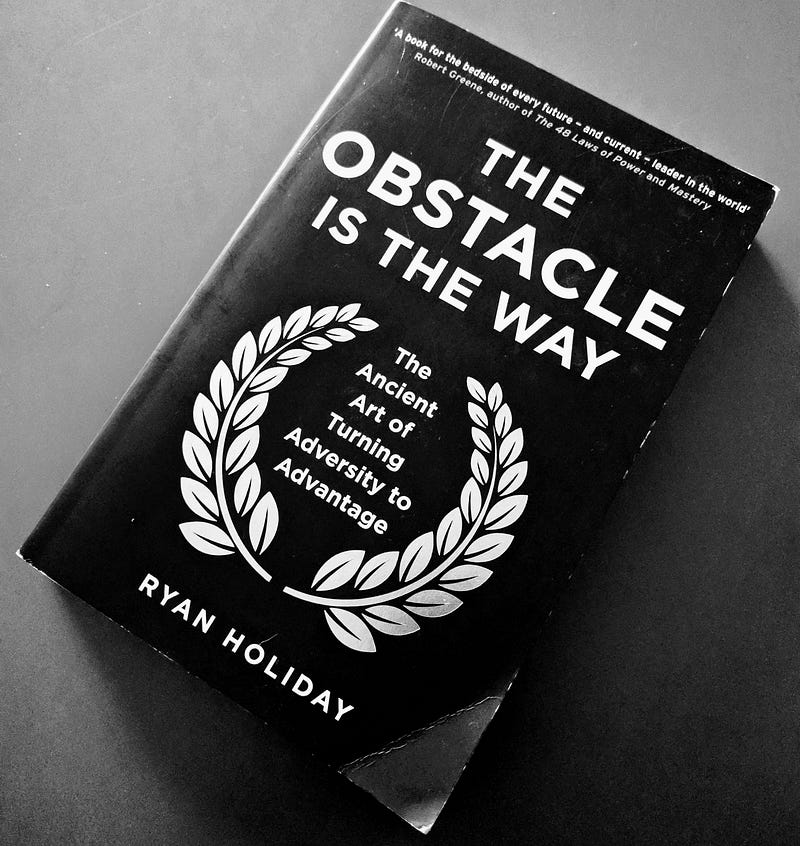
Work That Matters by Reading Ryan Holiday

If Tim Ferriss is the “Oprah of Audio,” that means that Ryan Holiday has to be on the short-list for being named the “Pharrell of Marketing and Book Writing.”
Rarely on the cover, but if you dig a little deeper you will find his fingerprints everywhere. From some of the worlds most influential and innovative people and companies, to the locker rooms of some of the most successful sports teams, to even the clothes on your back, his name is in the conversation.
Recently, Ryan sat down and wrote “Thank You Letters” to his friend, Tim Ferriss, and his mentor, Robert Greene, addressing 23 things he has learned by being fortunate enough to work and play with them.
While reading these articles it dawned on me that people do not do this enough, sit down and write out what their friends and mentors mean to them.
After reading his articles I sat down and wrote out “thank you letters” to my wife and parents and realized that I should give credit, to where credit is due, by taking the time to thank Ryan for not only positively impacting my work, but more importantly, my life.

1. EMBRACE THE COUNTER-ARGUMENT:

A few years back I told my dad about a book I really liked, thinking it would start a conversation. Instead he replied “Good, now go read the counter-argument.” End of conversation.
Ryan and my dad would get along just fine. His work shows that after reading a biography on Grant, he picks up Lee next. By hearing both sides of the story, he has found a way to write his own, and in the process by sharing his thoughts and book recommendations, he has helped thousands of others to write theirs.

2. TREAT READING AS ANY OTHER “MUST-DO” EVERY DAY:

I used to treat reading as a hobby, reserved for rainy days and the occasional bathroom break. It was not until I came across Ryan´s article on “How To Read More — A lot More” did I make the switch from reading for fun to reading for necessity.
Ryan has said numerous times that the reasons he reads so much (hundreds of books a year) is because, “Someone, somewhere, at some point in time, experienced the exact same problem you are facing now and they took the time to write about it, what took them years to figure out on their own, we get to learn in a matter of hours.”
Is there a better reason to read?

3. WRITE EVERY DAY:

Even if you have absolutely zero aspirations to be a writer, there is no better way to clear your head and organize your ideas than putting pencil to paper.

4. LOOK WHERE EVERYONE ELSE IS GOING AND THEN DO THE OPPOSITE:

Much of Ryan´s marketing success has come down to the idea, and execution of, “Picking one of the our sacred cows and then slaughtering it.”
Although, he may do this to get clicks, from what I have gathered, he also lives his life this way.
Instead of being seduced by the lifestyles of LA and NYC he decided that a small farm in Austin, Texas was the best place to be able to do the work that mattered most to him and anything that could potential lure him back he thoroughly analyses to make sure it is not throwing him off track of what “he” really wants to do.
If you create an environment, instead of allowing the environment to create you, you might just find that the very people you once chased, come knocking.

5. DON´T JUST ASK QUESTIONS BEFORE DOING SOMETHING, ANSWER THEM:

Ryan’s post, “3 Questions You Need To Answer Before You Have The Life You Want,” shaped my thinking and my business more than any other. It could have just come down to good timing. However, prior to reading this article I had a tendency to jump into things without answering the personal side of business questions, which ultimately led to my demise.
Define your “why” and get clear on “how you want to live.”
Answer the question, “What do you need money for?”
Take the time to audit what you really want to accomplish, not only in your career, but in your life.
For a long time I skipped this part and I paid for it.
Like Yogi Berra said, “If you do not know where you are going, you will end up somewhere else.”

6. LEARN THE RIGHT WAY TO CONTACT PEOPLE:

Successful people are successful for a reason, they have meticulously determined how, and with who, to best spend their time.
However, a “no” does not always mean a “no.” It just means that you did not do your homework well enough and did not identify what tools in your own skill set can provide them real value.
Ryan taught me to take my time with this, and to make sure when I do make contact, it serves “them” more than it does “me.”

7. THE VALUE OF “ME FIRST”:

Take the morning and knock out the things that matter to you first. If a few hours into the day you have already done your most important work, and filled the “you” void, playing a more reactive role going forward becomes a lot more tolerable.

8. DO AWAY WITH DISTRACTIONS ENTIRELY WHEN WORKING:

Give your work the respect it deserves and block out all potential distractions for a certain amount of time each day. No phones, no emails, just what Cal Newport calls “Deep Work.”
Block out three hours today to get your work done. You might be surprised at how productive you can be. Most of the time, emergencies are not emergencies an hour later. Things can wait.

9. HOW TO MANAGE PROBLEMS:

A great deal of Ryan´s work involves the ancient Greek philosophy of Stoicism. In the works of Marcus Aurelius, Seneca, Cato, Epictetus, Ryan has found his own way to navigate through the things that he cannot control.
Problems are a lot less scary if they are identified before they happen.

10. THINK LIKE A PHILOSOPHER, BUT SPEAK/WRITE LIKE A TRUCK DRIVER:

No matter how intelligent you are, if you cannot communicate your ideas in a way that is simple to digest and easy to understand you, will never make the mark you set out to make.
Ryan has taken the works of some of histories greatest teachers and packaged them in a way that is relevant to modern times. In doing so his work has impacted thousands of people who would have otherwise written off anything with the word “philosophy” in it. See his presentation tips here.

11. SAY “YES” EARLY and THEN “NO” OFTEN:

Learn new skills, network like crazy, have new experiences as much as you can, right up until you know exactly what you want to do, then protect that privilege of finding work that matters like crazy by saying “no” often.
And for those of you that lead emails to strangers with “can we grab a coffee” and “steal just a little bit of your time” click here.

12. EXERCISE IS MANDATORY:

13. FIND A SYSTEM THAT WORKS FOR YOU:

Ryan is an avid note-taker. If he reads something that hits home, he writes it down by hand on a note-card and then categories it to use at a later date or to spur ideas when he is in a rut (a habit he learned from Robert Greene).
How often do you get stuck frantically searching for a thought or quote that could properly fill a hole? Often? Me too. When you come across something of value, take the time to catorgize it in a way that allows your dots to connect more efficiently.

14. A GOOD PARTNER IS THE BEST LIFE HACK YOU WILL NEVER READ ABOUT:

My first article for Thought Catalog was a direct rip-off of an article Ryan had written on his wedding day.
Jim Rohn famously coined the expression, “You are the average of the five people you spend the most time with.”
A big part of me agrees with this statement. However, what Mr. Rohn failed to mention was to be very careful about who takes the top spot, as that person may actually equate to more than 50% of your time.
The perfect spouse will give you the confidence to do the things you dream of doing and also some of the things you never dreamed you were capable of in the first place.

15. IT IS OK TO STEAL FROM OTHER PEOPLE:

Ryan is a master of taking the ideas of others and putting his own twist on them. If you think about it, that is all innovation is today. Simply a different take on an existing idea or product.
I used to think that in order for me to publish something I needed to come up with something truly original. I regret that, and Ryan helped me to move away from that thinking, and recognizing that adding to the conversation can be just as powerful as trying to create a new one.

16. SURROUND YOURSELF WITH PEOPLE BETTER THAN YOU:

At an early age Ryan was fortunate enough to apprentice under some extremely successful people. And from the looks of it, he has not slowed down in the least from doing this.
Seek out people you admire. Figure out a way to help them. Then rinse and repeat. As Ryan said, “The best way to clear your own path, is to help others to clear theirs.”

17. TAKE PRIDE IN WHAT YOU HAVE ACCOMPLISHED, THEN GET BACK TO WORK:

Shortly after Ryan send out a Facebook message with the words, “Define Irony,” above an image of his book, “Ego Is The Enemy,” shown on the big screen in Time Square, he released another book, “The Daily Stoic.
What got you where you are, very rarely is going to keep you there.
As soon as you hit send on the work you are doing, or hang up the phone after making a sale, get back to work.

18. THE BEST COMES FROM PUSHING THROUGH THE BAD:

I grew up with a speech impediment. The one constant in my career has been trying to overcome my embarrassment by becoming a good communicator and strong salesmen. I love that Ryan went against the grain of “stick with your strengths” for us underdogs when writing “The Obstacle Is The Way.”

19. OTHER PEOPLE SAYING HOW GREAT YOU ARE IS MUCH MORE POWERFUL THAN YOU SAYING IT ABOUT YOURSELF:

I cannot count the number of interviews with authors, entrepreneurs, or successful people in general, where Ryan´s name was brought up as a quick side note. By doing good work, day in and day out, Ryan does not have to rely on his marketing skills to sell books. His reputation takes care of that.

20. RECOGNIZE THAT THE BRUTAL FACTS, ARE THE ONLY FACTS:

After having a light-bulb moment it is difficult to not get ahead of ourselves and build castles in the sky.
However, Ryan has trained himself to do the opposite and also plan out worst-case scenarios. This is not a gloomy way to look at things. It is a very pragmatic one. Planning for when things go south, because they always will in some form or another, alleviates some of the inevitable stress because you already have thought through the worst case scenarios and have a plan in place to keep moving forward.

21. IT IS BETTER TO MAKE A HARD LEFT THAN AN EASY RIGHT:

Every successful person can vividly recall the moments in their lives that shaped their stars, and more often than not it involved making a hard left instead of an easy right, despite the pushback.
What I admire most about Ryan is the fact that instead of taking low-risk, high-profile jobs, he consistently follows his intuition by choosing personal projects that “may work out.”

22. OVER THANK PEOPLE, OVER THANK PEOPLE, OVER THANK PEOPLE:

Kind of a gimme since the inspiration for me writing this was Ryan thanking both Tim Ferriss and Robert Greene for all that they have done for him. But I would imagine a young guy like Ryan did not get to where he is today by not thanking people every chance he gets.

23. KNOW WHEN TO STOP:

The more I think about Ryan´s influence the more I could easily keep going. But I am going to stop at 22 (See Law #1).
I am not sure how my wife is going to feel about me writing out 23 lessons I have learned from a guy who I have never met, especially one who lives on a farm in Texas surrounded by goats, when I only wrote out five for her.
But like Tim Ferriss taught Ryan, “You have to keep somethings for yourself,” and heeding their advice, I am going to keep the other 197 lessons my wife has taught me just for us.
Big THANK YOU Ryan Holiday for all that you do.
If you have enjoyed this article, please give it a ❤ or 👏 so other people will see it here on Medium. Truly appreciate the support — means the world.

What To Do When You Don’t Care


Especially when you don’t care that you don’t care

I recently wrote about “knowing what you want” — the struggle most of us have to discern how we even feel or what we actually enjoy, and the importance of identifying and understanding true interests to pursue.
And the ugly side of this is not when we pursue things without interest, but rather when we pursue things without interest but don’t care.
What are you supposed to do with that? How alarmed should we be at the fact that we do tons of things in our daily lives that we feel moderately interested in but don’t care that we don’t care?
Should we care?
In the 1999 film Runaway Bride, we come to find out that Julia Roberts character, serial monogamist Maggie Carpenter, has spent so much time buying into her partners’ breakfasts that she doesn’t even know how she prefers eggs.
At the time, I didn’t really understand how that could happen. Now I do. Things like that slip through the cracks.
But what if Maggie Carpenter truly didn’t care how her eggs were prepared? Should it matter?
I think it depends.

Whenever I’m confused about any of the other big things in life — work, or areas of passion (if the two are different, and they almost always are) — I come back to romantic relationships.
Partly because I’ve done a shit ton of research in that area, but mostly because things work out for me there — even when relationships have ended, I’ve come away with new learnings, new insights.
Something about partners is easier; more contained. I don’t hang too much on other people; I let them exist as their own separate beings, this single, imperfect entity who happens to be at my side — and I see them for the finite thing that they are. Things like “work” and “passion” and “interests” have no parameters; no boundaries. (That, and for me it’s the work, not the partner, where I tie my identity up. That’s the reason most of us flail at either one.) And that makes them harder — for me.

So, let’s take it back to relationships

1.) I dated people I didn’t want to marry — and I didn’t care.
Now, there are a couple of important caveats here: first of all, I was young. We are all permitted a few silly flings when we’re young. Two, they still offered me whatever I was looking for at the time (hint: they always do, whether it’s healthy or not), and in that sense still had value. And three: I’m still not sure on the whole marriage thing, so “finding a husband” still isn’t a big deal.
So, all things considered, I would never advocate that anyone “waste their time” with someone they didn’t enjoy if they truly weren’t getting any enjoyment from it. Sure, your 20s are for trial and error, but it should mindful and deliberate, not negligent or wasting your time.
But as I look back on these relationships, especially within the context of where I am now, I have zero regrets.
So, +1 for “not caring about not caring.”
2.) There’s a lot I don’t care about in relationships.
I don’t care whether my partner texts every day. I don’t care if they never buy me flowers or Christmas gifts. I don’t care how they leave the toilet seat up, or the toothpaste. I don’t care what car he drives. We could go our whole lives not saying “boyfriend” and “girlfriend.”
Because the thing is: You can tell the size of a man based on the size of the things that bother him.
We all have the same amount of finite amount of “fucks” to give, and too many of us waste them on petty things. I’m not willing to sacrifice any “fucks” on stupid shit.
I’ve written about this before and a few people were quick to accuse me of being a pushover, or spineless, or not caring enough in general. But in reality, people who respond defensively to these care too much about the wrong things, and not nearly enough about the things that matter.
I demand of a partner the same things I demand of myself: emotional health, intelligence, and friendship. When I say I don’t care about the rest, it’s not because I’m not in the game, but rather because I am simply unwilling to spare any chips on stupid bets. And I am super happy (and focused, and deliberate) with my relationship as a result.
+1 more for “not caring about not caring.” With the added caveat: so long as you care about something.

What do you do if you STOP caring — at a high level?

Especially if it does matter?
Like, what if we stop caring about our partner or relationship at all?
It does a huge disservice to both ourselves and our partners when we bite the bullet and pretend or force ourselves or “try harder” to care when we don’t. The emotional energy required of this upkeep is just obscene.
I’m not suggesting anyone should bow out of a relationship just because they “no longer care.” I’m just also not suggesting they “force it.”
On the contrary, the solution is to ask why they no longer do — and what they need.

Why don’t we care when it matters?

I don’t know. The answer varies. It can feel like fear, anxiety, uncertainty, “lack of motivation” (which isn’t real), lack of knowledge, broken morale, sadness, etc. but these are all pretty much different words for lowered self esteem, and self esteem is almost always the root issue — first causing a lack of engagement when we know it matters, and then causing us to accept a life lacking engagement (when we know it matters) as the norm.

What do we need?

Again, I don’t know. Self esteem is part of the answer, but the other part of the answer is a better understanding of ourselves. We don’t need to be interested in everything, but we should have an idea of what we’re interested in — or, in the least, an understanding of how to identify the feeling of “interest.” That, and then an honest understanding of our own values, and what actually matters to each of us as individual human beings in a vacuum.

So, applying these back to work and passion

What should we care about? When does it matter if we don’t care? And what should we do if we don’t, but it does?
The main takeaways here are as follows:
  • What matters is what you value — both long-term, and at that time. Hopefully these two are in alignment, otherwise you’re going to be doing some damage (like binging at the risk of our health), but for the most part, doing the work of understanding these upfront — and being honest and healthy about them (and understanding cause and effect) — will go a long way in discerning what matters and what doesn’t; where to care, or not.
  • It’s fine to not care about what doesn’t matter — as long as you do care about what does. Dude, maybe Maggie Carpenter could go her whole life not preferring any one egg and maybe that could be totally okay. Maybe it’s okay not to have an opinion on everything, if one does have an opinion where it counts.
  • When you stop caring — and it does matter —don’t just force it; ask yourself why. If you don’t love your work, why? What do you need? If you are overweight, why? What’s the core problem? If you are lonely, why? The point is that these problems aren’t what they look like, so blindly throwing ourselves at them aren’t the solution. Very often, they’re bundled and burdened with tons of emotional reasons, and it’s our job — our obligation to ourselves — to do the dirty work of unpacking it.

The solution is to fix the core problem: the broken spirit

And the good news is that a broken spirit can almost always be fixed by pursuing things that we love (just as a spirit can be hurt by dumping energy into things we don’t — and hurt even more when we withhold our spirit from things we do.)
So what to do when you don’t care — and you don’t care that you don’t care? Sometimes professional therapy is best. But short of that: find at least one (healthy) thing you do care about, dump energy into it, and build from there. The rest, for most of us, will work itself out.